On the Road with the Achtenhagen Family at the Ludorf Manor House in the Mecklenburg Lake District

Published: August 21, 2026

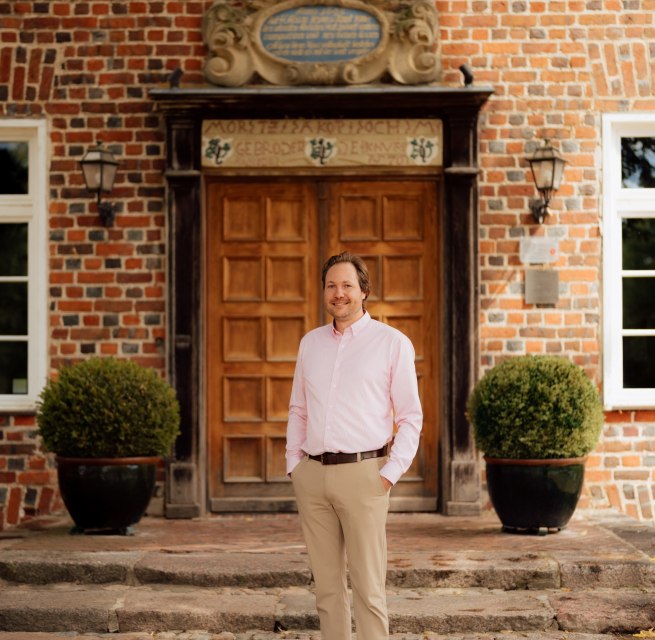
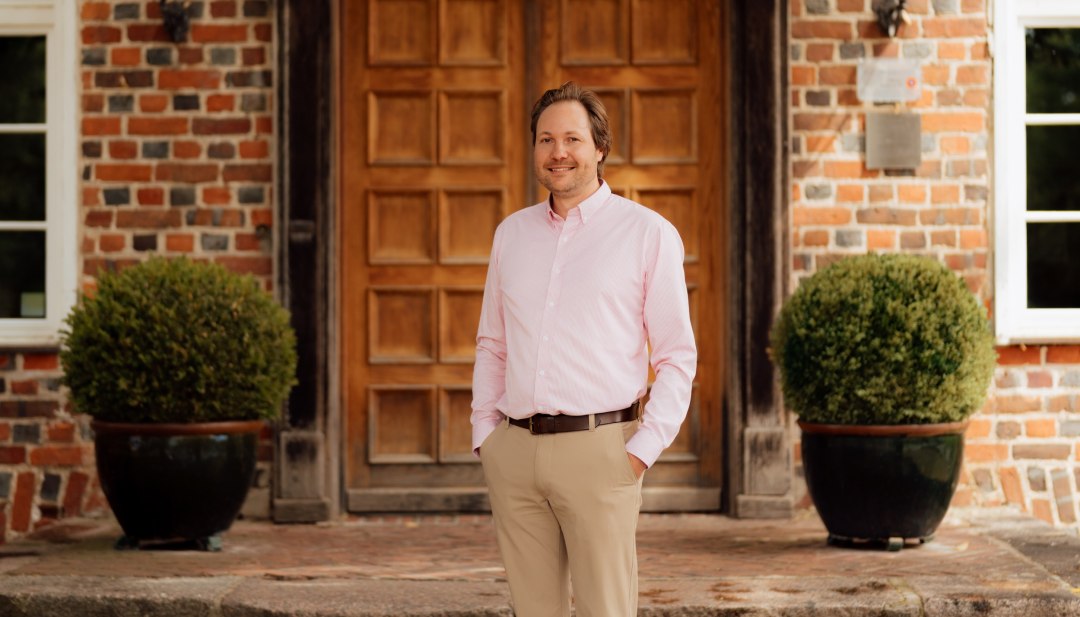
Jannis Achtenhagen is standing in front of the large wooden door of the Ludorf brick manor house, next to two round potted plants.

Together with his mother, Jannis Achtenhagen runs the Ludorf Manor in the Mecklenburg Lake District. In the third installment of “MV Local,” he takes us on a journey through the history of the estate, talks about regional Slow Food cuisine, and shares stories about employees who have been with the estate for decades.

As you approach from the Müritz Cycling Loop coming from the lake, it already catches your eye through the tree-lined avenue and, as the center of the village, is impossible to miss: the Ludorf Manor House, a massive, light-colored building dating from 1698, surrounded by old trees. In the center is the heavy door; to the right is the entrance to the restaurant, next to which are wooden benches that invite you to take a break. In the rooms, there’s no TV, no minibar humming, and no phone ringing. “We’ve created a place here where people feel like they’re in a completely different world—a bit like traveling back in time,” says Jannis Achtenhagen, who now runs the property together with his mother, Keril Achtenhagen, as a hotel and restaurant in the Mecklenburg Lake District.

Jannis is sitting at his desk; today, administration, marketing, and the website are once again on his to-do list. But for a long time, he himself didn’t realize that this would one day be his profession. “We’ve owned the manor house since I was seven, but when I was a teenager, I thought it was all totally lame.” He describes how, back then, he wanted nothing to do with that bourgeois lifestyle. He rebelled, went to Australia and Berlin to figure himself out, only to realize that the anonymity of big cities wasn’t for him. While studying at the hotel management school in Hamburg, where he’s earning his degree in business administration, he received what he calls “the call.” “I realized that there were tasks here waiting for me that my parents had no idea about—for example, digitalization and marketing.” He has now been a permanent part of the business for about five years.
Yoga Classes That Open Doors

But his favorite task is and always will be the weekly historical tour, every Thursday at 10:30 a.m. There, he tells guests how an almost abandoned manor house became one of the most unique hotels in the region. Once Jannis starts talking about it, his enthusiasm is almost unstoppable. For him, running a manor house as a hotel means diving into history and critically examining its past. He wants to dispel the image—particularly one perpetuated in the GDR—of the evil landlord who abuses his power; he aims to approach history with a more nuanced perspective, examining where the narrative holds true and where it does not. He is not alone in this. During the guided tours, he sometimes even meets people who themselves spent part of their past in the house—as refugees after World War II who found shelter here.

But what is so special about the Ludorf manor house? Couldn’t it be found anywhere? Yes, Jannis admits. That’s because these houses have a long tradition in Mecklenburg-Western Pomerania. There are over 2,000 castles, manors, and stately homes in this vacation destination, some of which are used as museums and others for tourism. On the other hand, the village also has its own unique history. The manor has existed since the 13th century—and the Achtenhagens are only the second family to ever run it. It was a decision-making process for the family to invest in this house—even though they had known the place for a long time. Jannis’s mother was born in nearby Röbel, his father in Berlin; both fled the GDR and initially settled in Hamburg. In the 1990s, work brought his parents back. Time and again, they drove past the dilapidated manor house until, in 1998, they made what Jannis calls the “crazy decision” : to purchase the more or less vacant house together with partners, quit their jobs, apply for grants, and renovate it.

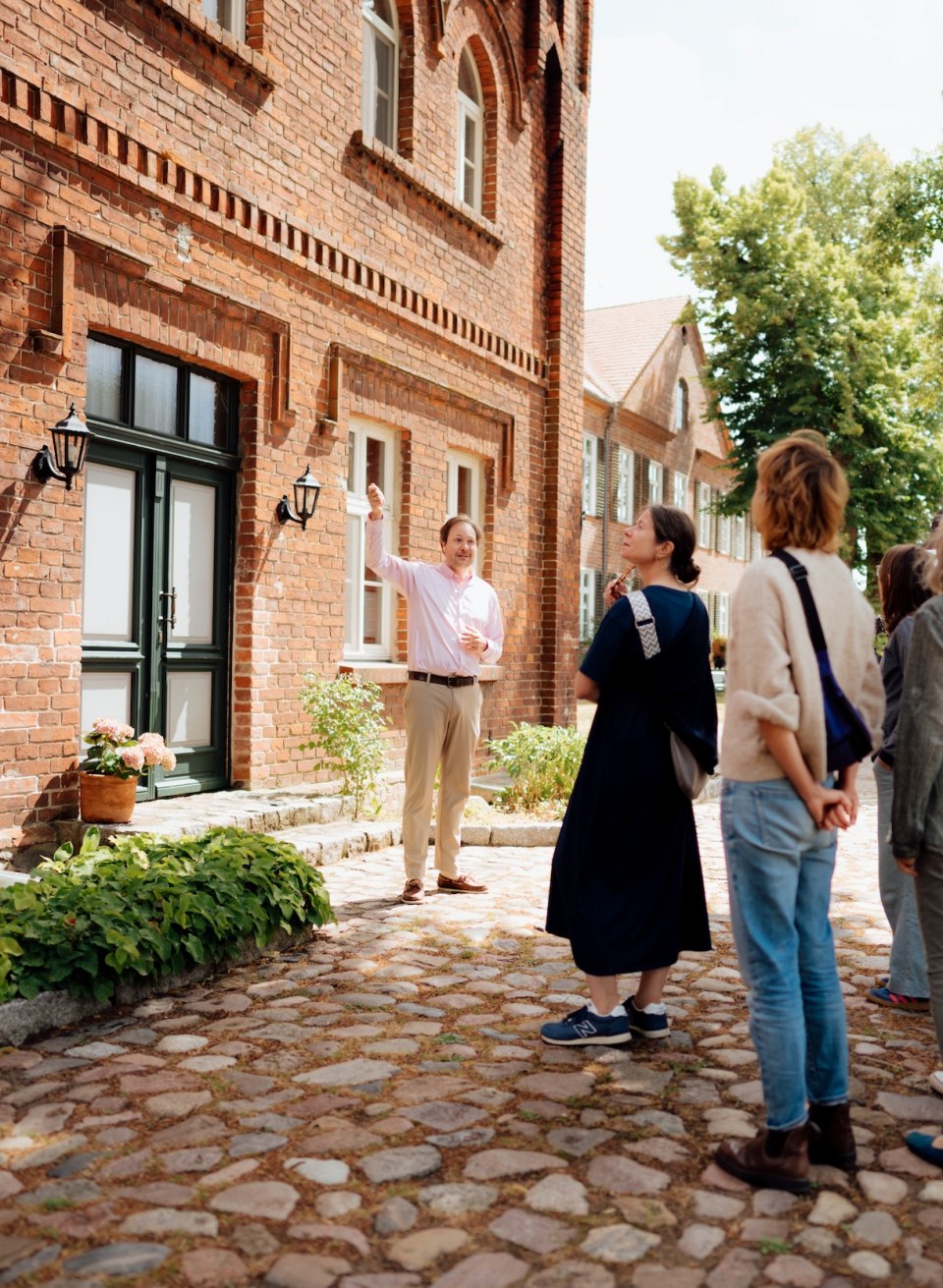
Jannis Achtenhagen explains the brick construction of the Ludorf manor house to a group on a cobblestone path surrounded by greenery.
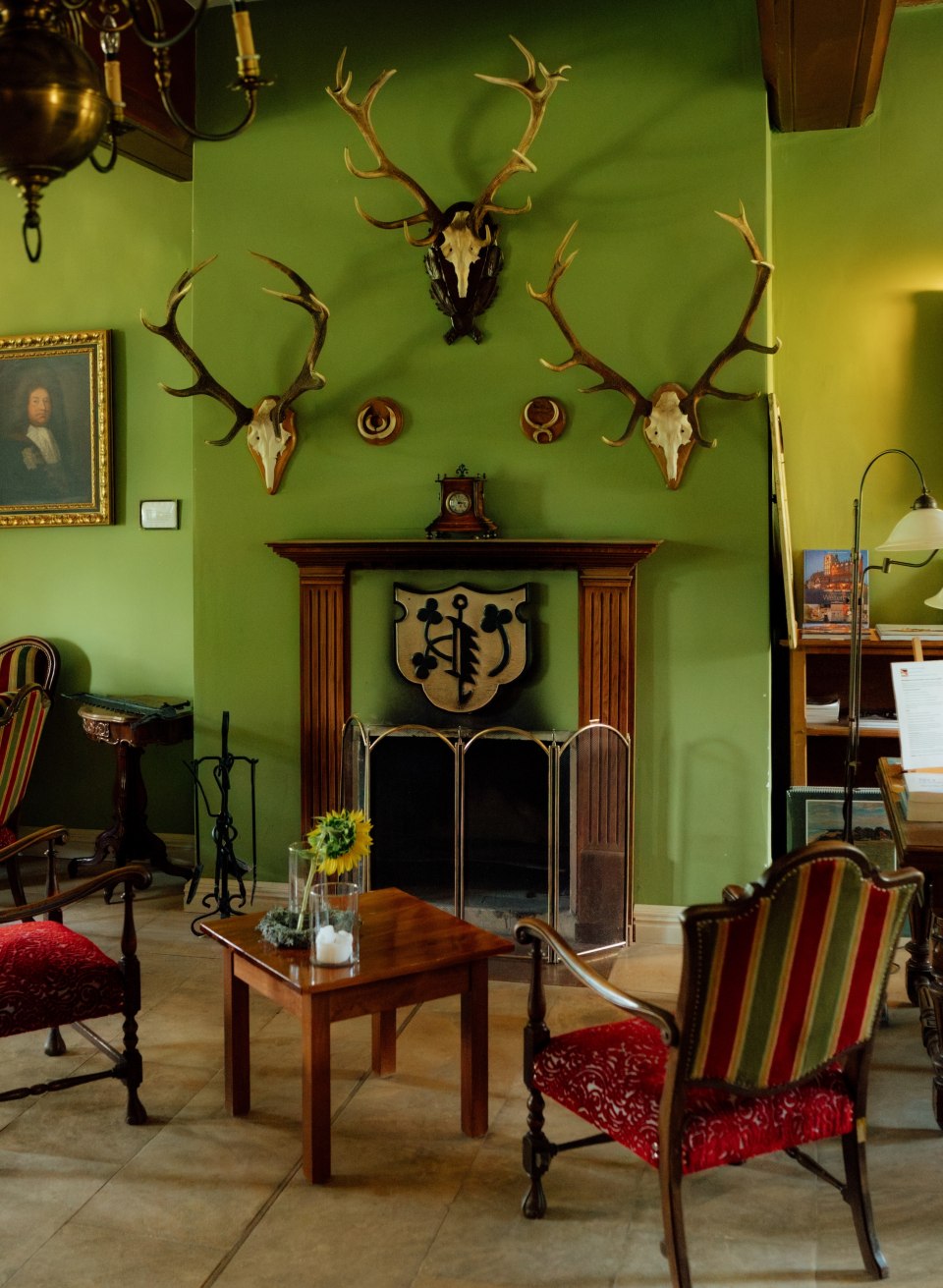
A fireplace with a wooden frame against a green wall, with antlers and a coat of arms above it; in front of it stand an armchair and a table in the Ludorf manor house.
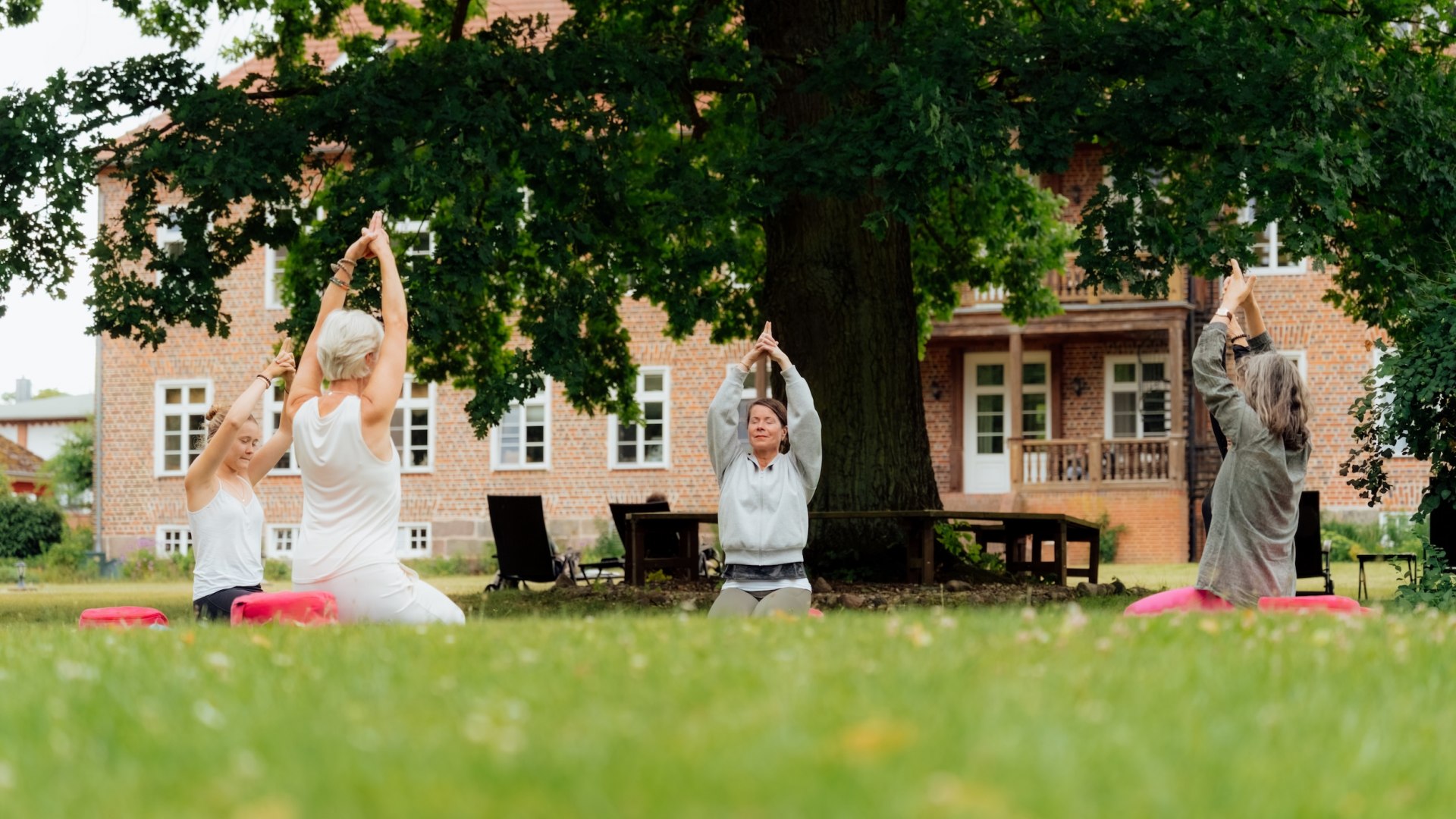
Three women are doing yoga in a meadow under a large tree, with the Ludorf manor house in the background.

Yoga Classes That Open Doors

Things weren't easy for them right away. “Back then, there was definitely some resentment in the village—we were always ‘the ones with the castle,’” Jannis recalls. The family had returned from the West, even though they were actually originally from the East—“West Germans in the East, East Germans in the West,” as he puts it. But over time, the situation changed. Today, his mother teaches weekly yoga classes, which are attended mainly by women from the region. And the doors are wide open to anyone who’s curious: Anyone who stops by—whether a tourist or a neighbor—is invited in and told the story of the house.

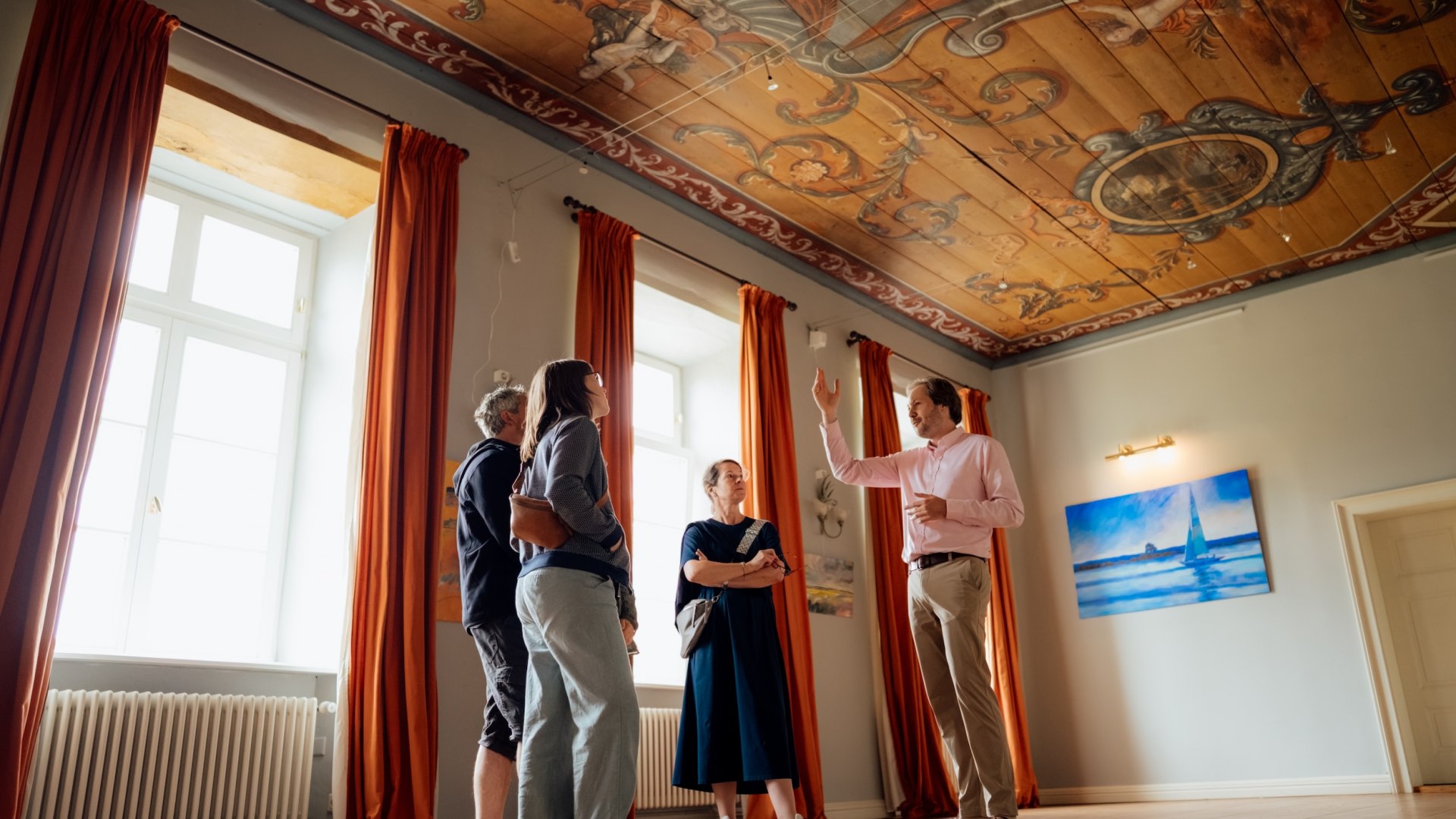
Jannis Achtenhagen explains the painted ceiling and the tall windows with curtains to guests in the Baroque Hall of the Ludorf Manor House.

Paintings Found by Accident

This story is long and eventful. And sometimes it turns up where you least expect it. During renovation work, contractors accidentally discovered a painted wooden ceiling in the Baroque Hall beneath a layer of stucco—paintings dating from around 1700, the time the house itself was built. “No one had expected that— it was a huge sensation”, says Jannis. The house’s own library also consists in part of original books that have found their way back into the house over the decades. 

Today, preserving the historic monument is also the basis of its business model. After all, the building is too large for private use or use by a single individual and is not very profitable. If we want to preserve history and protect historic buildings, we need to find a different solution. “Using it as a hotel is one of the best ways to preserve a house like this,” says Jannis. After all, that’s the only way for a family to keep such a large house. The family’s responsibilities are clearly defined but not rigidly assigned. The father is increasingly focusing on his work with the Association of Manor Houses in Mecklenburg-Western Pomerania, which has beento support owners and estates through public relations efforts and a large network. Since the association is active at the regional, national, and international levels, Manfred Achtenhagen travels all over Europe to help develop a cultural route in the Baltic Sea region. Jannis’s mother is, in his words, “the heart and soul of the house”—she has an eye for the right decor, invites interesting people to the house for retreats and events, and teaches yoga. “If a flower is missing somewhere, she notices it right away—while I walk right past it with tunnel vision,” says Jannis with a laugh.

No traditional menu—instead, slow food and regional dishes

“It’s also kind of nice that this isn’t a company that’s always run 100 percent rationally, but rather, at the end of the day, it’s a family where decisions are made more with the heart,” says Jannis, describing the company’s philosophy. A total of twelve people work at the restaurant, in a deliberately flat hierarchy without traditional department heads. Every day at 5 p.m., the team meets for a meal together—a fixed ritual that fosters a sense of closeness, according to Jannis. Central to this sense of community is Thomas Köpke, the head chef, who has been working at the restaurant for 26 years. Jannis has known him since he was seven years old, when he would stop by after school to order pancakes or pasta with tomato sauce. 

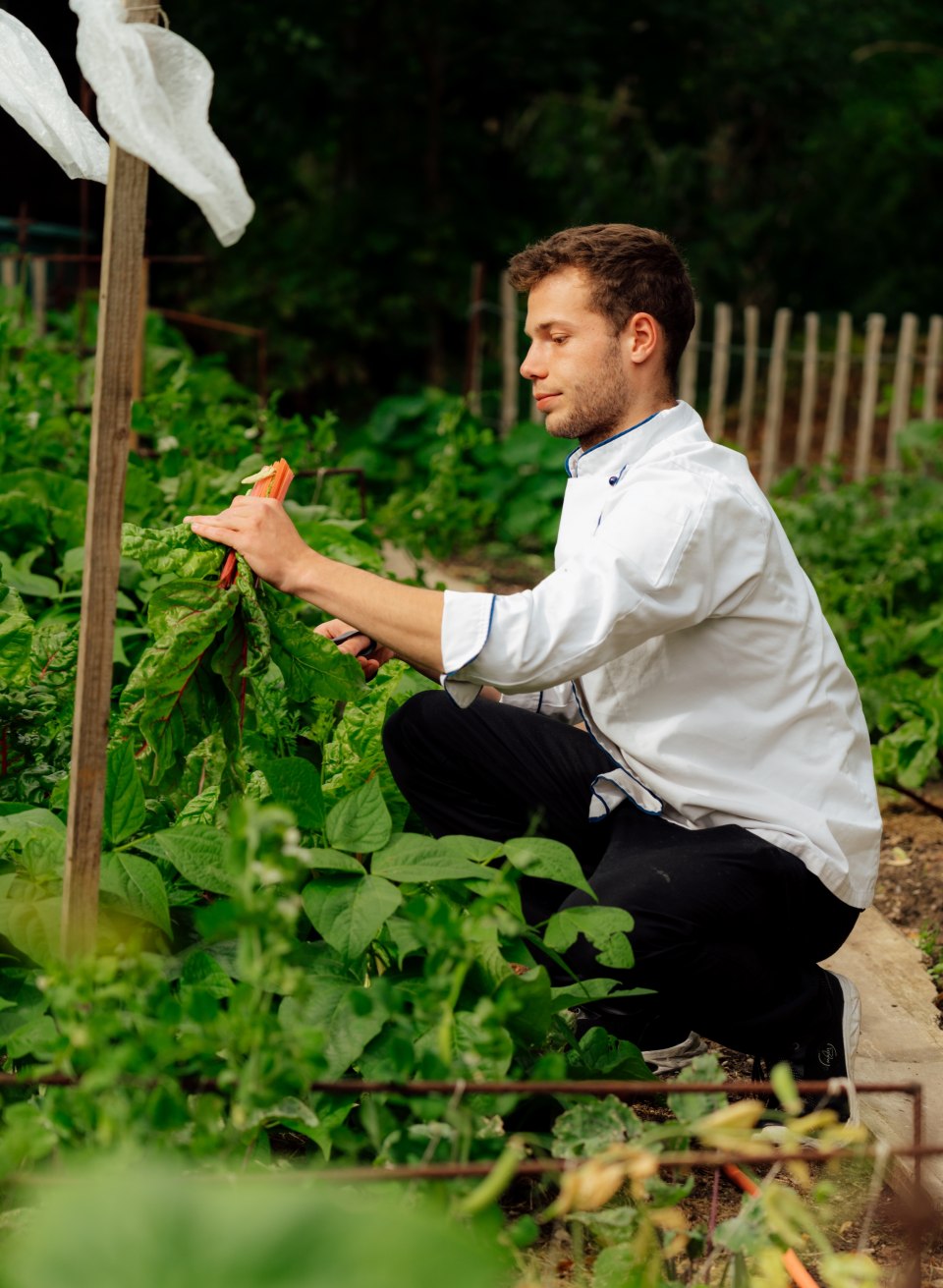
Today, the two of them develop the culinary concept together: a Slow Food cuisine rooted in the Italian counter-movement to fast food—regional, seasonal ingredients instead of globally sourced produce. The potatoes, for example, come from a local organic farmer. There is no fixed menu; instead, there’s a daily changing menu based on what’s currently growing in the garden. This decision also has a history. “People have always lived sustainably in this manor house, simply because there were no supermarkets—just a garden and their own animals,” says Jannis. “That inspired us to make the cuisine as seasonal as possible.”

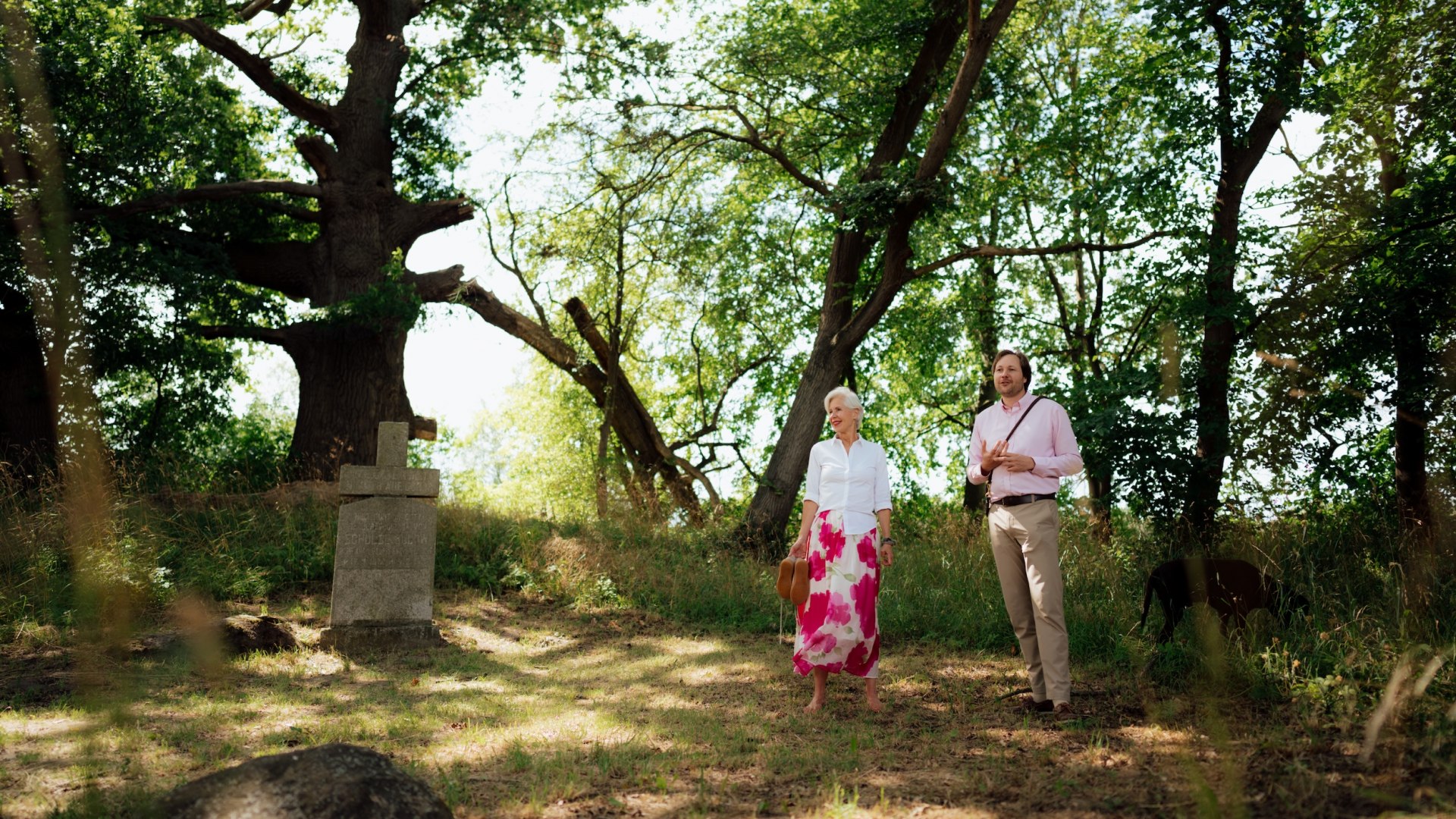
Amid administrative tasks and guided tours, however, it’s always about finding peace and reconnecting with nature. After all, running the manor house isn’t just work—it’s also a home, as Jannis puts it. It’s not always easy—it also means that drawing a line between these two worlds can sometimes be difficult. To find common ground, mother and son have therefore established a regular ritual: Around noon, Jannis and Keril take the hotel dog, Hugo, for a walk through the estate park, past the mound with the 400-year-old oak tree and the grave of the last lord of the manor, who was buried there in 1945. “This magical place takes our minds off the hustle and bustle of the hotel,” says Jannis. “It reminds me time and again that nature is a major reason why guests travel to us in the Mecklenburg Lake District—and specifically to Ludorf. In the hustle and bustle of everyday life, you sometimes forget that.”

Chef Thomas Köpke is kneeling in the vegetable garden, harvesting Swiss chard with scissors and gathering the leaves in his hand.
Kerl und Jannis Achtenhagen steht unter großen Bäumen neben einem steinernen Kreuz am Grab in Ludorf. // Standing beneath old trees, Keril and Jannis Achtenhagen stand at the grave of Ludorf’s last lord and continue to tell the story. // © MV-T/Petermann

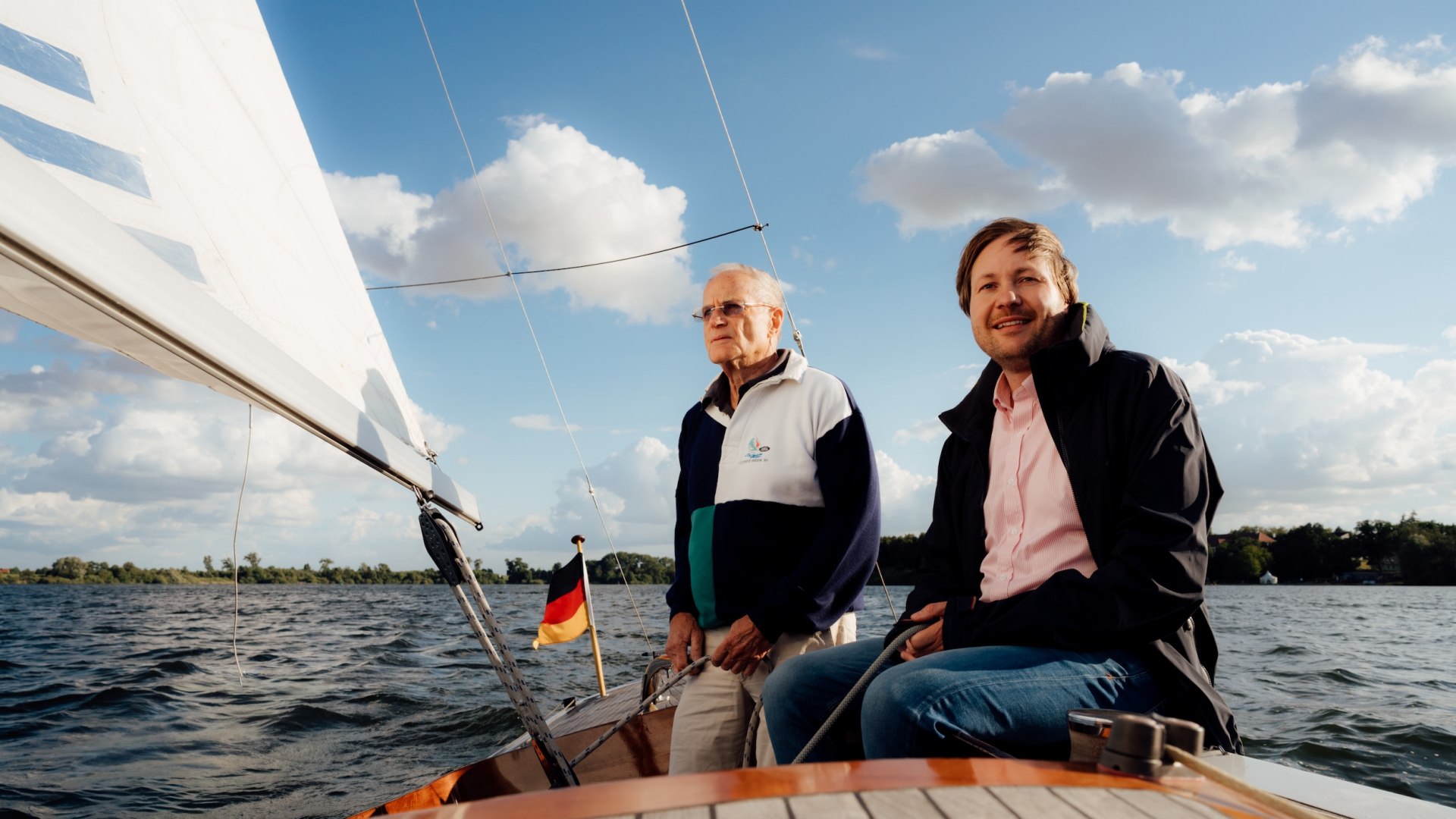
Nature is also present where Jannis most enjoys spending time with his father: on the water. Both are passionate sailors and own a sailboat in nearby Röbel—a Drachen, a former Olympic, motorless boat class that allows you to experience sailing in its purest form. Occasionally, the two of them—or they along with guests—set out on a cruise across Lake Müritz; sometimes a white-tailed eagle joins them. Anyone approaching Röbel by boat can witness a special natural spectacle: The town’s two church towers appear to move closer and closer together until, for a few moments, they block each other from view—the so-called “church eclipse.” “This is where I find peace,” says Jannis.

Jannis and Manfred Achtenhagen are sitting on a sailboat on Lake Müritz, with the sail and a cloudy sky in the background.

Open House Every Day for the Curious

Nature is also present where Jannis loves to spend time with his father most: on the water. Both are passionate sailors and own a sailboat in nearby Röbel—a Dragon, a former Olympic class of boat that lets you experience sailing in its purest form. Occasionally, the two of them—or they along with guests—set out on a cruise across Lake Müritz; sometimes a white-tailed eagle joins them. Anyone approaching Röbel by boat can witness a special natural spectacle: The town’s two church towers appear to move closer and closer together until, for a few moments, they obscure each other—the so-called “church eclipse.” “This is where I find peace,” says Jannis.

Once a year, Ludorf Manor also opens its doors as part of the Midsummer Festival, along with more than 80 other manors in the region—featuring guided tours, concerts, and cake. But actually, says Jannis Achtenhagen, there’s no need for a special occasion. At the Ludorf Manor House, every day is an open house. “Anyone who’s curious is always welcome here.”

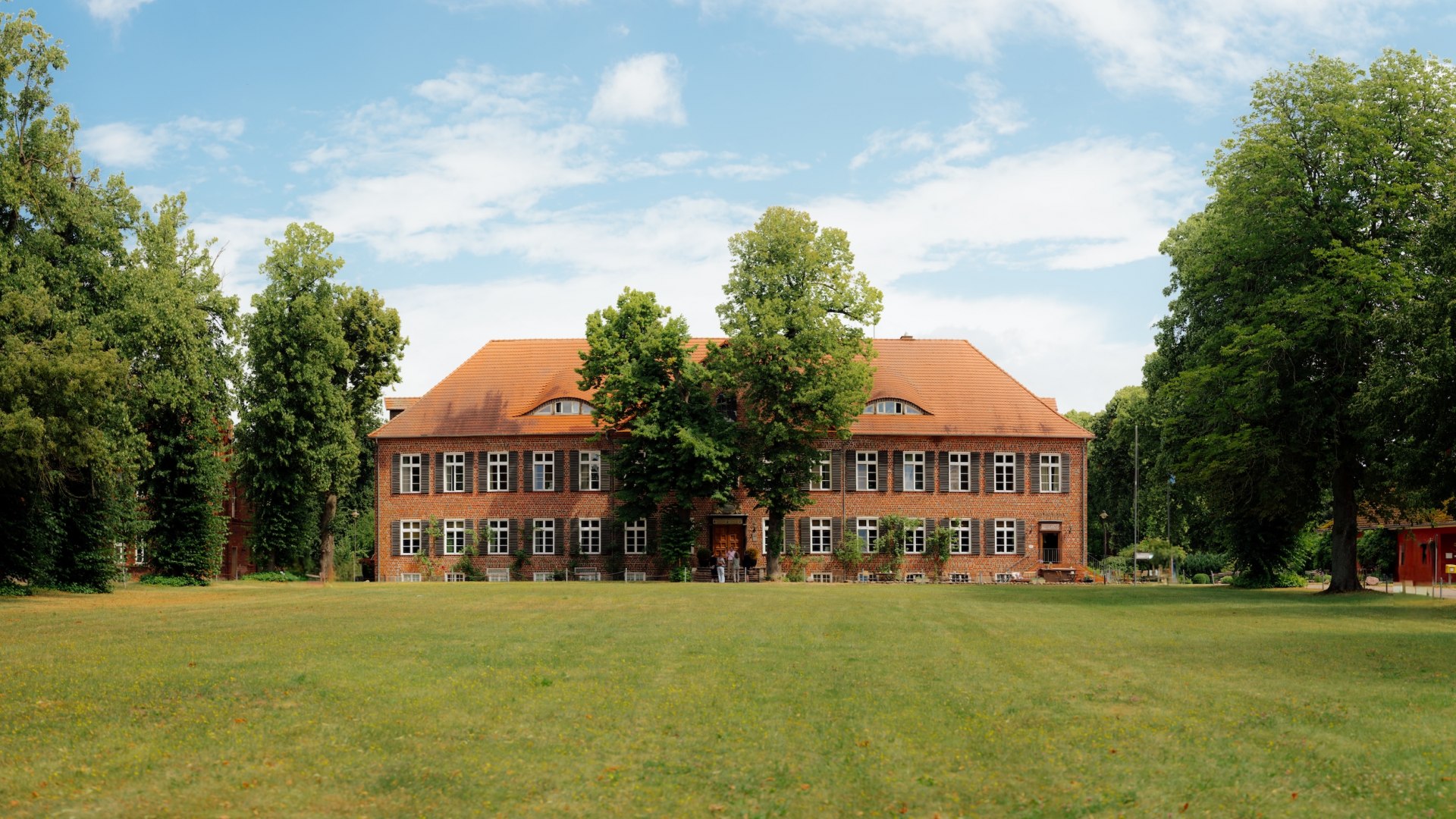
The Ludorf manor house, a brick building, stands behind a large meadow, surrounded by old trees under a blue sky.
A large meadow stretches out in front of the Ludorf manor house, with brick buildings and towering trees framing the setting—here, Jannis Achtenhagen focuses on tranquility, space, and the feeling of coming home in Mecklenburg-Western Pomerania.

Places of Interest

on Lake Müritz

To the map
  • Slow food from the rural fine cuisine // © Christin Drühl

    Romantik Hotel Gutshaus Ludorf

    • Rondell, 17207 Ludorf

    On the west bank of the Müritz, between two nature reserves, the visitor sees one of the most beautiful and oldest manor houses in Mecklenburg. Whoever is a guest here will be transported back from our hectic times to past centuries, when man in harmony with nature was the measure of all things.

    Read more: "Romantik Hotel Gutshaus Ludorf"
  • to the list

    Content is loaded

    You might also be interested in this

    1. Mecklenburg cuisine: a culinary foray along the Baltic coast

      Read more: "Mecklenburg cuisine: a culinary foray along the Baltic coast"
    2. Schwerin: UNESCO World Heritage Site

      Read more: "Schwerin: UNESCO World Heritage Site"
    3. FÖJ at the Szczecin Lagoon – Protecting and Discovering Nature

      Read more: "FÖJ at the Szczecin Lagoon – Protecting and Discovering Nature"
    4. Nature and Star Park

      Read more: "Nature and Star Park"
    5. Eating fish: An interview with chef Lars

      Read more: "Eating fish: An interview with chef Lars"
    6. Guided tour of Schwerin Castle

      Read more: "Guided tour of Schwerin Castle"
    7. Healthy and fit through fall and winter

      Read more: "Healthy and fit through fall and winter"
    8. Read more: ""
    9. Experience 250 years of Caspar David Friedrich

      Read more: "Experience 250 years of Caspar David Friedrich"
    10. Regional personalities on Fischland-Darß-Zingst

      Read more: "Regional personalities on Fischland-Darß-Zingst"
    11. Baltic Sea hosts with a heart

      Read more: "Baltic Sea hosts with a heart"
    12. Read more: ""
    13. Wolfgang Schewe and the Boutique Hotel Nixe on Rügen

      Read more: "Wolfgang Schewe and the Boutique Hotel Nixe on Rügen"
    14. Museum in Göhren: Past meets future

      Read more: "Museum in Göhren: Past meets future"
    15. Oh Caspar, how romantic: Caspar David Friedrich in Western Pomerania

      Read more: "Oh Caspar, how romantic: Caspar David Friedrich in Western Pomerania"
    16. MV Locals - Birte Frenssen

      Read more: "MV Locals - Birte Frenssen"
    1- 0 from 0