
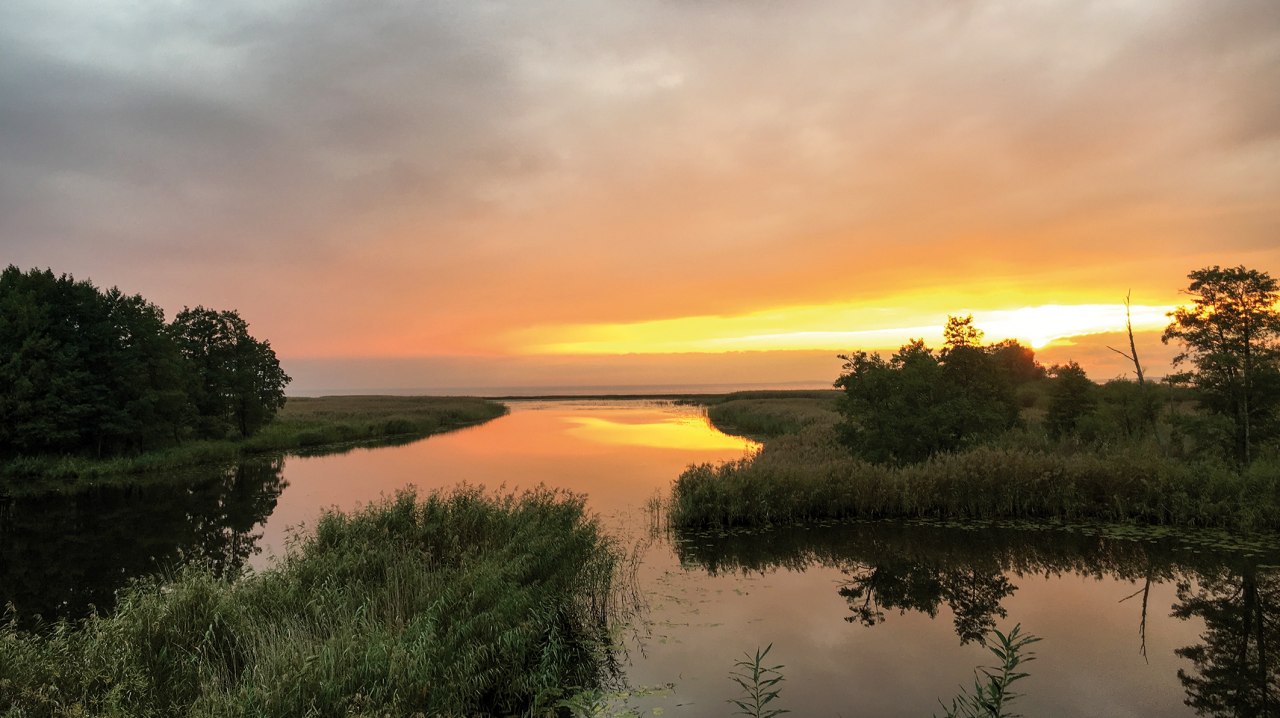
“Time, I can only ever love you alone…” (Johannes Bobrowski: *Sarmatian Time*). The river “Chronos”—the ancient name for the “Memel”—flows through the region of Sarmatia. Filmmaker Volker Koepp follows its course in search of the stories of the people who live along its banks—and in doing so, he repeatedly returns to those who have shaped his earlier films. But “Chronos—River of Time” is also a portrait of a region in transition. Filming took over five years. The Russian invasion of Ukraine and the COVID-19 pandemic shape the experience just as much as the Soviet past and the scars the Holocaust has left on these communities…
Inspired by the poems of Johannes Bobrowski, director Volker Koepp shot his first film in 1972 in the historic region east of the Vistula River, between the Baltic Sea and the Black Sea—a region known in late antiquity as “Sarmatia.” A world that became part of the Soviet Empire after World War II. Later, Koepp shot an entire cycle of films in this region, including “Kalte Heimat” (1994), “Herr Zwilling und Frau Zuckermann” (1998), and “In Sarmatien” (2013). These films explored encounters with people, their daily lives, and their life stories shaped by political upheavals; they addressed Nazi terror, the murder of Jews, Stalinist persecution, and hopes for social change. His documentary film *Chronos – Fluss der Zeit* (2026) adds a new, decisive chapter to these stories, taking the form of a cinematic montage in which the past and present are fragmentarily intertwined.