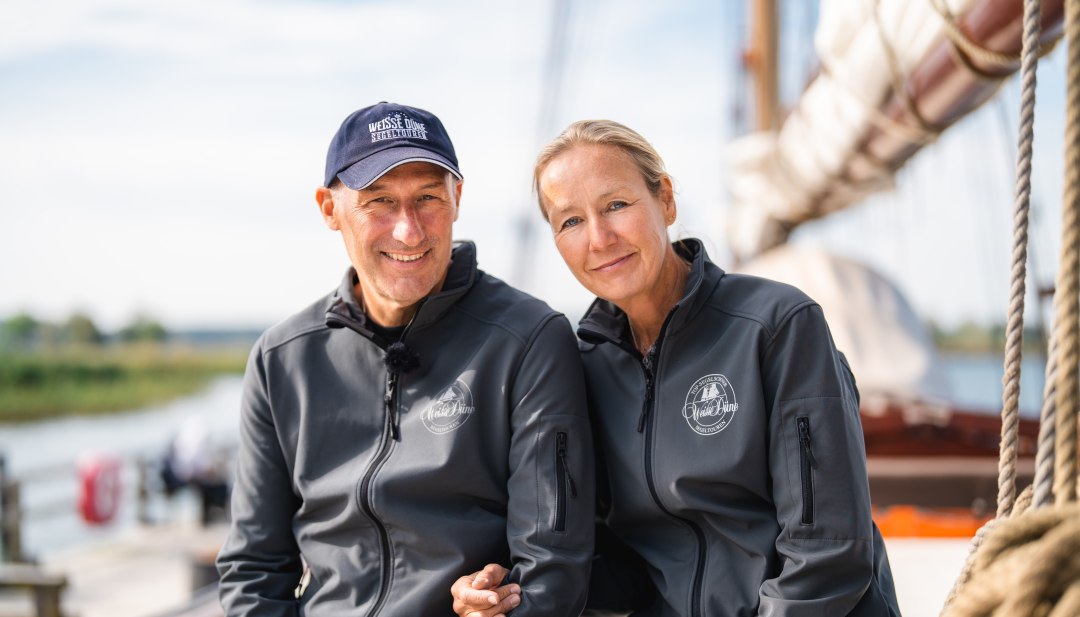
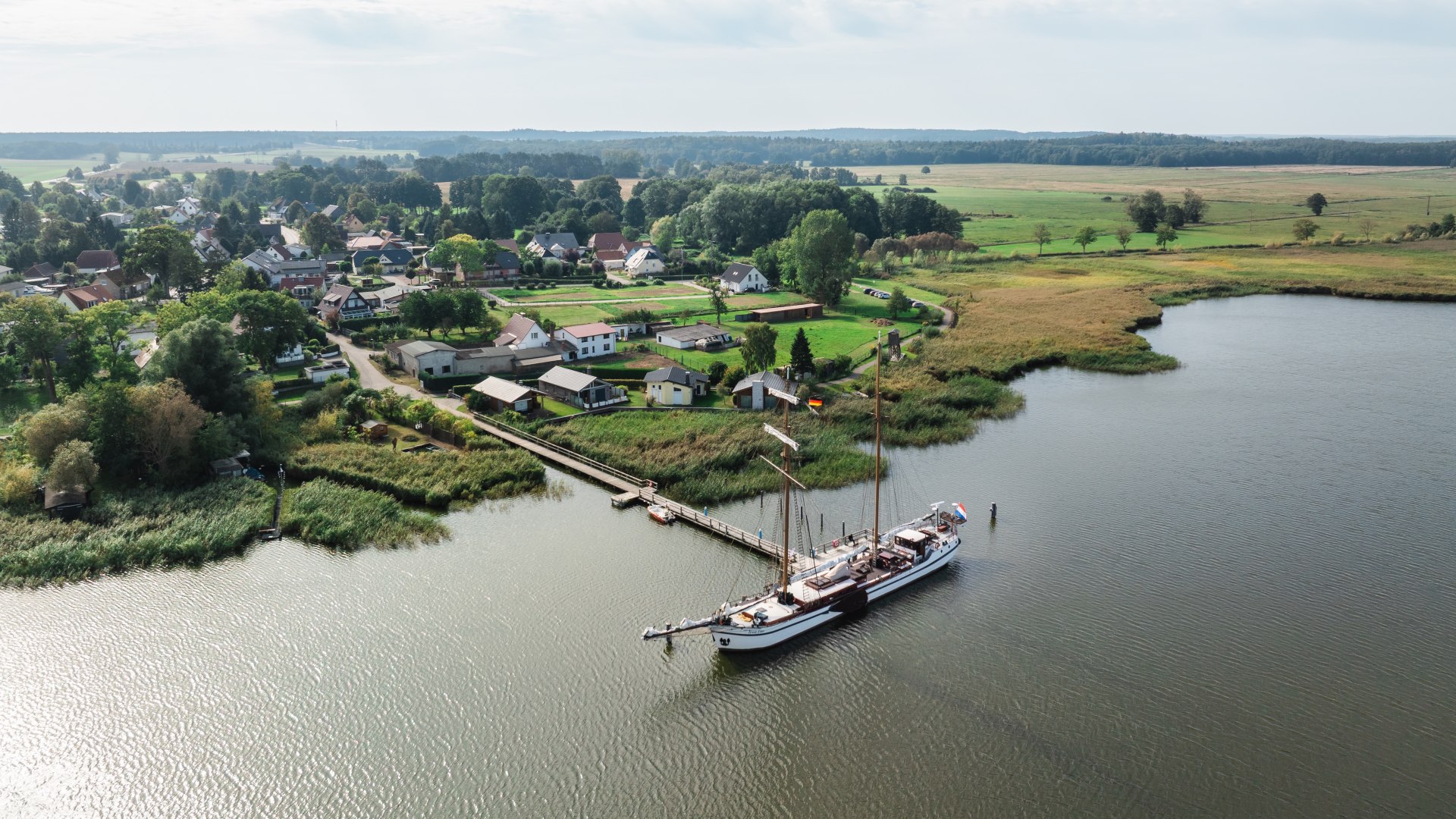
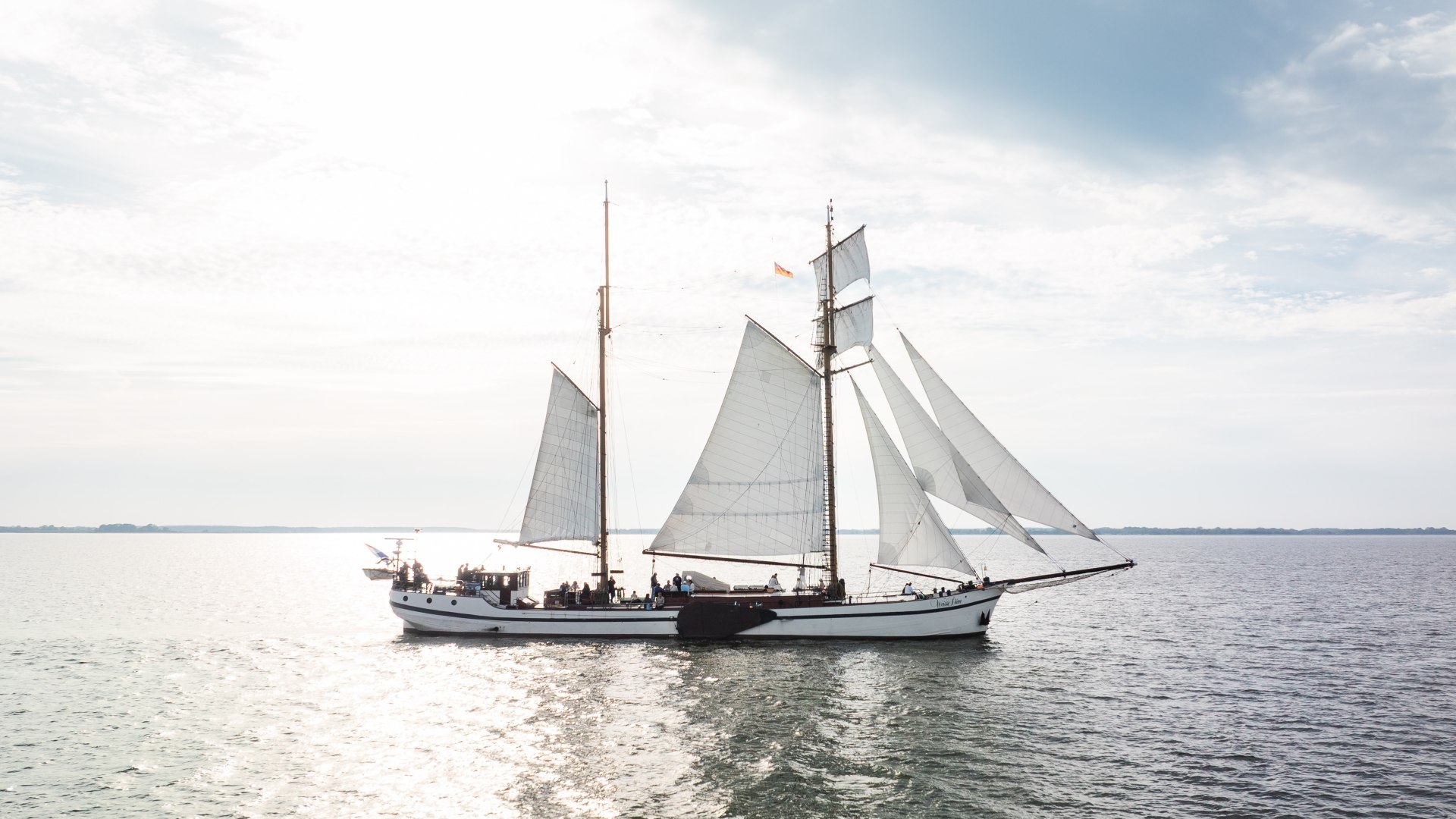
The Weisse Düne is Germany’s only sailing passenger ship—and also the big dream that Captain Jane and her husband, Detlef Bothe, have made come true. During a cruise aboard the 117-year-old sailboat, they explain why, for them, fine dining and sailing on the Achterwasser near Usedom go hand in hand.
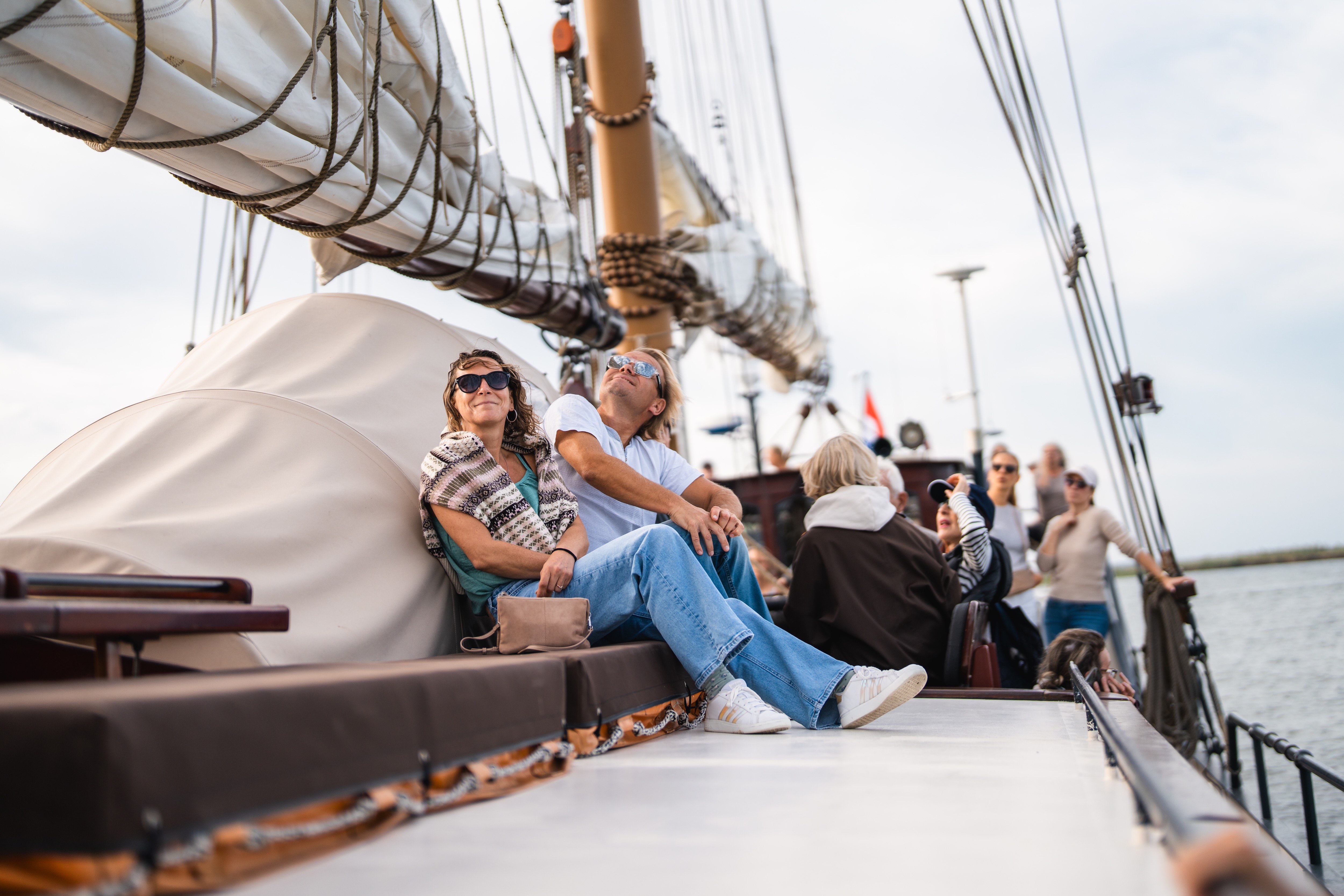
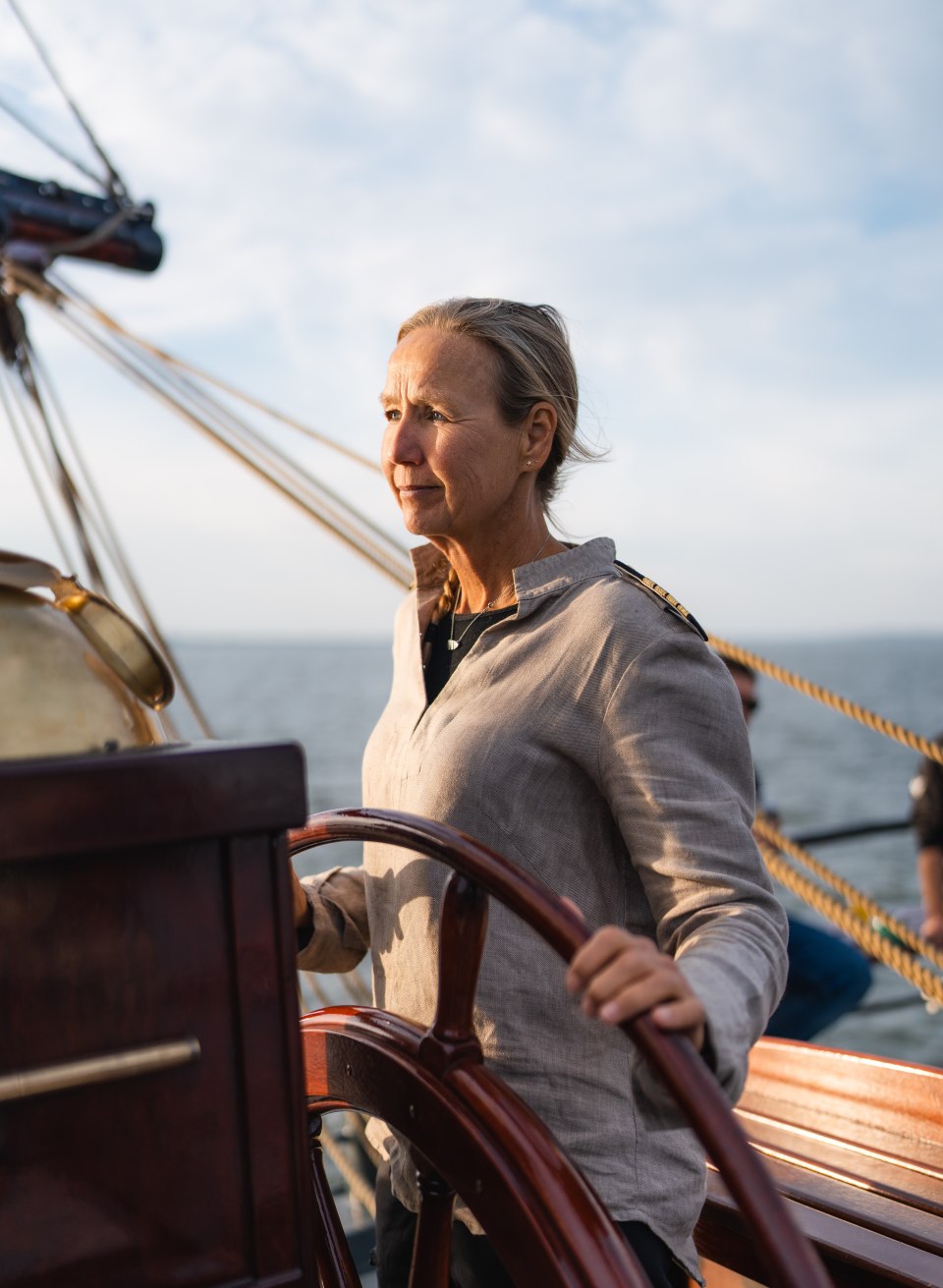
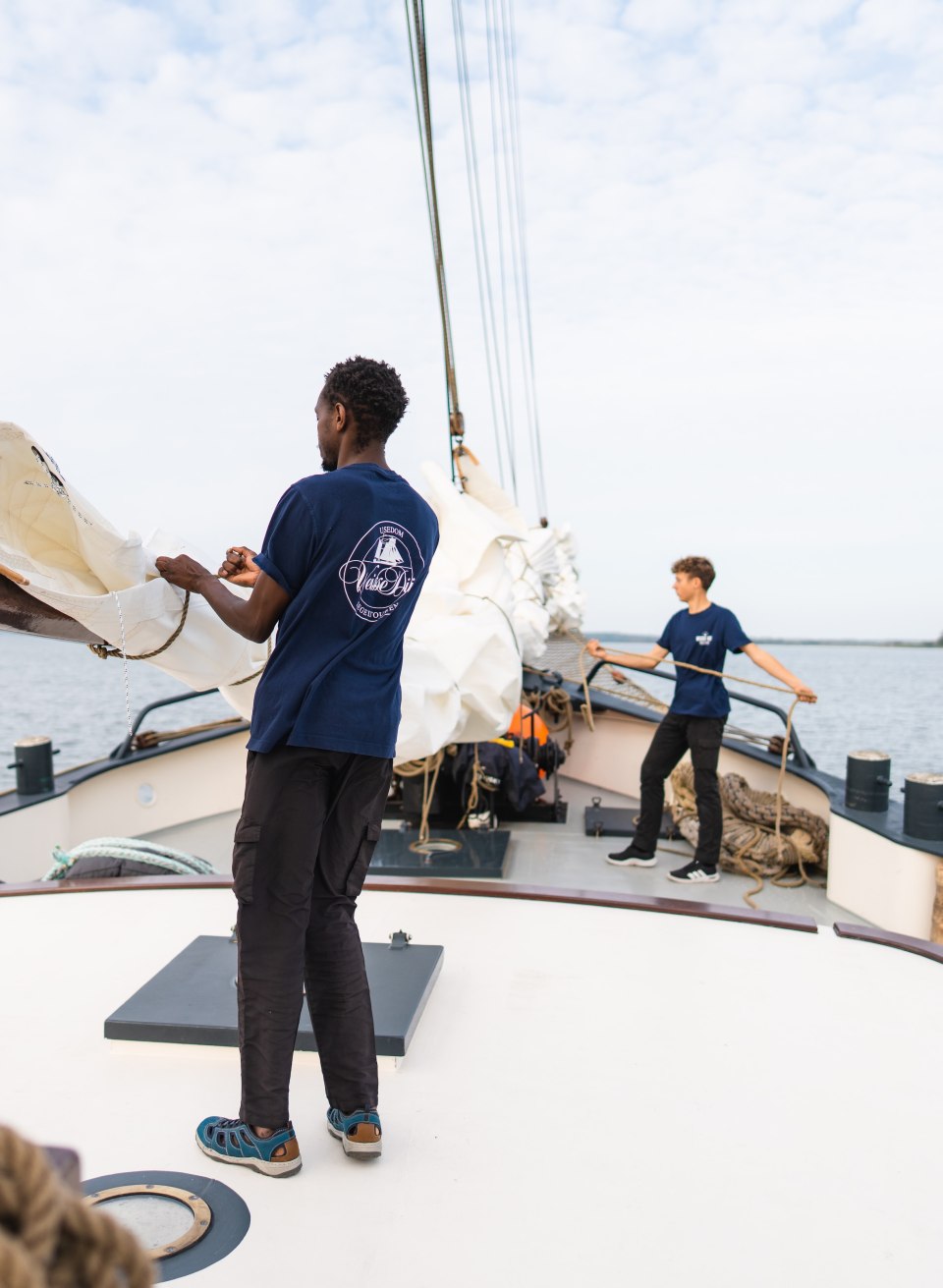
“Cast off!” calls Captain Jane Bothe, quickly making her way behind the large wooden steering wheel. The two trainees, Aeneas and Christopher, make sure the sail is in the correct position. Beforehand, they laid out the nautical charts, cleaned up, and held a team meeting with the crew below deck. Now, a few hours later, 45 guests are on board, looking up with anticipation.
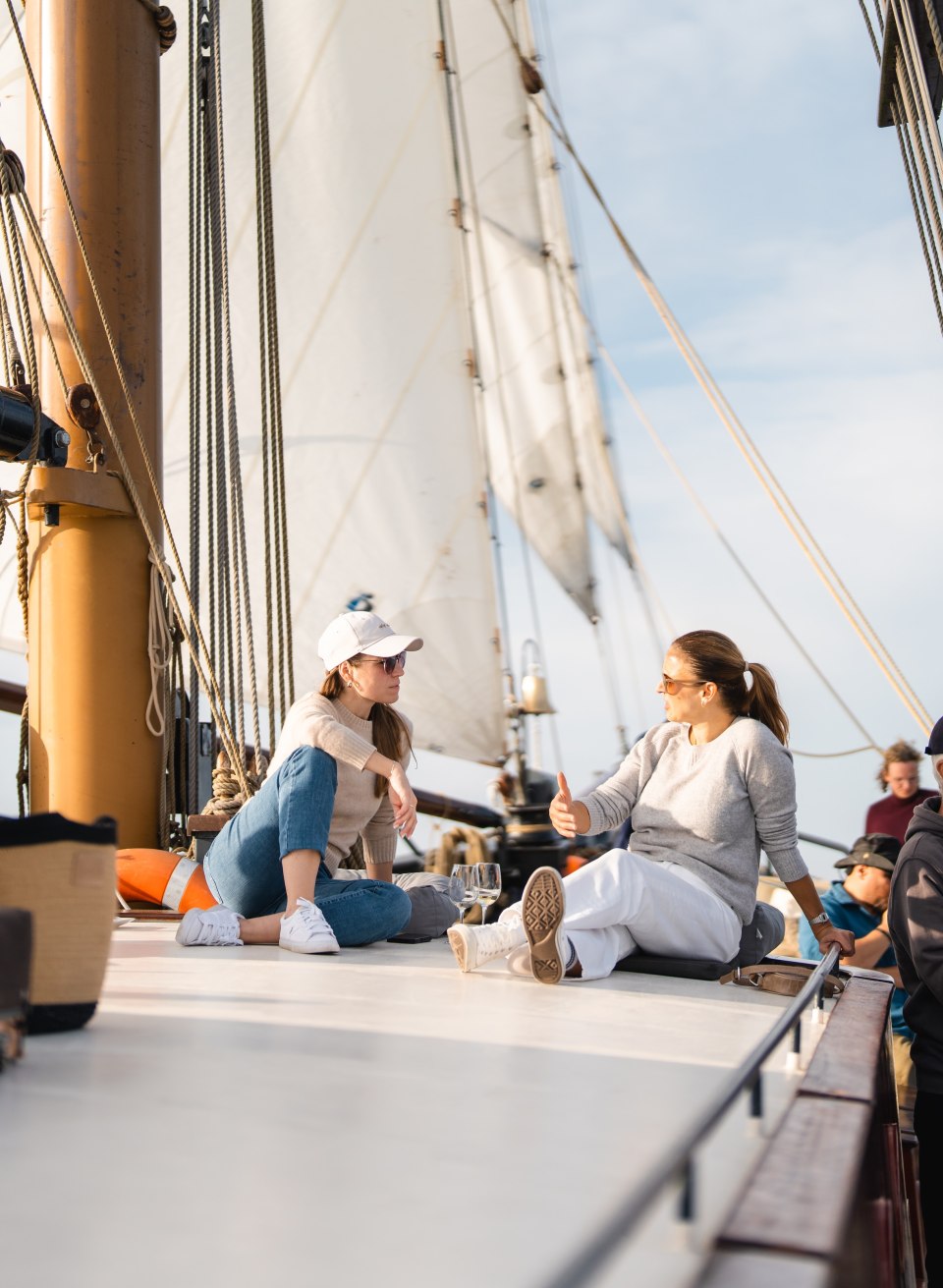
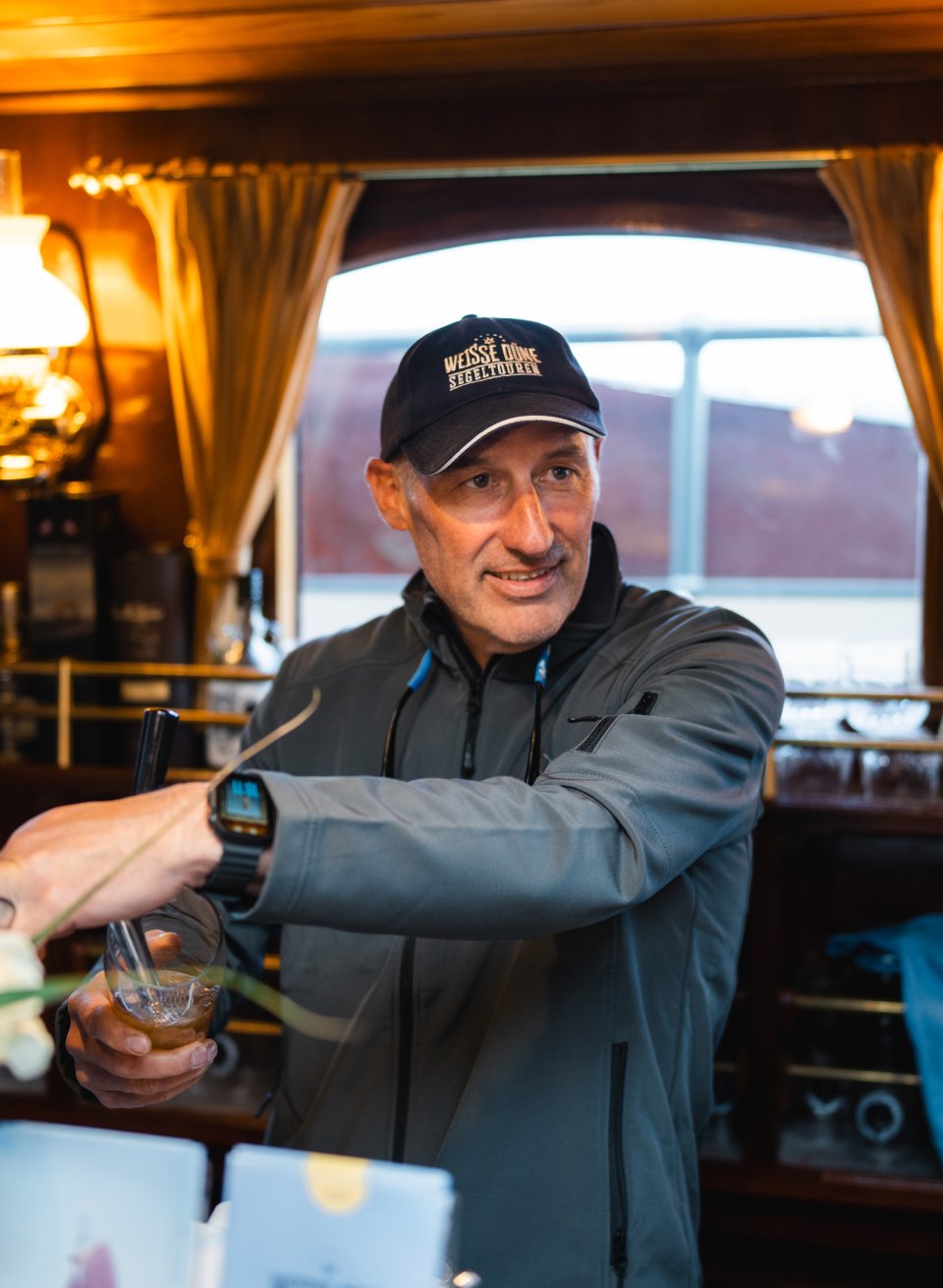
It’s one of the last late-summer days of the year, and the Weisse Düne is setting sail from Neppermin. “When a ship sets sail, so do the people,” says Detlef Bothe. He observes this on every trip: The guests come aboard and leave behind what weighs on them on land. “You can see it in their faces. And that fills me with gratitude.” Today’s guests are currently enjoying a welcome drink, finding their seats somewhere on the 45-meter-long ship.
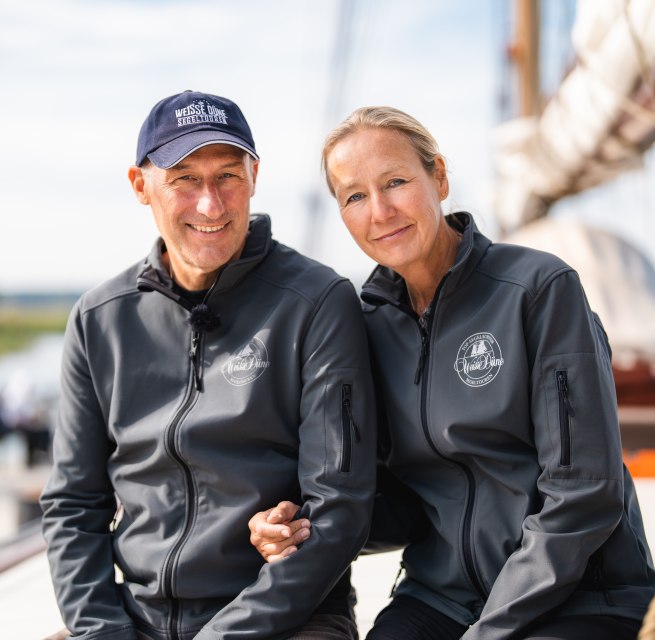
It all began in the Netherlands. At the age of thirteen, Jane saw women there at the helm, serving as captains. “I found that so fascinating that I wanted more of it.” And that’s exactly what she did. She now also leads workshops specifically to encourage women. She’s passed on her love of ships to her husband. But she didn’t have to do much to convince him. Even as newlyweds, the two of them shared a vision: “One day, we’ll own a ship together.”
From Cargo Ship to Passenger Ship
They trained together in the Netherlands on flat-bottomed boats and looked for a suitable area to sail. The Greifswald Bodden, with its shallow waters, was the perfect fit. They found their boat in the most classic way possible—while on vacation on Usedom. In Wolgast, they saw tall masts, “and when we see tall masts, we head right over there,” says Jane. It was the Weisse Düne. The two signed on, initially as employees, and later bought the ship. “We were looking for ships and didn’t realize we were already on the best one.” In 2007, Jane was hired there as captain; starting in 2011, she and her husband became co-owners. Jane took command, while Detlef handled operations.
The Weisse Düne has been around for 117 years. It used to be a cargo ship and is now a passenger ship—a vintage vessel with all its quirks. “It kind of does what it wants,” says Jane. Because of its shallow draft, the ship isn’t easy to steer. “You have to go with nature, not against it. That’s what fascinates me.” The tours take passengers across the Achterwasser, the Peenestrom, and the Greifswalder Bodden—sometimes lasting three and a half hours, sometimes nine, and sometimes several days all the way to Szczecin or Rügen. On board is a barrel from Jörn Schnapke’s Usedom Distillery, which continues to age in these local waters. “A unique feature of the Achterwasser is that this is where the 54th parallel and the 14th meridian intersect—exactly, without any decimal places,” Jane notes.
Matjes Sushi Under Sail
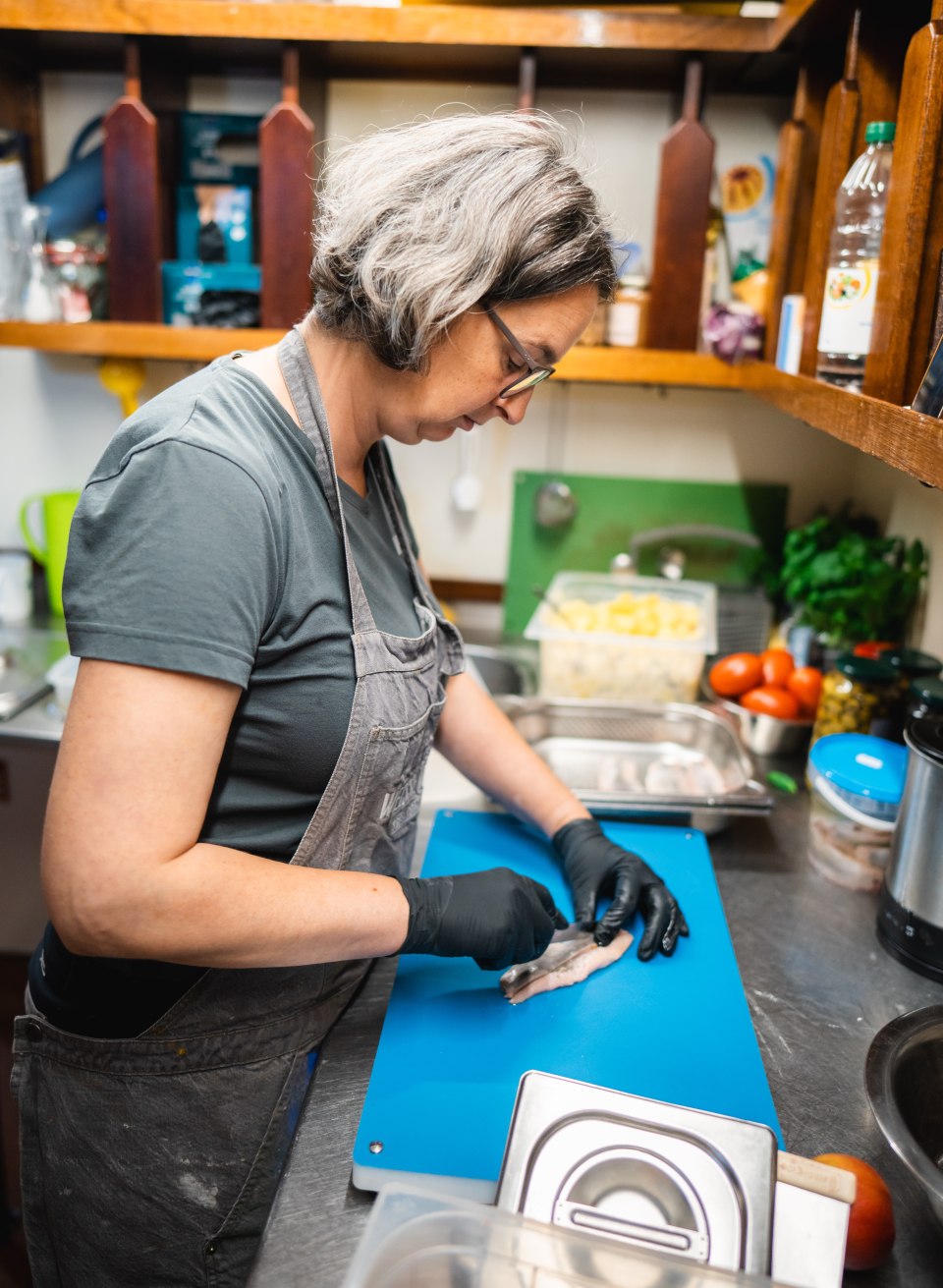
Below deck, Anika, a member of the crew, spent hours cooking today. The menu includes, among other things, potato salad made according to her grandmother’s recipe, homemade bread, meatballs, and matjes herring sushi with beets. “Sushi isn’t from Pomerania, but it just goes well together,” says Jane. “Life on a ship is always in motion—it’s never static. We try to reflect that in our cuisine.” For Detlef, the two go hand in hand: food and being on the water—both are good for people. They’ve developed and tasted everything that ends up on the plate themselves. Some ingredients come from regional suppliers, and they sometimes bring spices back from their long-distance travels. “When you know where a product comes from, it takes on a whole new value.”
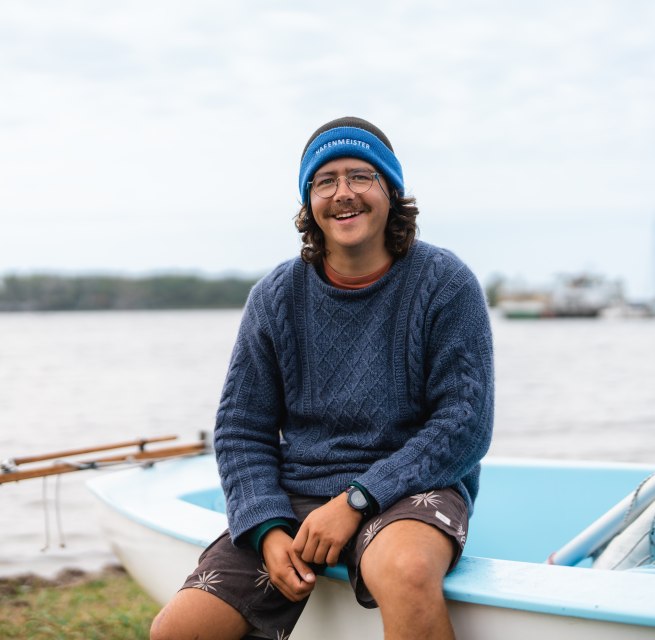
The two have now been married for 32 years. But wait a minute. Doesn’t all that closeness get annoying sometimes? Sailing a ship, living in a tiny space, working together? “Yes, but the annoyances are by no means the main issue,” says Jane. Detlef nods: That’s just part of it. But the most important thing they’ve learned comes from sailing: “On a ship, you have to stick together so everyone gets from A to B.” And that’s one of the things they want to pass on to their apprentices. The training is for inland waterway shipping; and the apprentices attend the Schiffer-Berufskolleg Rhein vocational school in Duisburg. During the week, the apprentices live on board. “It’s really like a little family,” says Jane.
With Sea Eagles on the Achterwasser
Out on the Achterwasser today, there’s hardly another boat in sight; the sun glistens on the water. “Almost no one dares to come in here,” says Jane. Only a few locals and a few lovers of silence are out on the water. The water sparkles green. Sometimes, Jane explains, you might even spot a white-tailed eagle here. Time and again, the guests move from the upper deck to the lower deck, grab more food—sushi and potato salad—then head back upstairs to gaze out at the water. Nowhere to be seen: faces staring at screens. That fits right in. Slowing down—that’s what the Bothes want their guests to take away: to lower their expectations and enjoy the moment. And what if it rains? Jane laughs. “Then you have to learn to love the ‘liquid sunshine’ too—and, of course, come back!”