Jasmund National Park

Largest beech forest on the Baltic Sea

Published: May 26, 2025

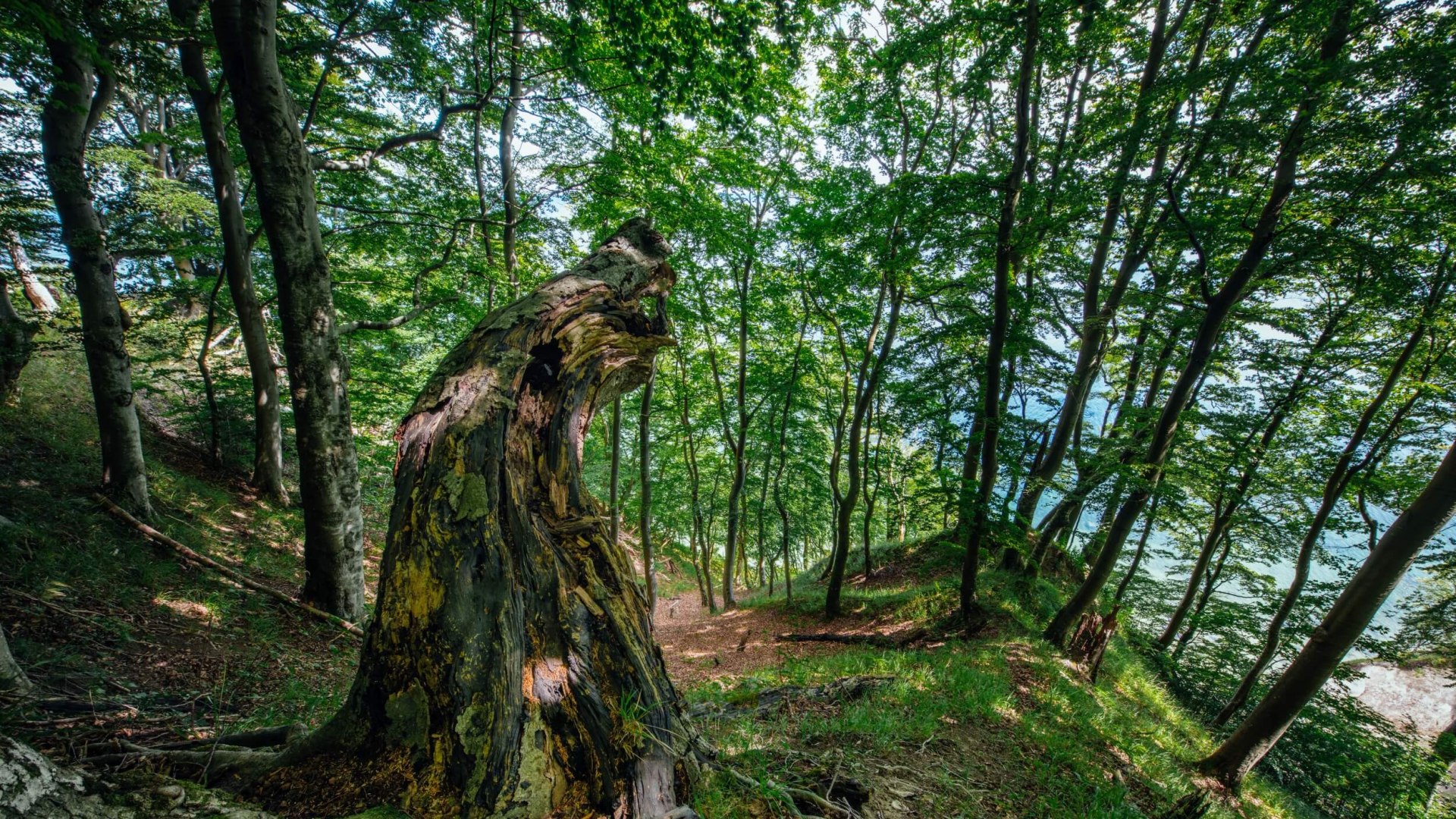
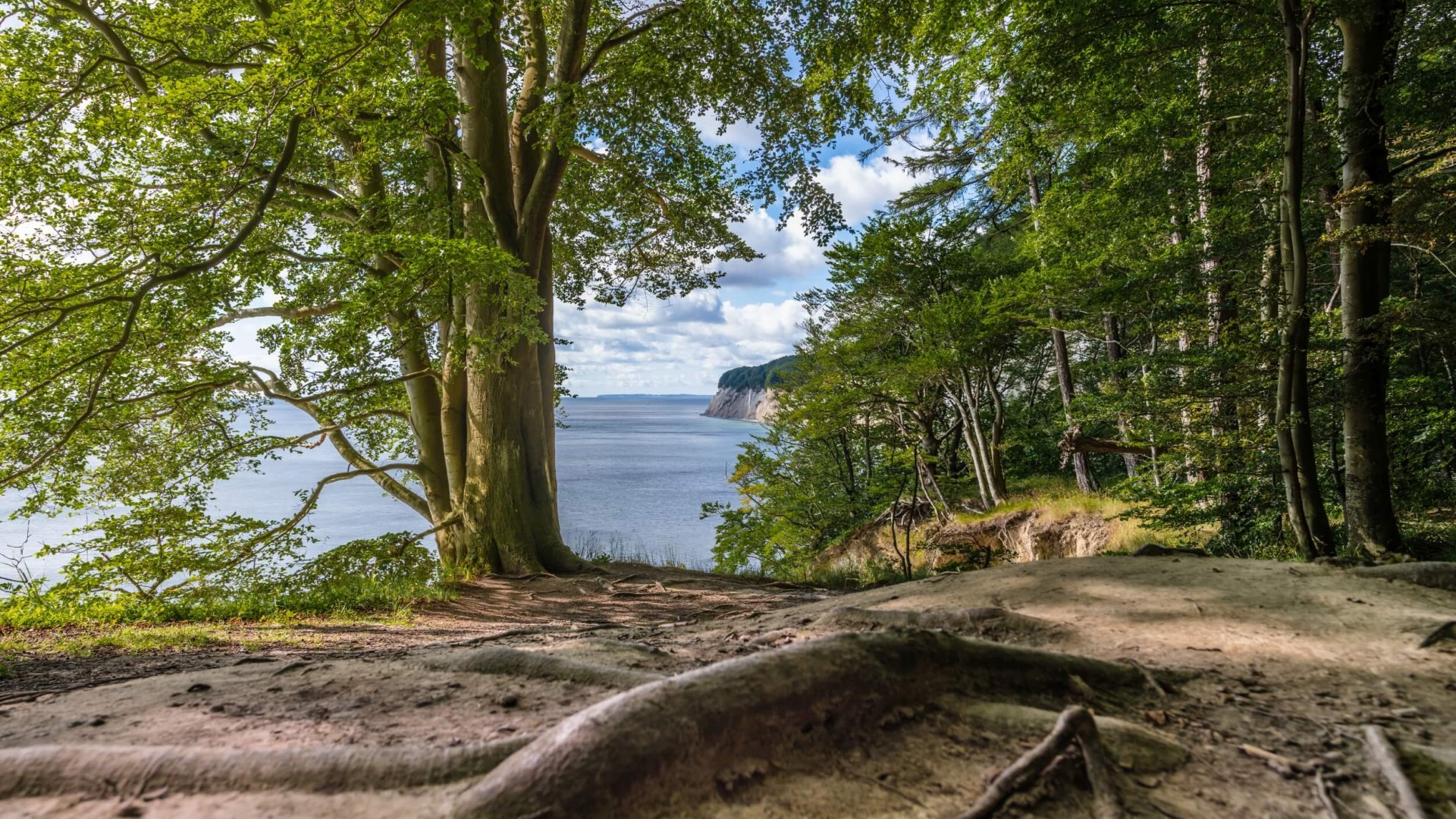
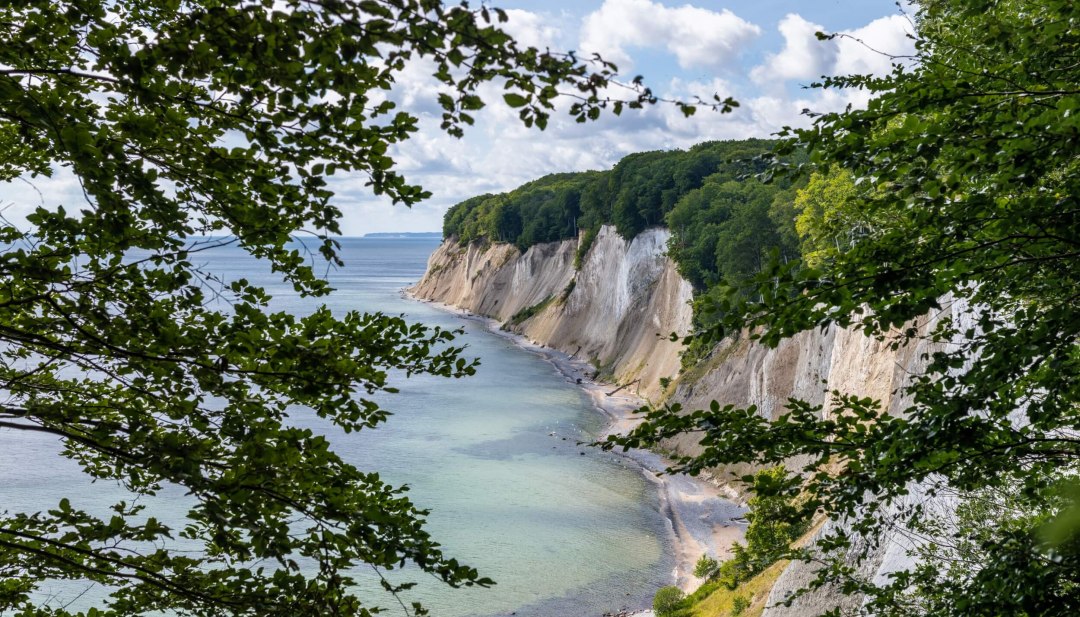
The beech forest on the chalk-white cliffs of Jasmund. The view goes along the coast with a view of the Baltic Sea
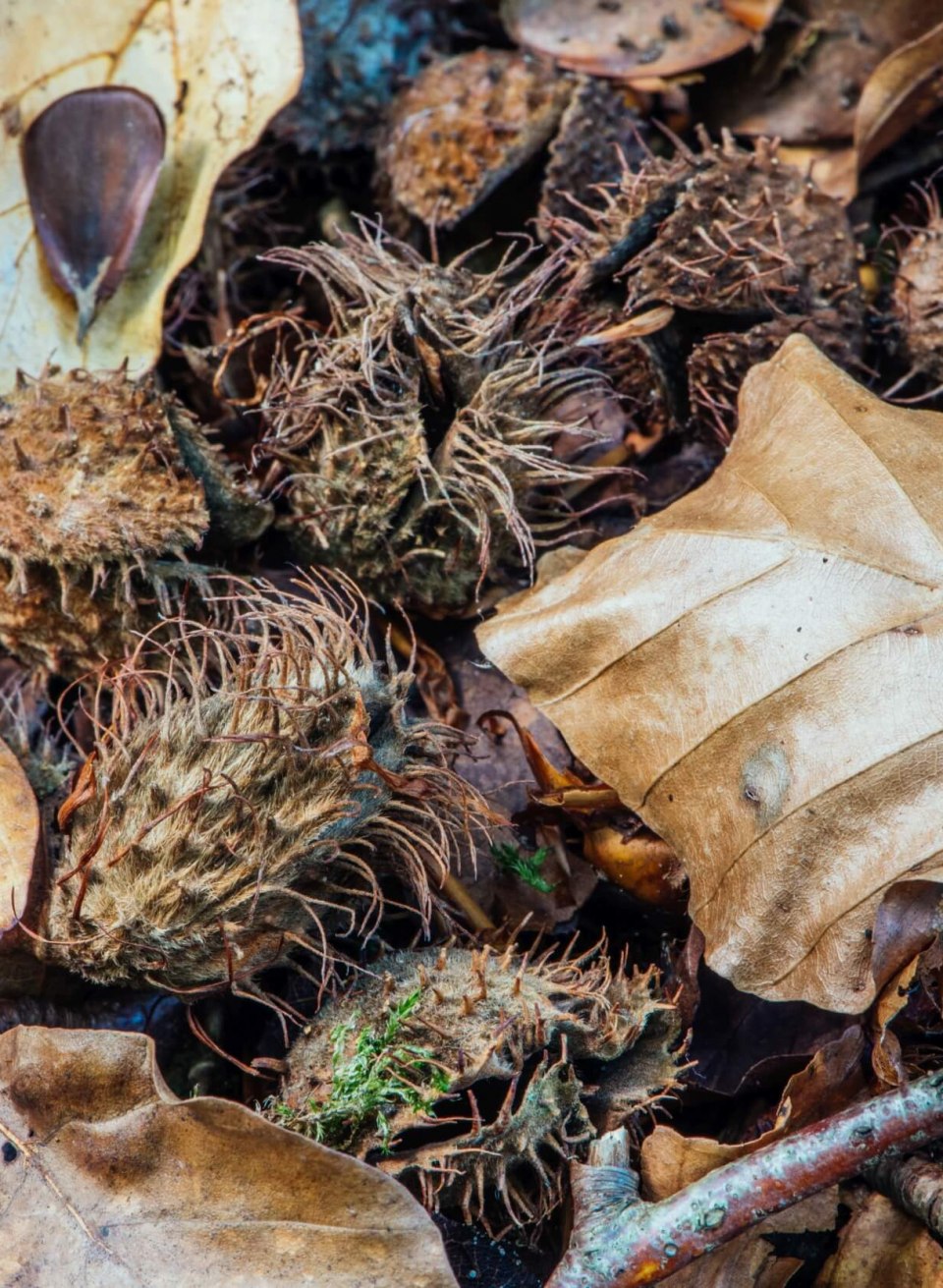
Beechnuts lie on the forest floor, fresh from the tree

The forest as a diverse habitat is more important than ever. It is important to know and understand them in order to preserve the old UNESCO beech forests. Dr. Stodian, head of the Jasmund National Park department, explains the different layers of the forest on the chalk cliffs on Rügen in Germany's smallest national park.

View through the forest to the chalk coast on Rügen.

Deadwood habitat

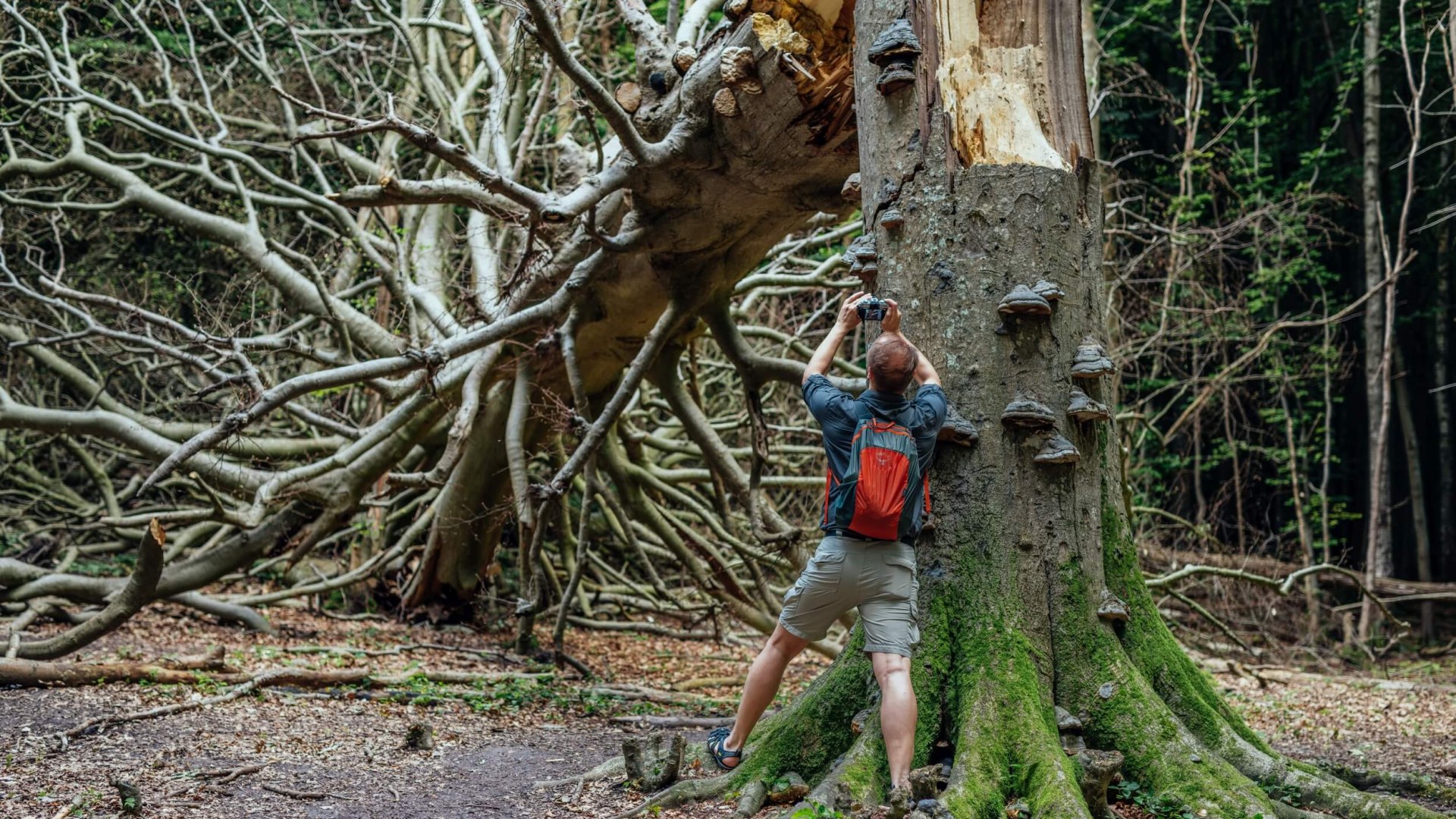
Because the Stubnitz is a national park, humans are not allowed to intervene. Stodian shows an uprooted giant tree. Behind it, a fox snorts through the grass. Frogs are croaking. Stodian knows exactly how important deadwood is for the forest: fungi decompose it, then moss and grass grow on it, and beetles take up residence. Deadwood also develops because the beech trees sometimes do not find enough support on the drier trees. The good thing about this is that it creates space for new forest communities to develop.

Beeches have been growing on Jasmund for 800 years. Beech forests were once the European primeval forest. But today they are rare. With over 650,000 trees, Jasmund has the largest contiguous beech forest in the entire Baltic Sea region. But the other protected areas in Mecklenburg-Western Pomerania - the Ivenack oaks, the Dar Forest and the primeval forest on the Peene River - are also magnificent cathedrals of nature.
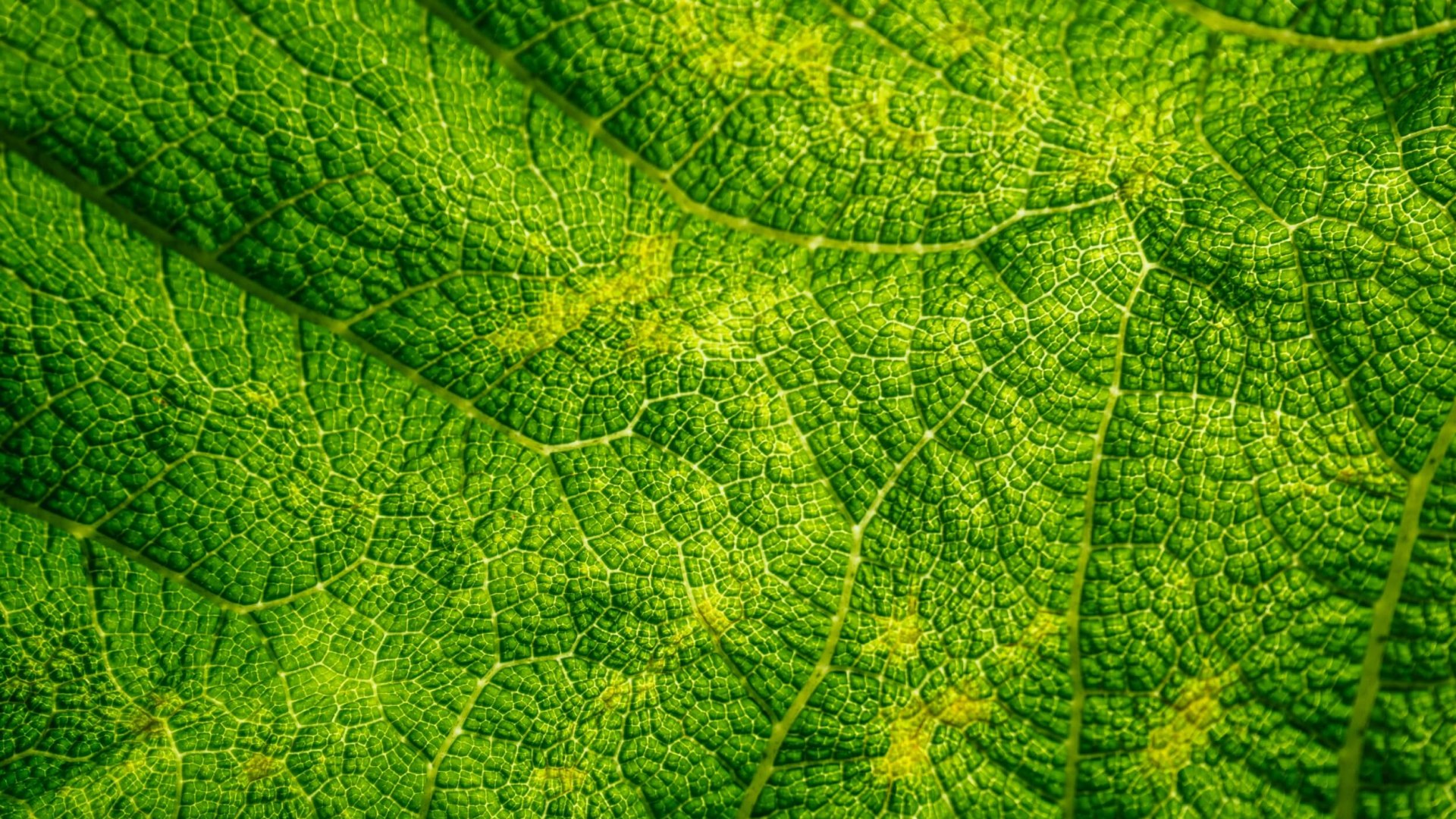
Die feinen Verästelungen eines Baumblatts im Detail // The fine ramifications of a tree leaf // © MV-T/Tiemann
The fine ramifications of a tree leaf
Not abstract art, but natural beauty. Fallen trees are also important for the survival of the Rügen beech forest. A very large fallen tree in the beech forest.
Not abstract art, but natural beauty. Fallen trees are also important for the continued existence of the Rügen beech forest.
View through the beech forest in the Jasmund National Park and behind it the steep coast of the island of Rügen.
Stubnitz is the name of the large beech forest in the Jasmund National Park, directly on the Baltic Sea coast of Rügen.

The experience centers show what makes nature tick

Nature experience tips at a glance

29 results

  • A stunning cliffside landscape with white chalk cliffs, densely forested slopes, and the sea in the foreground. // © Nationalpark-Zentrum KÖNIGSSTUHL / Dan Petermann

    KÖNIGSSTUHL National Park Center

    • Open today
    • Stubbenkammer, 18546 Sassnitz

    Right next to the famous Königsstuhl chalk cliffs and the UNESCO World Heritage Old Beech Forests, the KÖNIGSSTUHL National Park Center offers a special nature experience for the whole family, whatever the weather. A world full of secrets is waiting to be discovered on 2,000 square meters of exhibition space and 28,000 square meters of outdoor area - multilingual and barrier-free.

    Read more: "KÖNIGSSTUHL National Park Center"
  • © Evelin Kartheuser

    Karower Meiler Culture and Information Center

    • Open today
    • Ziegenhorn, 19395 Plau am See

    The central contact point for nature lovers and guests of the Nossentiner/Schwinzer Heath Nature Park is the Karower Meiler Culture and Information Center. In addition to a permanent exhibition on the development of this cultural landscape since the last cold period, five to six special exhibitions by artists and photographers on topics of nature and landscape are shown annually.

    Read more: "Karower Meiler Culture and Information Center"
  • Modern museum architecture meets Hanseatic heritage: the Ozeaneum at Stralsund harbor merges with historic brick buildings and sailing ships to create a unique silhouette. In the evening light, the UNESCO World Heritage city glows in warm tones. Here you can experience maritime history up close - from the museum deck to the harbor promenade. // © Francesco Carovillano

    OZEANEUM Stralsund

    • Open today
    • Hafenstraße, 18439 Stralsund

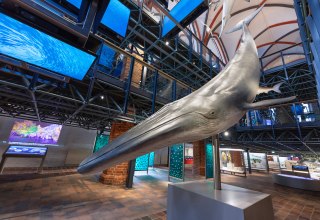
    With its five exhibitions and 46 aquariums, the OZEANEUM Stralsund invites you on an extraordinary underwater journey beneath the northern seas. Visit Humboldt penguins on the roof terrace, "Niki" the female sand tiger shark in the 2.6-million-litre pool "Open Atlantic" and the giants of the sea - real life replicas of whales.

    Read more: "OZEANEUM Stralsund"
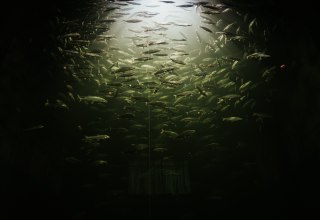
  • underwater vendace swim through the water, light refracts on the surface and bathes the shoal in a mystical green. At the Müritzeum in Waren (Müritz), you can experience the underwater world of the Mecklenburg Lake District up close - a fascinating glimpse into hidden worlds. // © 1000seen.de

    MÜRITZEUM - The NatureExperienceCenter in Waren (Müritz)

    • Open today
    • Zur Steinmole, 17192 Waren (Müritz)

    The Müritzeum shows the beauty and special features of the Mecklenburg Lake District and the Müritz National Park in an interactive exhibition. In Germany's largest aquarium landscape for native freshwater fish, you dive under the water surface of the 1000 lakes.

    Read more: "MÜRITZEUM - The NatureExperienceCenter in Waren (Müritz)"
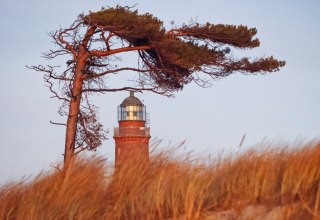
  • The Darss west beach is adorned by a lighthouse, which is part of the NATUREUM. // © Anke Neumeister/Deutsches Meeresmuseum

    NATUREUM and lighthouse Darßer Ort

    • Open today
    • Darßer Ort, 18375 Born am Darß

    The NATUREUM as a natural history museum in the National Park of "Vorpommersche Boddenlandschaft" is located on the peninsula Darß near Prerow directly at the accessible lighthouse Darßer Ort and is one of several locations of the German Oceanographic Museum. Here, the diversity, dynamics and need for protection of the unique Darß landscape are presented in particular.

    Read more: "NATUREUM and lighthouse Darßer Ort"
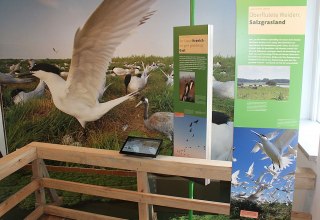
  • Exhibition on Birds and Their Feathers // © Wiebke Döbbert

    Nationalpark-Information Schwarzenhof

    • Open today
    • Schwarzenhof, 17192 Kargow

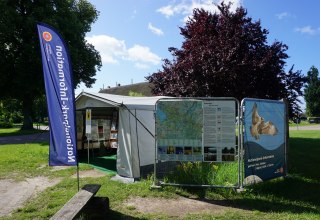
    The small farm village of Schwarzenhof has a national park information center featuring a photo exhibition.

    Read more: "Nationalpark-Information Schwarzenhof"
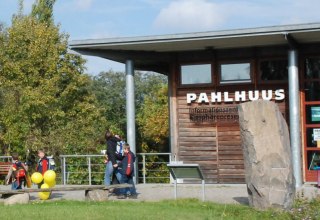
  • Das PAHLHUUS ist das Informationszentrum des Biosphärenreservates Schaalsee // © PAHLHUUS/Dornblut

    “PAHLHUUS“ – Visitor centre of the UNESCO biosphere reserve “Schaalsee“

    • Open today
    • Wittenburger Chaussee, 19246 Zarrentin am Schaalsee

    Welcome to the PAHLHUUS, the visitor centre of the UNESCO biosphere reserve „Schaalsee“. We are happy to inform you about touristic offers and show you the most beautiful places in the biosphere reserve. Extraordinary insights into nature and landscape of the region await you in an interactive exhibition.

    Read more: "“PAHLHUUS“ – Visitor centre of the UNESCO biosphere reserve “Schaalsee“"
  • Die Nationalpark-Information des Müritz-Nationalparks in Federow // © Nationalpark-Information Federow

    National park visitor centre in Federow

    • Open today
    • Damerower Straße, 17192 Federow

    The Müritz National Park: famous for its sea-eagles, ospreys and thousands of rabbits that rest here in the autumn and spring.

    Read more: "National park visitor centre in Federow"
  • © Katrin Köppen

    National park house on Hiddensee

    • Open today
    • Norderende, 18565 Vitte/Hiddensee

    "Veränderung" (change) is the title of the exhibition in the visitor information centre of the National Park “Vorpommersche Boddenlandschaft” and hardly anything could be more appropriate for the island of Hiddensee, which is constantly growing and changing due to the forces of nature.

    Read more: "National park house on Hiddensee"
  • Here you'll find information about the national park and the Havel region. // © Barbara Lüthi Herrmann

    Visitor centre “Flatterhus Kratzeburg“

    • Open today
    • Dorfstraße, 17237 Kratzeburg

    The visitor information centre called “Kratzeburger Flatterhus“ houses an exhibition about the mysterious hunters of the night: the bats.

    Read more: "Visitor centre “Flatterhus Kratzeburg“"
  • Visitor information centre of the Nature Park “Sternberger Seenland“

    • Open today
    • Am Markt, 19417 Warin

    The visitor information centre in Warin is the ideal starting point in order to inform oneself about the different destinations and experiences the nature park offers. One can learn something about the landscape’s formation and the way the human’s occupation influenced its development. The unique flora and fauna of the nature park greatly fascinate the visitors. Borrow a backpack at the visitor centre and discover the nature park in your own way.

    Read more: "Visitor information centre of the Nature Park “Sternberger Seenland“"
  • Im Westportal der Kirchenhalle empfängt die imposante multimediale Inszenierung einer Jagd auf einen Sardinenschwarm die Gäste. // © Anke Neumeister/Deutsches Meeresmuseum

    SEA MUSEUM Stralsund

    • Open today
    • Bielkenhagen, 18439 Stralsund

    The MEERESMUSEUM in Stralsund's old town is currently closed. The museum is expected to open in 2024 after extensive modernization work.

    Read more: "SEA MUSEUM Stralsund"
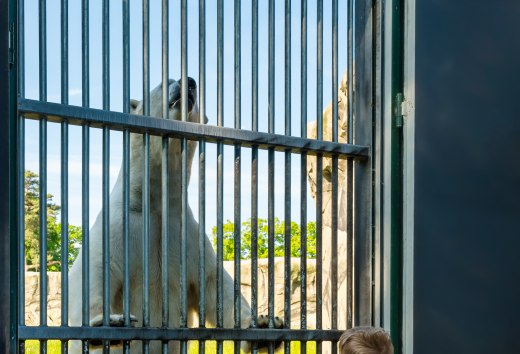
  • The brown bear sits calmly on the meadow, its thick fur glistening in the light that falls through the treetops. In the Müritz Bear Sanctuary near Stuer, rescued bears find a species-appropriate home in 16 hectares of forest. Here you can observe how the animals live in their natural rhythm - a touching nature experience. // © 1000seen.de

    BÄRENWALD Müritz

    • Open today
    • Am Bärenwald, 17209 Stuer

    Brown bears – all of which came from improperly kept habitats – live in Western Europe’s largest bear sanctuary in the Mecklenburg Lakes. It is open all year round!

    Read more: "BÄRENWALD Müritz"
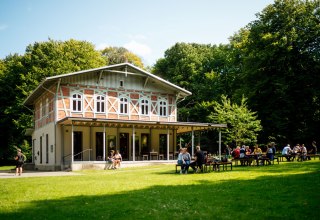
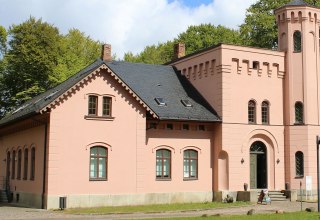
  • A bright building with a terrace, in front of which several people are sitting on benches on a green lawn. // © Nationalpark-Zentrum KÖNIGSSTUHL / Dan Petermann

    UNESCO World Heritage Forum

    • Open today
    • Waldhalle, 18546 Sassnitz

    The hiking base near the port town of Sassnitz on the island of Rügen is dedicated to the UNESCO World Natural Heritage idea. Nature lovers can learn about the phenomenon of ancient beech forests here or simply linger in the greenery, fortify themselves and unwind.

    Read more: "UNESCO World Heritage Forum"

Content is loaded

Content is loaded

Content is loaded

back