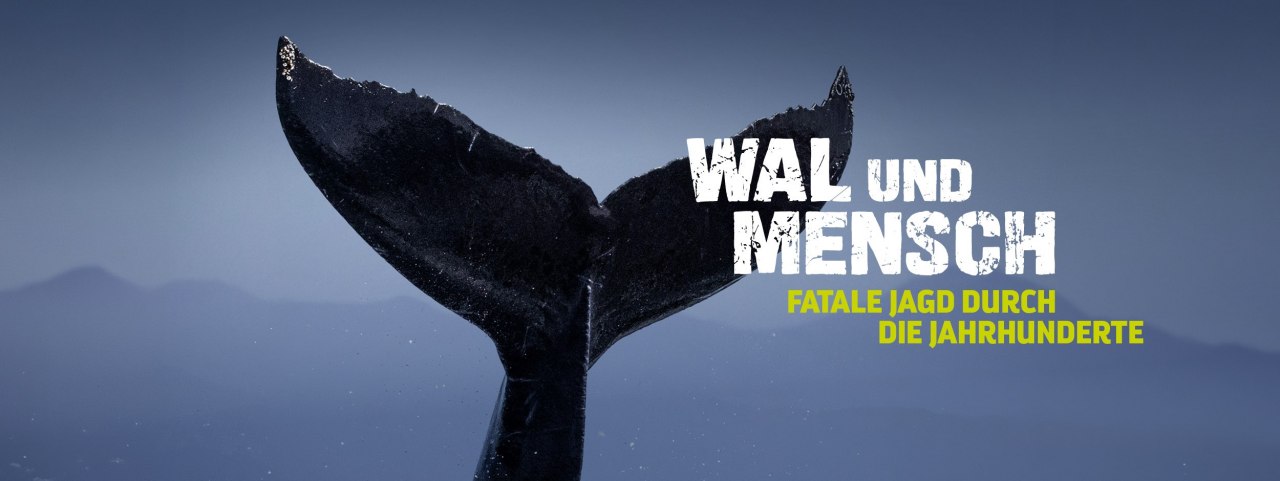
From hunting to protecting the giants of the seas: The special exhibition “Whales and Humans” explores the complex relationship between humans and whales over thousands of years—from the history of whaling to the whales’ importance to marine ecosystems and their portrayal in literature and culture.
Whales are among the most fascinating creatures on Earth and have captivated people for millennia. Reports of these massive marine mammals date back as far as the 4th century B.C. For many centuries, the relationship between humans and whales was primarily shaped by hunting, exploitation, and economic interests. Today, the focus is increasingly on their protection and their importance to marine ecosystems.
The special exhibition “Whales and Humans” explores this complex relationship. Historical artifacts, models, and other exhibits show how whaling was practiced over the centuries, how the animals were utilized, and what consequences intensive hunting had for whale populations. At the same time, the exhibition traces the shift from commercial exploitation toward a growing awareness of whale protection and conservation.
Rostock, too, is linked to the history of whaling. In the mid-19th century, sailors from Rostock sailed as far as Greenland aboard the whaling ships FLORA and POLARSTERN. In the 1950s, the whaling mother ship JURI DOLGORUKI was also built in Rostock.
Another focus is on depicting the relationship between humans and whales in literature and culture. Herman Melville’s world-famous novel “Moby Dick” plays a special role in this context. To accompany the exhibition, a theater project is being developed in collaboration with the Rostock University of Music and Drama.
Exhibits from the collections of the Rostock Maritime Museum, as well as items on loan—including some from the Stralsund Maritime Museum—illustrate the history of whaling and the use of whales, right up to the current conservation efforts for the Earth’s largest mammals.