of the fishing fleet A report on everyday life, travel and experiences on the high seas
Between 75° North and 25° South: Adventures of a Sassnitz fisherman in the fishing fleet
A reportage about everyday life, travel and experiences on the high seas
This exhibition takes you on an exciting documentary from the polar waters to the south of Africa, told from the slide perspective of Sassnitz fisherman Joachim Blumenthal, who was part of the fishing fleet in the Sassnitz fish combine. Immerse yourself in stories of voyages, challenges and everyday life on board.
Joachim Blumenthal (born 1955) Joachim Blumenthal began his career in the Saßnitz fishing combine in the early 1970s. After leaving school, he completed an apprenticeship as a ship fitter from 1971 to 1973. He embarked on his first voyage as an apprentice on the auxiliary vessel "Karl Marx" in December 1972. After completing his apprenticeship, he sailed on the FT "Kattegat" as an engine assistant. FT stands for freezer trawler - large deep-sea fishing vessels with their own freezing facilities that processed and deep-froze the catch directly on board.
There were different types of fishing vessels in Saßnitz, but the freezer trawlers formed the backbone of the Fischkombinat's global fishing fleet. After his time in the army in Prora (1974-1975), he was trained and commissioned as a refrigeration engineer on the FT "Großer Belt". The men working on the refrigeration systems were respectfully called "polar bears" on board. At the age of just 22, he was awarded a C2 technical officer's certificate, making him one of the youngest technical ship's officers in the Saßnitz fish combine. As a technical officer for refrigeration systems (TOK), he worked in various areas, including off Mozambique, in the Barents Sea, Scotland and Ireland. He took part in the so-called Pimarda mission several times, most recently as 1st Technical Officer. He left the GDR in 1989.
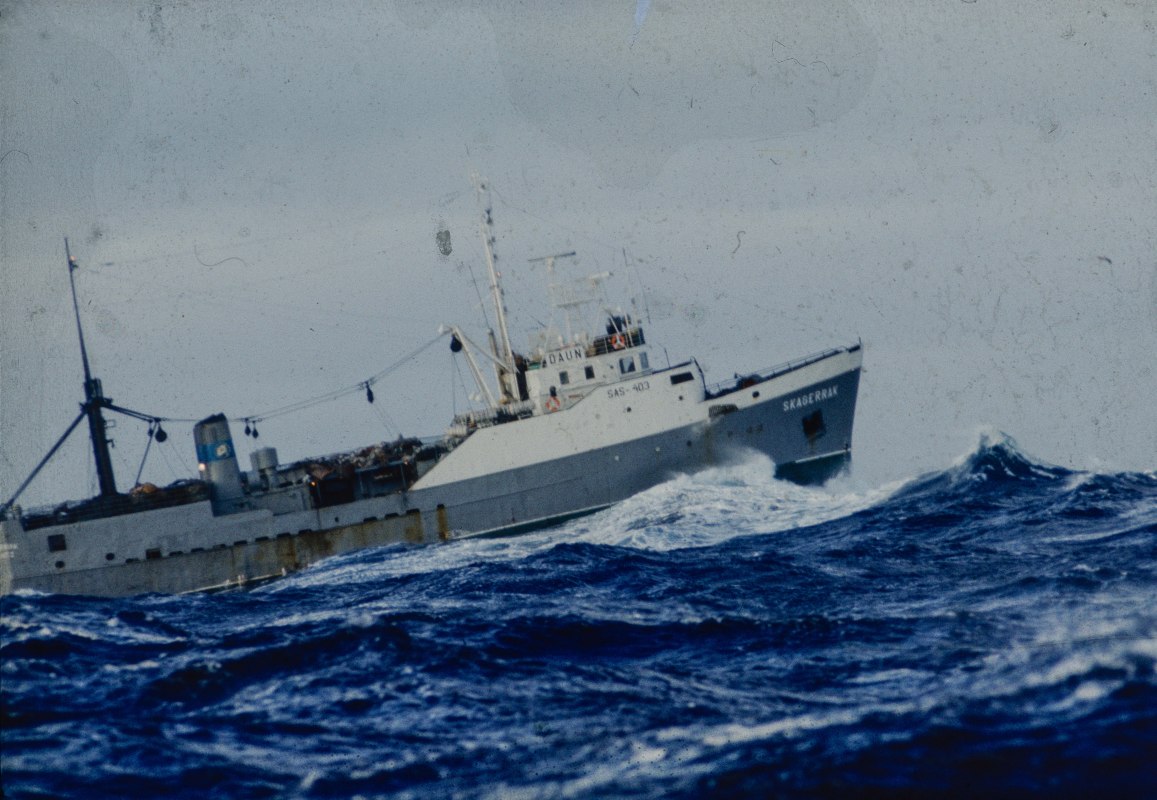
After further studies and obtaining a patent as a marine engineer, he continued his career in international merchant shipping - on refrigerated ships ("banana hunters"), special dock ships (Baco liners) and container ships, most recently as Chief. He had to end his seafaring career prematurely for health reasons. The photographs shown here tell of a time when the frost trawlers set out from Sassnitz for distant fishing grounds - weeks and months underway, heading for the Barents Sea, the Atlantic or the coast of Africa. They show work below deck, ice on the bulwarks, engine noise and camaraderie. Much has changed. The large fleet is history. But the port has remained. Anyone who has ever sailed from here still goes back there first. You stand on the quay, look out over the water - and remember where you came from. Anyone who has been to sea here carries it with them - the sound of the winds, the smell of diesel and salt, the first light over the pier. So these images are not just memories of ships and missions, but of an attitude to life that originated in Sassnitz - and which can still be felt today when you look down on the harbor from the town.