Reading & Discussion | Moderator: Ulrika Rinke (Literaturhaus Rostock)
1983: Wanda Karłowska, a young Polish psychologist, travels to Venice to interview Henryk Mrugalski, who is living there in exile, about his research. Or is it an interrogation in which Mrugalski—once a Gulag prisoner, later a collaborator—shirks responsibility? Nawrat’s novel takes us deep into recent European history—even beyond the sphere of influence of the SED. For throughout the entire Eastern Bloc, people were familiar with a reality of multiple truths—their own stories of perpetrators and victims, which persist within them, playing hide-and-seek with one another and from one another. Nawrat follows two generations on their journey toward the questions that human existence poses to us: To whom do we grow close? How can we live responsibly? When history and bureaucracy determine our fate, how are happiness and morality connected?
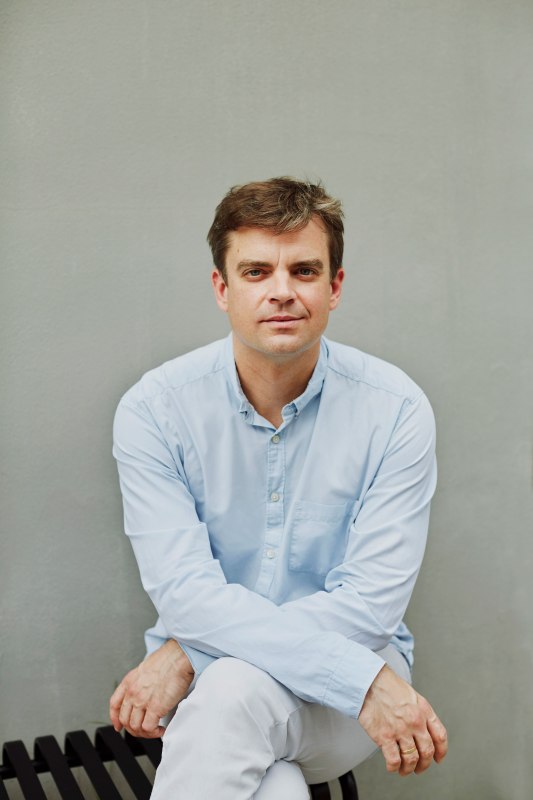
Matthias Nawrat, born in Opole, Poland, in 1979, emigrated to Bamberg with his family at the age of ten and now lives in Berlin. His work has received numerous awards, including the Alfred Döblin Medal, the European Union Prize for Literature, and the 2023 Fontane Prize for Literature.