A Tour of the Exhibition with Dr. Magdalena Schulz-Ohm
What opportunities did a woman have in the 1920s to pursue her art, and what opportunities did a man have? This question is at the heart of the exhibition and takes us deep into a story of unequal opportunities, political persecution, and artistic courage.
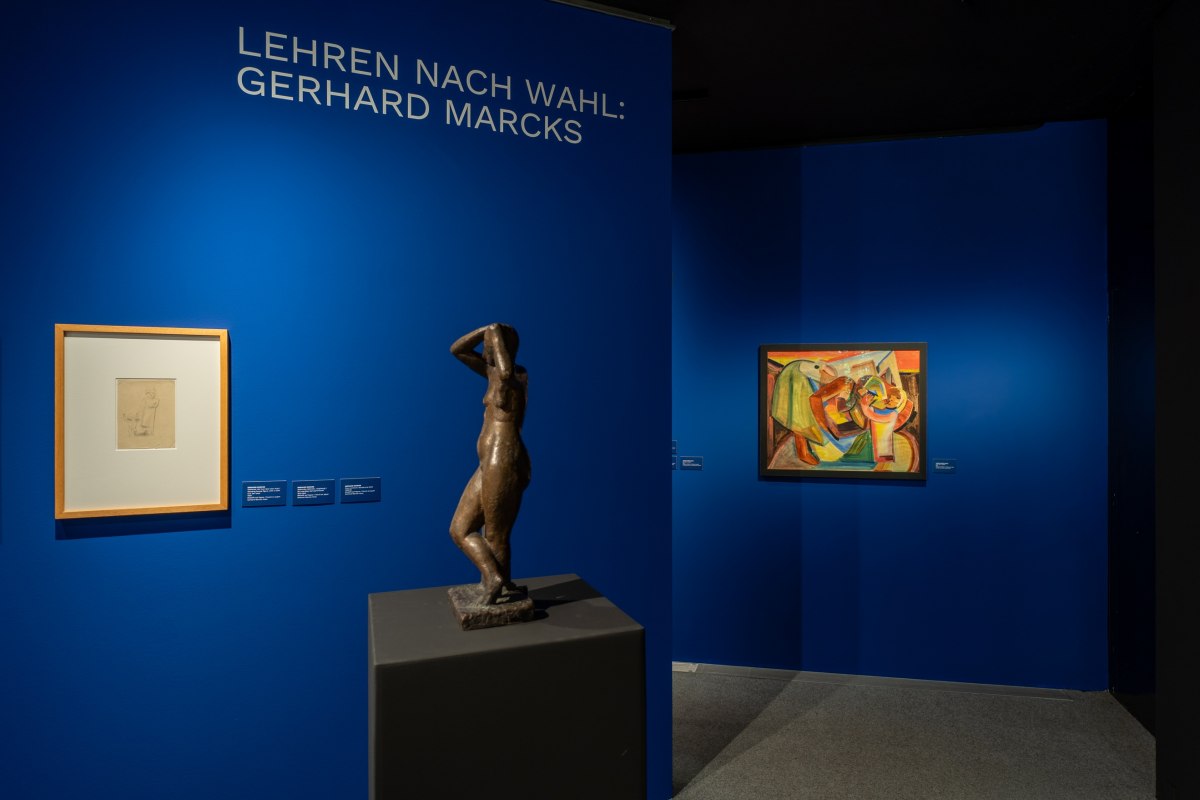
Johanna Schütz-Wolff (1896–1965) and Gerhard Marcks (1889–1981) both taught at the renowned Burg Giebichenstein University of Art and Design in Halle—and yet their paths could hardly have been more different. Marcks was entrusted with the sculpture department, while Schütz-Wolff was tasked with establishing the textile class, even though she had no experience in weaving. She held her ground nonetheless and found her own ways to realize her artistic vision. The National Socialists’ art policy hit both of them hard: Marcks’ work was ostracized as “degenerate,” while Schütz-Wolff destroyed 13 of her early tapestries in a single night—out of fear of persecution.
Curator Dr. Magdalena Schulz-Ohm will guide visitors through the exhibition and discuss role models and resistance, what art means under pressure, and two artists who sought artistic freedom in different ways.