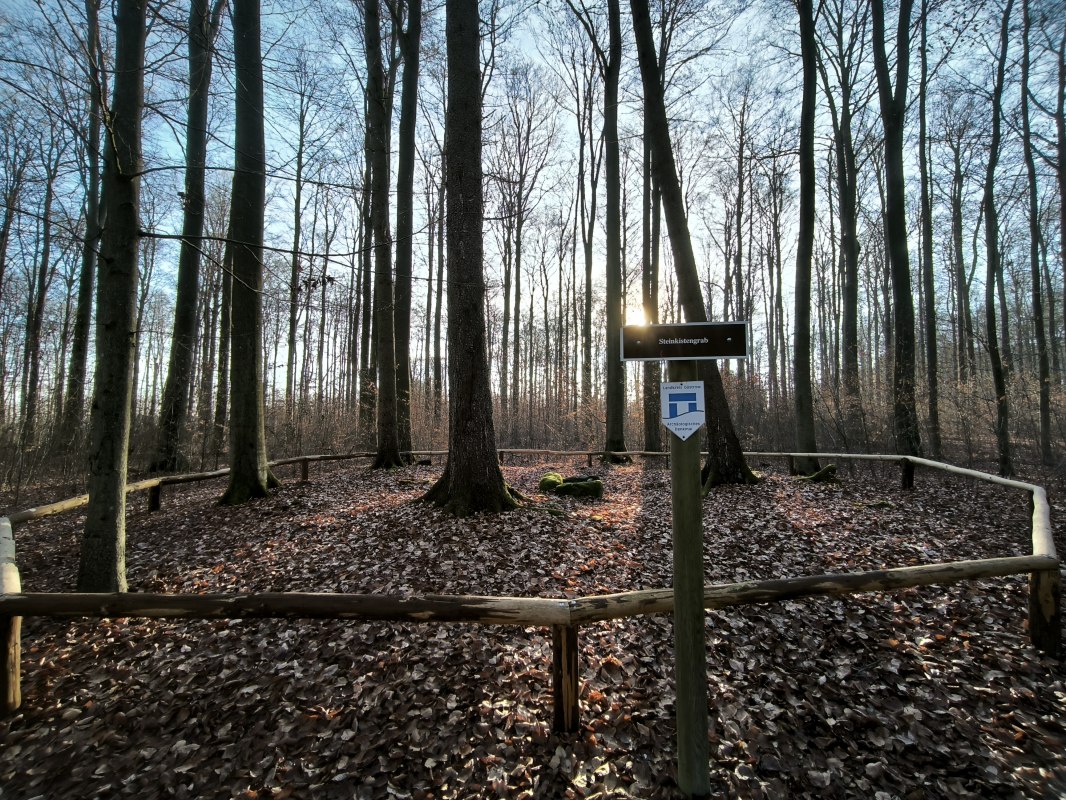

Burial site from the Neolithic period around 3000 BC.
The cultivation of crops and livestock in the Neolithic period also marked the beginning of a sedentary lifestyle. The treatment of the dead also changed. From then on, burials took place either in simple earth graves or in specially constructed earth mounds with stone chambers.
Remains of such a stone chamber were discovered in 1902 by woodcutters in the Hohes Holz hiking area near Teterow. The stone chamber was surrounded by a mound 18 m long and 7 m wide. The chamber's capstone was already missing. Shards of clay vessels were found during the investigation.
In 2004, the site was scientifically re-examined and restored. The exact position of the stones could be determined on the basis of the traces left behind. The entrance to the chamber, which was only 80 x 100 cm wide, was via a flat stone at the western end that is missing today. This allowed the bones of the deceased to be laid there.