The concert presents Palestrina's masterpieces and their formative influence on church music from the Renaissance to the present day.
Giovanni Pierluigi da Palestrina: Icon of sacred music and master of counterpoint
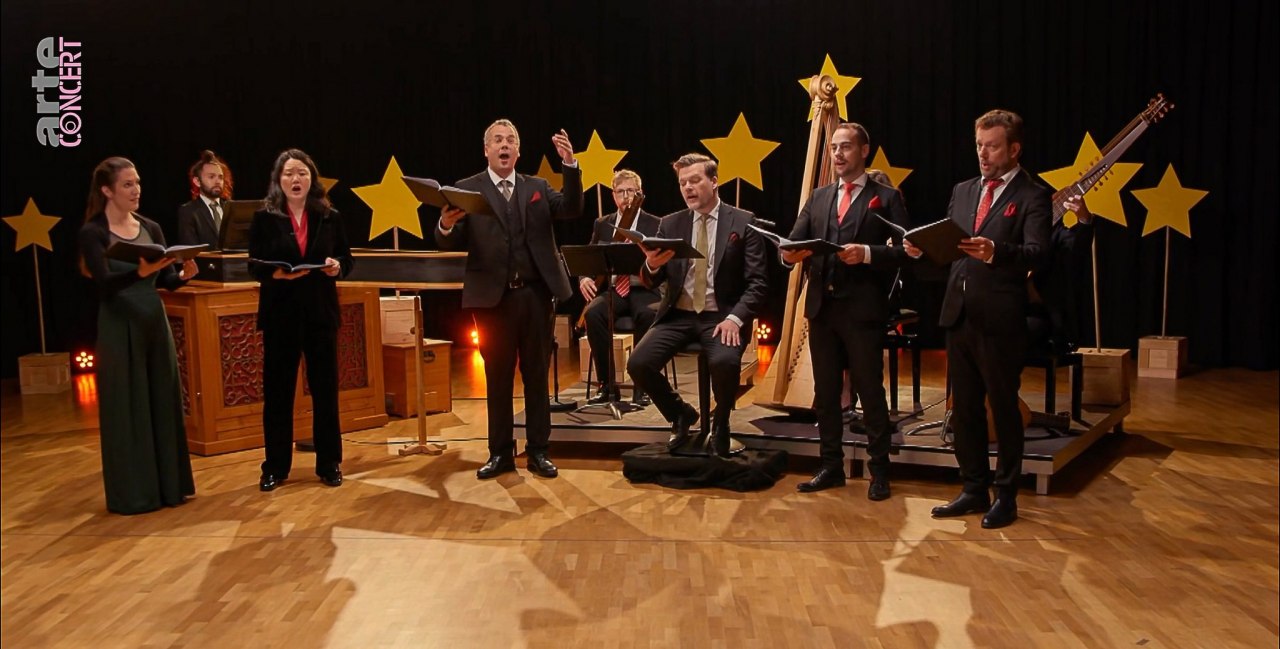
The Ensemble Polyharmonique from Berlin, known from television, numerous CDs and videos, dedicates its concerts to the legendary composer Palestrina
Giovanni Pierluigi da Palestrina is considered one of the most important composers of the Renaissance and is often referred to as the "savior of church music". In 2025, the music world will celebrate the 500th anniversary of his birth. No other composer of his time created vocal music that so masterfully combines text comprehensibility, clarity and sensual beauty - and continues to inspire to this day. Even the Romantics saw in him a supernatural greatness: E. T. A. Hoffmann spoke of chords that fell "like dazzling rays", Richard Wagner called his motets a "spiritual revelation" and Giuseppe Verdi honored him as the "true king of sacred music". Finally, Friedrich Nietzsche described Palestrina's works as "unspeakably sublime and sacred".
The program opens with the festive Easter motet Haec Dies, whose elaborate polyphony sets the musical tone for the concert. The parody mass Assumpta est Maria captivates with its bright timbre, relying less on strict imitation than on clear chord blocks. In the Kyrie, imitative passages alternate throughout with harmonically shaped sections, which develop their special expression through skillful vocal constellations.
Palestrina's influence extends far beyond Italy. His style also served as a model for Protestant church music in Germany. One example of this is the motet Nun bitten wir den heiligen Geist by Michael Praetorius, which takes up Palestrina's clear polyphony and at the same time hints at the expressive style of the Baroque era. In the following Credo of the Missa Assumpta est Maria, the Crucifixus stands out with four high voices (SSAA), which delicately illustrate the grief of Mother Mary.
With the Passion motet Adoramus te by Felice Anerio, the program plunges into a darker world of sound. Anerio, once a singer in the Cappella Giulia under Palestrina, became a composer for the papal chapel after his death in 1594.
Palestrina's Lamentation for Holy Saturday (Lesson III, Book III) shows another facet of his work: dark, restrained, contemplative. Far removed from the bright Marian devotion, a deep emotional intensity unfolds here, culminating in the haunting line "Jerusalem, Jerusalem, turn to the Lord your God".
A contemporary reference arises with Infelix ego, a Latin paraphrase of the 51st Psalm. It was written by the Dominican monk Girolamo Savonarola (1452-1498), who established a strictly religious theocracy in Florence, but soon encountered resistance. In 1498, he was convicted of heresy and forced to recant his beliefs under torture. On the night before his execution, he wrote this moving text - an inner monologue that ranges from guilt and fear to the hope of redemption. Savonarola's legacy influenced composers such as Adrian Willaert, Roland de Lassus, Cipriano de Rore and William Byrd, who used it to create some of the most haunting settings of the 16th century. Ensemble Polyharmonique has commissioned the Flemish composer Erik Van Nevel (*1956) to set Infelix ego to music for six voices. His interpretation combines a rich, dissonance-saturated sound world with ascending and descending rhetorical figures. Fragments of Luther's chorale Aus tiefer Not schrei ich zu dir and Erhart Hegenwalt's Erbarm dich mein (1524) run through the work and intensify the dramatic expression. The alternation between polyphony and homophony reflects the emotional turmoil of the text.
After these dark tones, the motet Congratulamini mihi, the Sanctus and the Agnus Dei of the Missa Assumpta est Maria bring back the luminosity and clarity that earned Palestrina the title Musicae princeps - "Prince of Music". The crowning finale is the motet Assumpta est Maria, which celebrates Mary's Assumption in jubilant choirs of angels. A finale that once again underlines Palestrina's timeless mastery - with music that still touches hearts in the 21st century.
More at https://polyharmonique.eu/
Videos: https://www.youtube.com/@polyharmonique/videos
Admission 15€ (box office. Advance booking possible online)