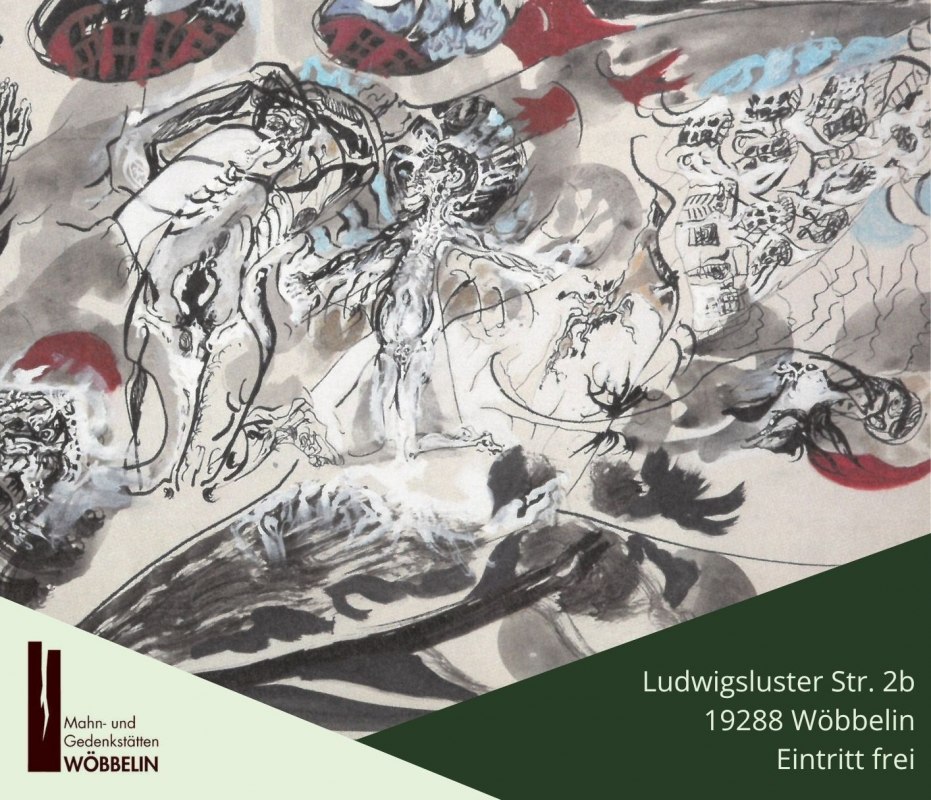
These experiences stayed with him throughout his life: As a young man, Zdzisław Lachur (1920–2007) lived through the German occupation of Poland during World War II and spent his entire life painting works that bear witness to the crimes committed during that time.
During the war, Lachur took part in the resistance against the Germans and experienced the occupiers’ terror firsthand in his immediate surroundings. On the one hand, there was his father, who was temporarily imprisoned in the Dachau concentration camp in 1940. On the other hand, there were also the events unfolding around his hometown. The crimes and the inhumane living and working conditions to which the inhabitants of the Będzin and Sosnowiec ghettos were subjected—he witnessed them firsthand as an eyewitness living in the immediate vicinity.
After the war, the man from Western Galicia began studying art in Kraków. Yet the memories of the war years remained with him. As early as 1948, Lachur began work on his series of paintings titled “Ghetto.”
His works tell their own stories and are permeated by recurring themes: despair, hope, and religion. The paintings garnered international attention and were exhibited on several continents. In 1979, the Israeli memorial Yad Vashem honored the Catholic artist for his exploration of the suffering of the Jewish people.
A selection of the works is on view through September 6 at the Wöbbelin Memorial and Commemoration Sites (Ludwigsluster Straße 2b, 19288 Wöbbelin) during regular opening hours. As always, admission is free.