Lecture at the Museum of Local History in Waren (Müritz)
Lecture by Prof. Dr.-Ing. Sabine Bock, Schwerin
On the Situation of Refugees and Displaced Persons Who Found Shelter in Manor Houses in Mecklenburg in 1945
The end of World War II had triggered a veritable mass migration. At first, people in the eastern part of the German Reich fled from the advancing front; later, they were displaced.
Mecklenburg-Vorpommern was the first state to remain part of Germany, so it is not surprising that more than 1.4 million people found themselves stranded here in 1945. On average, in 1946, a quarter of the population in the Soviet Occupation Zone (SBZ) consisted of refugees and displaced persons. In Mecklenburg-Vorpommern, they accounted for 56 percent of the total population—the highest proportion. More than a third of them were children.
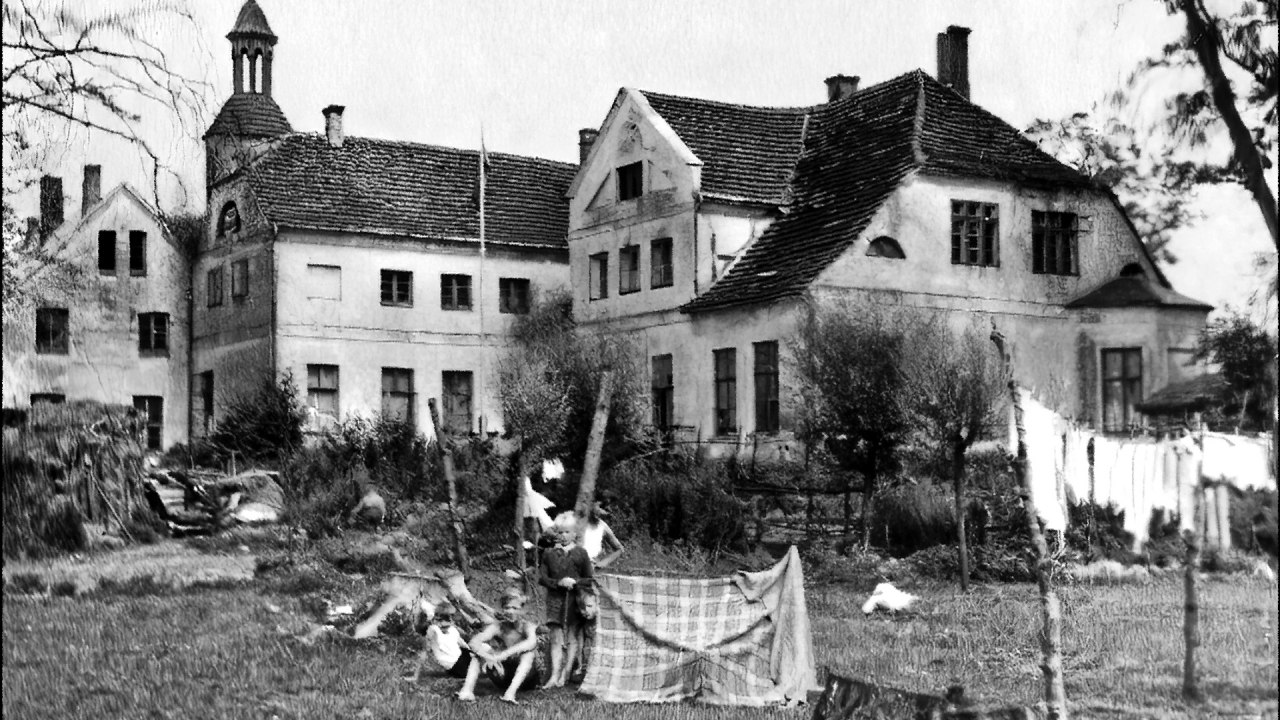
At the same time, as part of the “Democratic Land Reform” in the fall of 1945, all large estates had been expropriated, and their owners or tenants had been forced to leave their homes. Refugees and displaced persons were often housed in these homes, frequently numbering well over a hundred people.
This richly illustrated lecture presents various manor houses as they appeared in 1949, along with contemporary accounts of the lives of their new residents.