Guided Tour on the History of Gardens with Dr. Angela Pfennig
In 1909, the 36th Provincial Assembly chose Stralsund as the site for the construction of another large sanatorium and nursing home for the province of Pomerania.
The property on Rostocker Chaussee—with its secluded location outside yet still close to the city, its fertile soil and good building site, the clean air, and the usable drinking water—met all the requirements for establishing a sanatorium at that time.
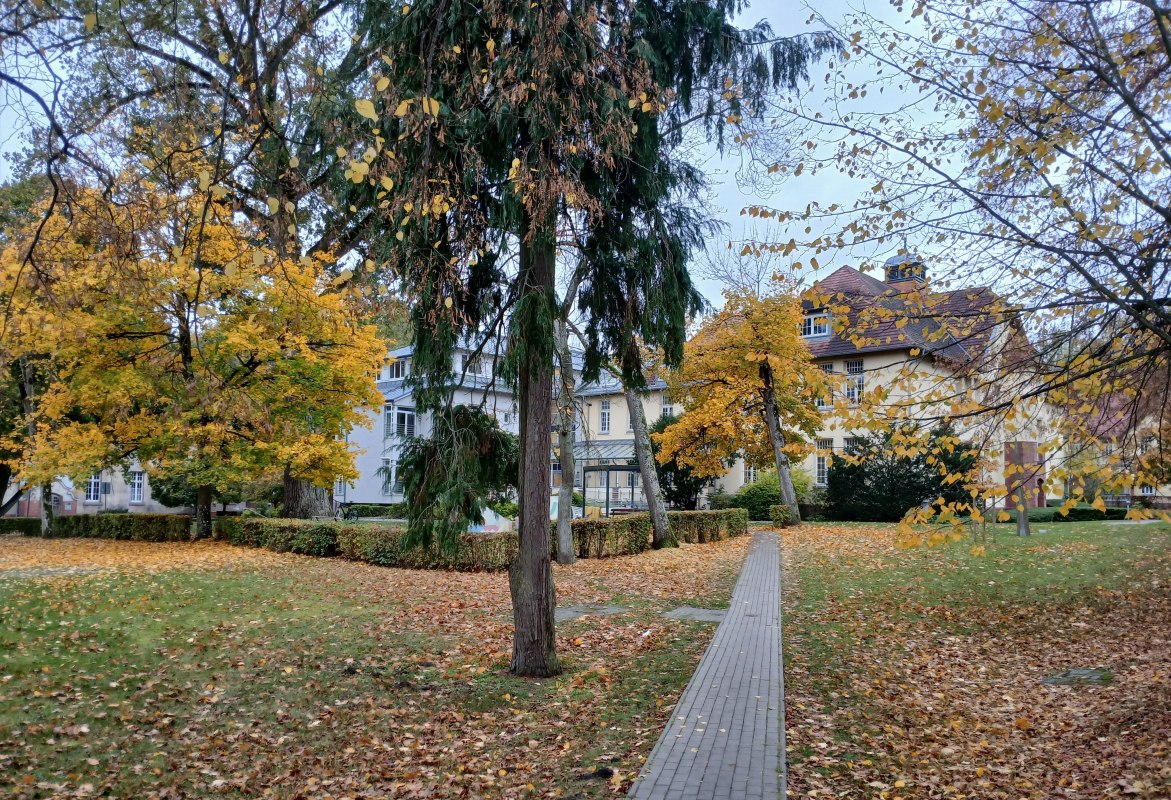
The floor plan of the Stralsund sanatorium is reminiscent of Baroque palaces and town layouts. With all its garden spaces, a remarkably unique basic concept for a sanatorium emerged, featuring all the elements of a self-sufficient town surrounded by greenery: access roads, ornamental public squares, a promenade, a park, a cemetery, residential buildings in the style of a villa colony, public buildings typical of a city—such as the administration building, the assembly hall, and the church—as well as the necessary service buildings.
In contrast to earlier methods of treating the mentally ill, work at the sanatorium took on central therapeutic significance.
In the late 1930s, the systematic extermination of patients by the Nazis marked the darkest chapter in the history of the sanatorium. Various memorials on the grounds of today’s Hanseklinikum are attempts to restore some of the victims’ dignity and acknowledge the injustices they suffered.
Admission: 9 euros