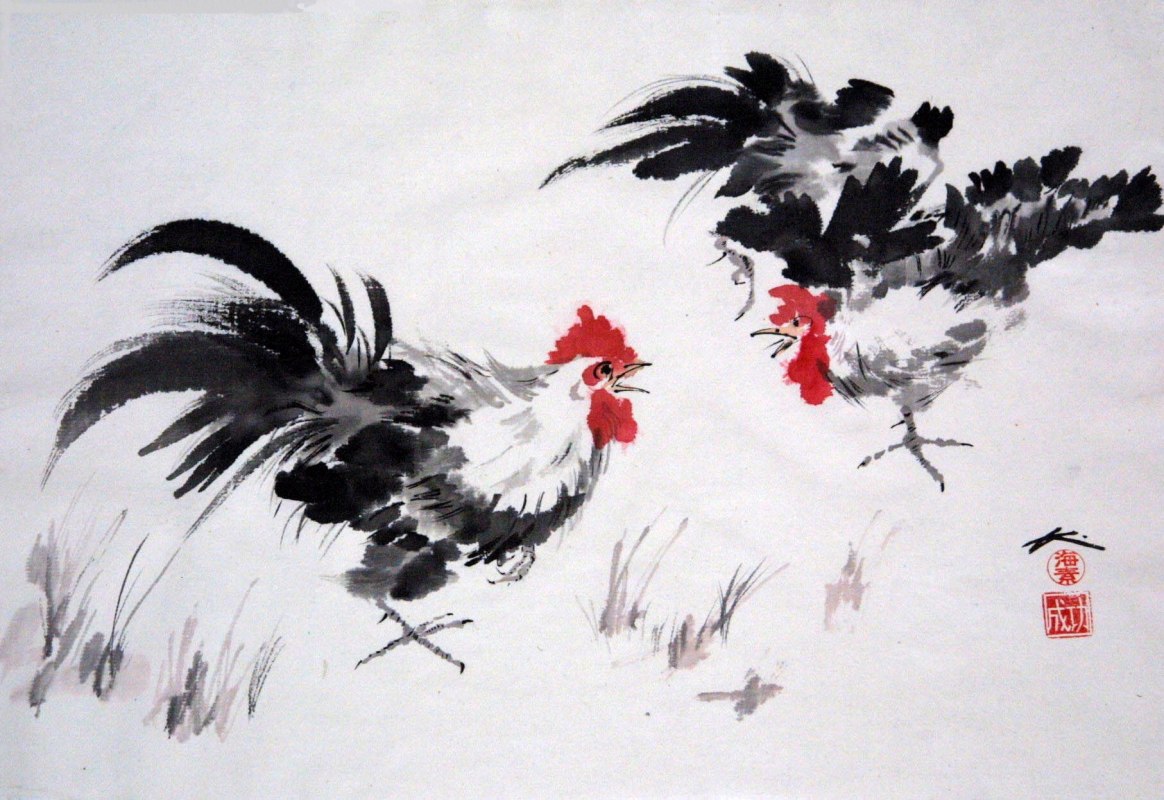
Sumi-E Japanese ink painting
Japanese ink painting
Waldemar Keiss lives and works in the Feldberg Lake District. He has been interested in various aspects of the Japanese philosophy of life for many years. One of these aspects is sumi-e, Japanese ink painting. For Waldemar Keiss, it is the ideal way of painting, as it corresponds to his desire to depict the world as he sees and feels it in a clear and reduced form.
Sumi-e is based on the influence of Zen Buddhism, which came to Japan in the 12th century and has been a major influence on Japanese culture alongside Shintoism ever since. It works with the four so-called "treasures": Rubbing stone, stick ink, brush and paper. This technique produces expressive pictures that concentrate on the essentials. Their strength lies in their reduction. The illustrations are dedicated to the core content and the captivating expressiveness, they do not get lost in details.
Ink painting is both a craft and a spiritual path. In addition to exact mastery of the material and technique, the artist must practice mindfulness. He devotes himself to being present in the here and now, because he wants to capture the essential and put it on paper. Ideally, this mindful and attentive approach is also transferred to his own life.
The exhibition presents various works by Waldemar Keiss, with a focus on the four "nobles" (bamboo, plum, orchid and chrysanthemum), as these motifs contain all the techniques of sumi-e. But there is also room for depictions of animals.
We cordially invite you to the vernissage on March 27, 2026 at 7 pm.
We would also like to draw your attention to the finissage on Sunday, June 14, 2026 at 4 pm. Waldemar Keiss will give a practical sumi-e demonstration and show the ink painting process. We will also be auctioning off one of his works for the benefit of the cultural association's voluntary work.