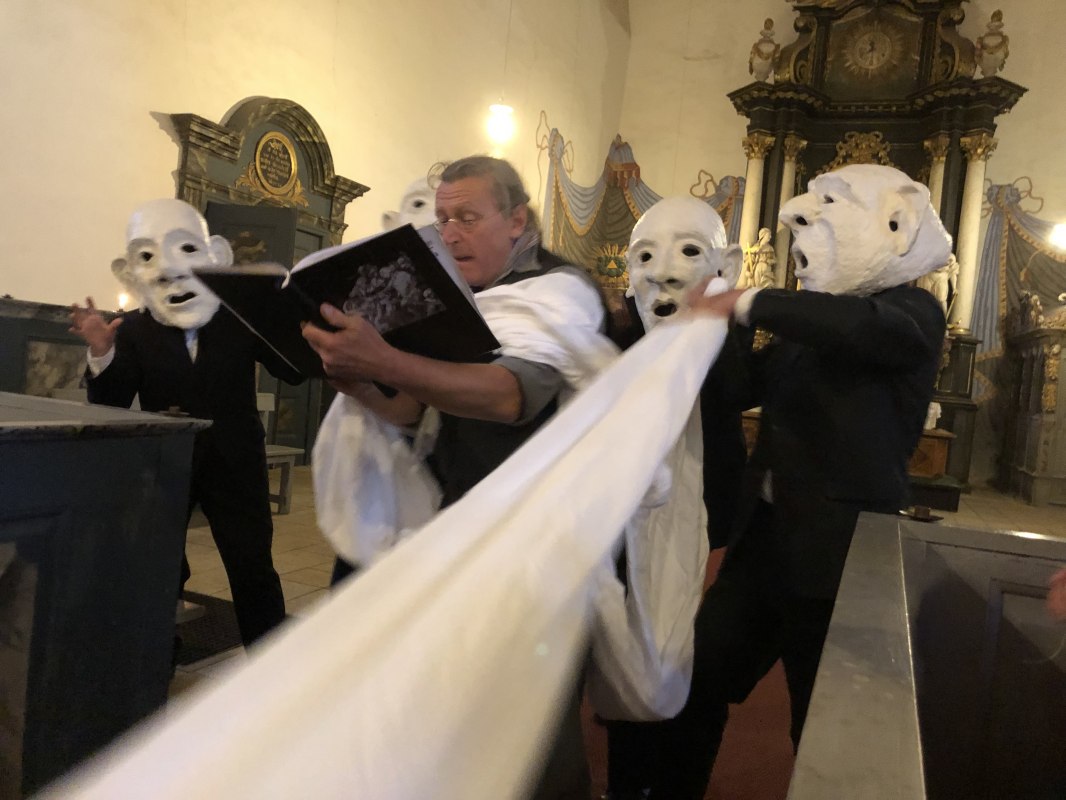
Scenic reading: Gingst was "miserably incinerated" by the great fire of 1726. Against this backdrop, the life of Pastor Picht is portrayed in his fight for freedom and his commitment to eliminating the consequences of the fire in the stations around the Gingst church. Performance by the Hinterlandbühne Rügen ensemble.
This year, the parish of Gingst is celebrating the abolition of the serfdom of its pastorate subjects over 250 years ago. On June 15, 1773, J.G. Picht (1736-1810), the pastor and prefect at the time, freed the church's serfs. For this groundbreaking reform, he had obtained the approval of the Swedish king, under whose crown northern Vorpommern stood at the time.
"Be free! Be virtuous and be happy!" With this appeal at the end of his liberation speech, Picht draws the Gingsters' attention to the Christian dimension of his vision of prosperity. Freedom requires reason to decide between good and evil. Guided by Christian values, happiness should already be possible on earth.
With the enfranchisement, Picht was a pioneer in the country. The former hereditary subjects could now determine their own place of residence, choose a profession, marry whoever they wanted and bequeath or sell their houses. To promote their prosperity, Picht renewed the weaving trade and expanded the school system.
In order to bring the significance of the enfranchisement back to life today, where freedoms are taken for granted, the parish invites you to a series of four events: On Saturday, June 13 and Friday, June 19, both at 7 p.m., the Hinterlandbühne Rügen will present the life of the pastor and prepostor Johann Gottlieb Pichts Picht and his fight for freedom and his commitment to eliminating the consequences of the great fire of 1726 in several stations around the Gingst church.