In the garden of the Papenhof Museum in Barth, the “Park-Moor-Land” project demonstrates how a historic green space can benefit the climate while still being preserved as a historic landmark. You’ll explore on-site how garden culture and climate protection are connected, and you’ll also take a virtual tour of the garden areas.
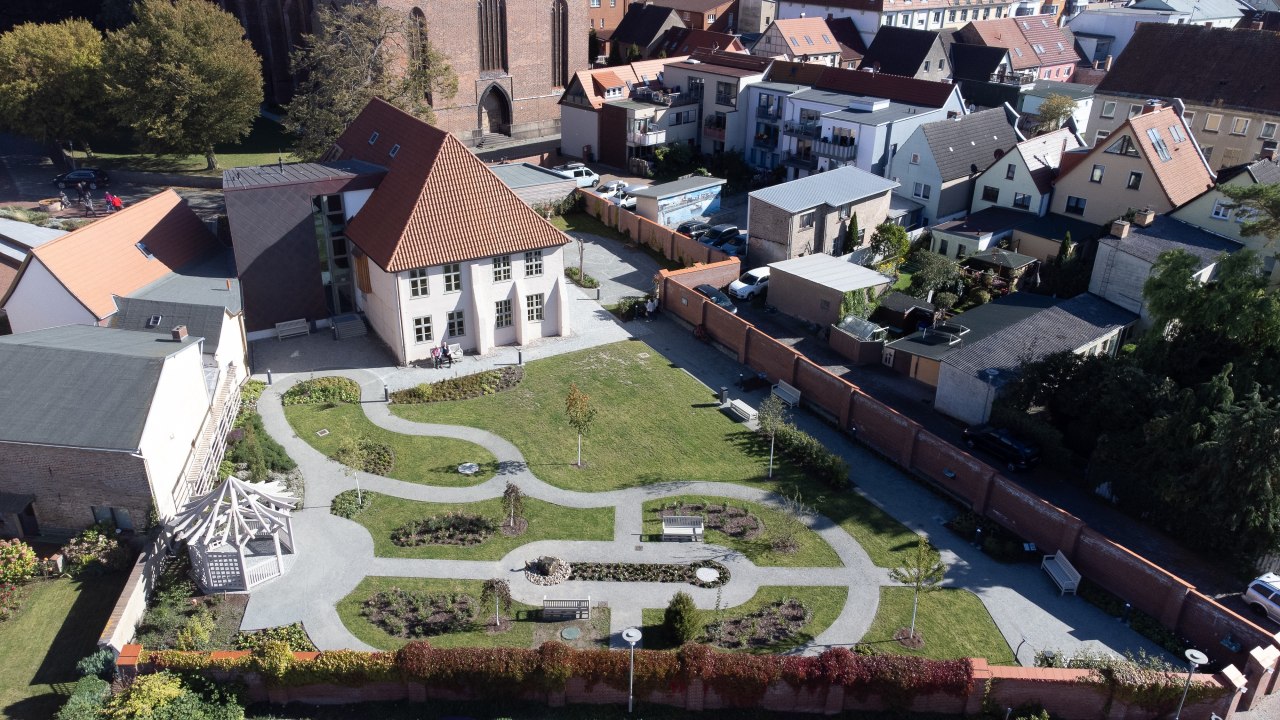
The garden of the Papenhof Museum at Papenstraße 10 in Barth has evolved over six centuries. It began as a medicinal herb garden maintained by the Kaland Priestly Brotherhood, which used the house as a meeting place around 1490. During the ducal era, a Baroque parterre was created. In the 19th century, the bourgeoisie laid out a Romantic landscape garden. Today, it is home to old rose varieties and rare shrubs. The garden also features a well that was uncovered during archaeological excavations and faithfully restored, as well as various works of art.
With this garden and the “Park-Moor-Land” project, the city of Barth demonstrates how historic landscapes can be developed in a climate-adaptive and ecologically sound manner without violating historic preservation regulations. The project combines climate protection, biodiversity, and garden culture. It is funded as part of the “Natural Climate Protection” action program, and the garden serves as the venue for the accompanying theme week.
An information guide explains the goals of “Park-Moor-Land.” A digital tour takes you through the individual garden areas and explains how they came to be and why they are important for current climate issues. You can visit the event in person or follow it digitally.
Barth was once known as a garden city in Vorpommern. Anyone who understands the town’s history also understands why its gardens continue to play a role to this day. The Papenhof Museum, along with the Vineta Community Center and Bogislaw Square, is part of Barth’s emerging cultural corridor and is located west of St. Mary’s Church.