The lecture presents possible explanations and shows what these ritual offerings reveal about the beliefs and worldviews of early farmers
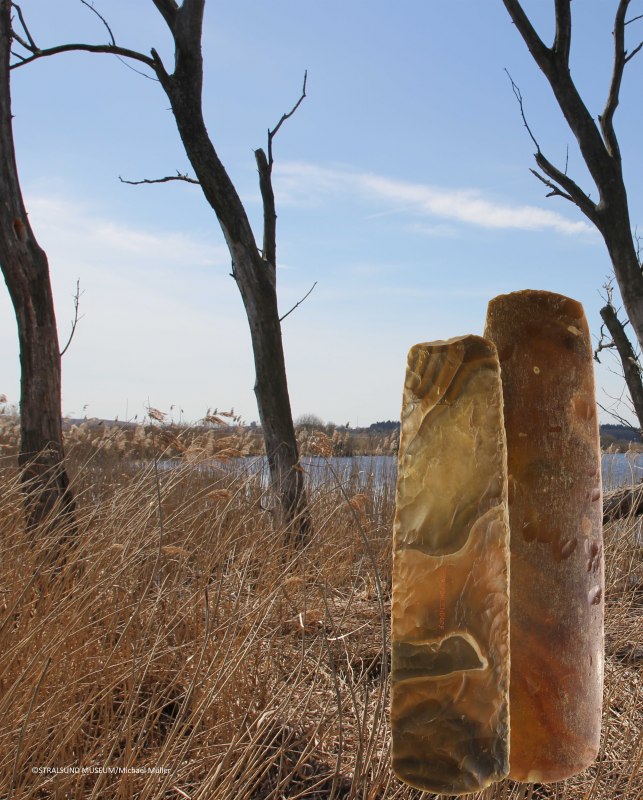
Why did people of the Neolithic era sacrifice valuable and elaborately crafted objects instead of continuing to use them? With the Funnel Beaker Culture (4100–2800 B.C.E.), the Neolithic way of life spread as far as northern Germany and northern Europe. During this period, monumental megalithic tombs and gathering places known as “trench structures” were constructed. Particularly striking are the ritual placements of large flint axe blades and other objects made of stone, amber, pottery, or copper—often far from settlements and graves. Such sacrificial rituals can be observed over many centuries. The lecture presents possible explanations and reveals what they tell us about the beliefs and worldviews of early farmers.