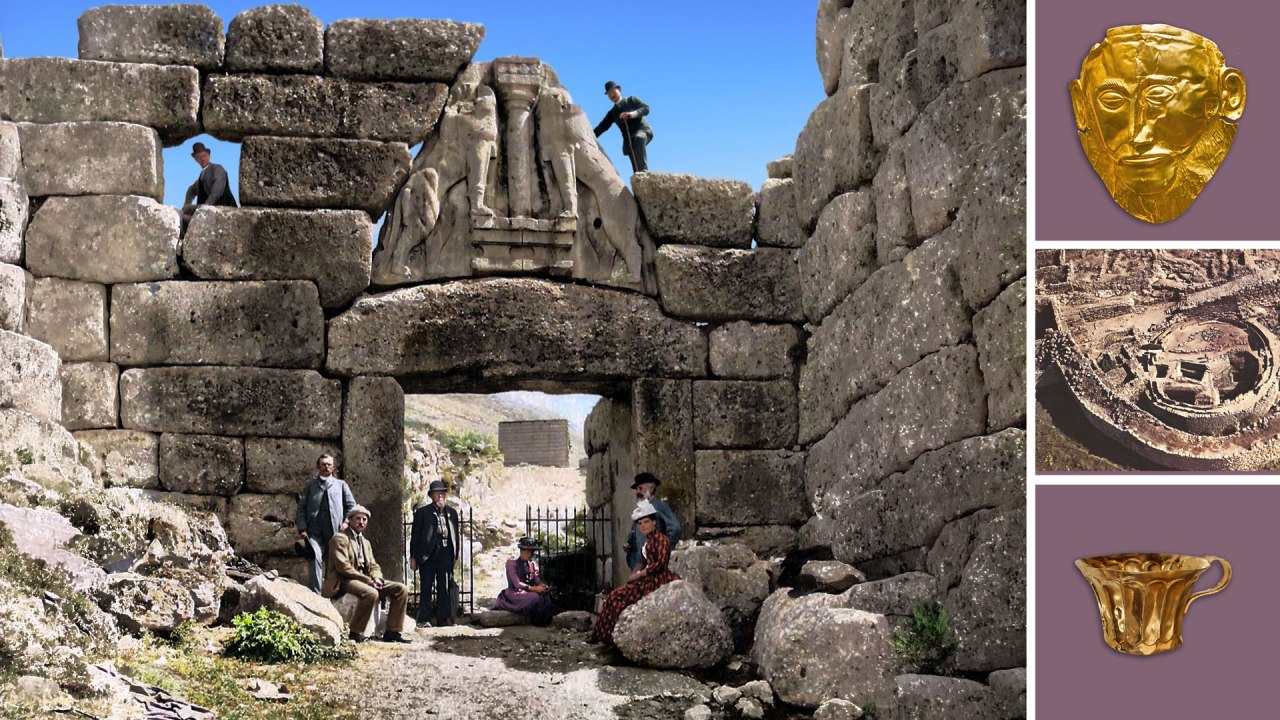
In 1876, Heinrich Schliemann began excavations at Mycenae. Following the account of the Greek writer Pausanias, he searched there for the tombs of the kings of antiquity. Within the castle walls, he found a circular tomb complex with 5 S
In 1876, Heinrich Schliemann began excavations at Mycenae. Following the account of the Greek writer Pausanias, he searched there for the tombs of the kings of bygone times. Within the castle walls, he discovered a burial circle consisting of five shaft graves, each filled with valuable votive offerings. In addition to pottery, precious alabaster vessels, and richly decorated weapons, the most spectacular finds were the artfully crafted gold artifacts. Among them was the so-called “Mask of Agamemnon.” 150 years later, the Schliemann Museum in Ankershagen is presenting a special exhibition detailing the circumstances of Schliemann’s excavations and providing an in-depth look at the individual tombs and the history of the discoveries. Admission: Included in the museum admission price.