A Conversation with Dr. Manfred Osten and Hans-Jürgen Mende
Godfried Wilhelm Leibniz and Johann Wolfgang von Goethe, for their part, studied China in depth. Conversely, Goethe is still highly regarded and widely read there today; a new complete edition of his works is currently in progress. China’s interest in our culture, then, remains undiminished. In Germany, however, we often view China’s economic rise over the past 45 years with concern. What factors made this rise possible? And what role do the ideas of Confucius—who lived some 2,500 years ago and whose teachings continue to influence us today—play in this?
This rise also has its downsides. How stable is a system that combines capitalism and communism? Can economic success be permanently separated from the individual freedom of citizens? And—could there be another protest movement like the one in 1989 on Tiananmen Square? Between blanket criticism of China and uncritical admiration, this evening we will explore the causes of China’s success—and what Germany can learn from China.
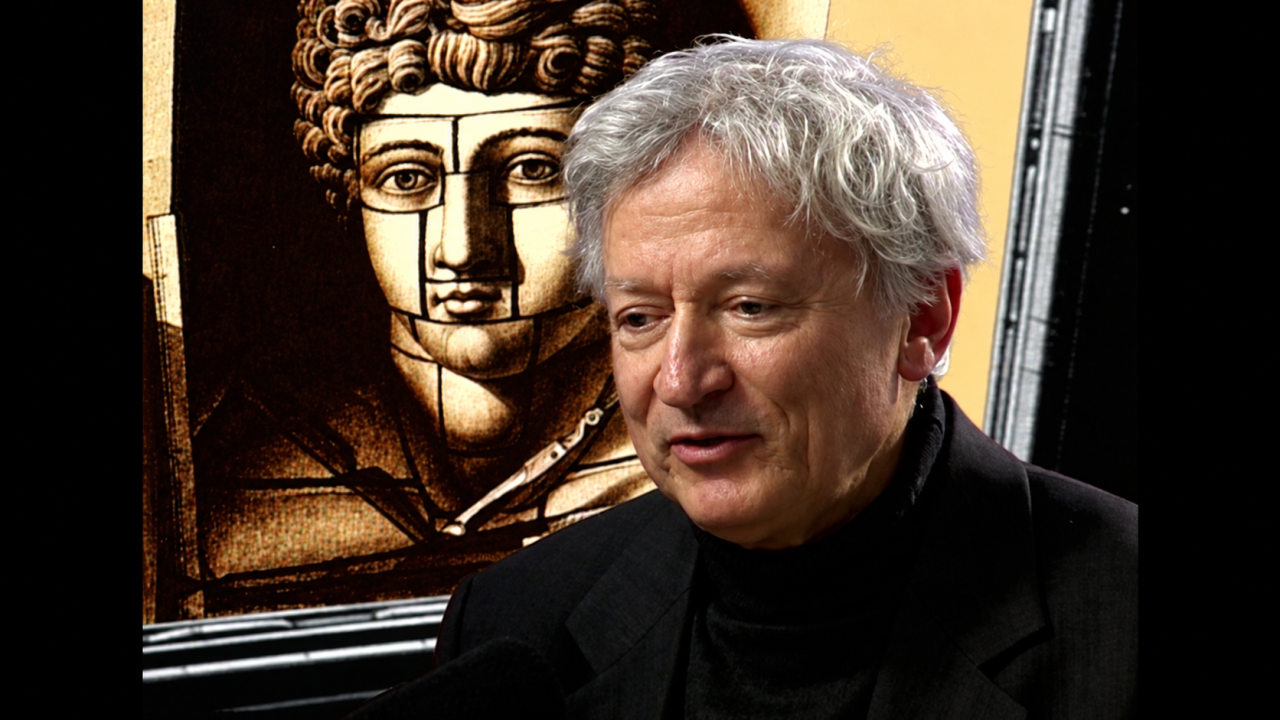
Cultural journalist Hans-Jürgen Mende will be joined by polymath Manfred Osten, Dr. jur. and recipient of multiple honorary doctorates. He was a high-ranking diplomat and Secretary General of the Alexander von Humboldt Foundation and is considered an expert on Asia. For many years, he was Alexander Kluge’s discussion partner on dctp programs. Osten is the author of numerous books, particularly on Goethe.
An event in cooperation with the Volkstheater Rostock.
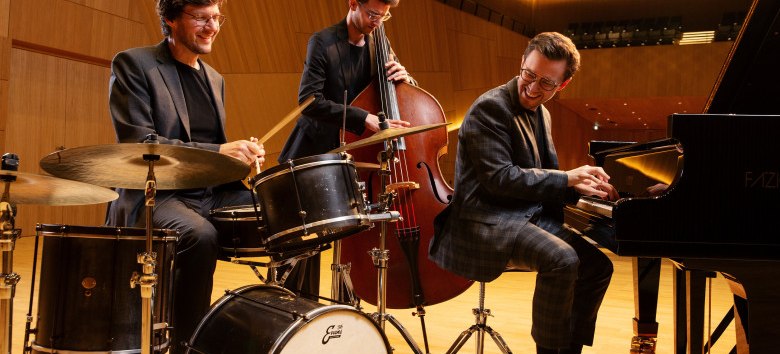
The Morgenstern Quartet will perform—a chamber music ensemble formed in 1987 featuring musicians from the North German Philharmonic Orchestra of Rostock.
Short Biography
Dr. Manfred Osten was born in 1938 in Ludwigslust, Mecklenburg. In 1952, he fled to the Federal Republic of Germany and studied law, philosophy, musicology, and literature in Hamburg and Munich from 1959 to 1964. In 1969, he earned his doctorate with a dissertation “on the concept of natural law in Schelling’s early writings.”
That same year, he joined the Foreign Service, serving in France, Cameroon, Chad, Hungary, Australia, and Japan. In 1993, he became head of the Eastern Europe Division at the Federal Government’s Press and Information Office. From 1995 to 2004, he served as Secretary General of the Alexander von Humboldt Foundation.
Short Biography
Hans-Jürgen Mende was born in Wiesbaden and grew up there. After completing a banking apprenticeship, he studied musicology and voice in Mainz and Bern (Switzerland). This was followed by several years working as an opera agent and artist manager. In 1989, he hosted his first radio program. Hans-Jürgen Mende joined NDR in 2001 via SWR and HR. He began working in television in 1996. In addition, Hans-Jürgen Mende has been a contributor to ARD stations and music magazines, such as “Opernwelt.”