Together with biographical information and quotes from the protagonists, the photographs bear witness to the crimes committed by the Nazis.
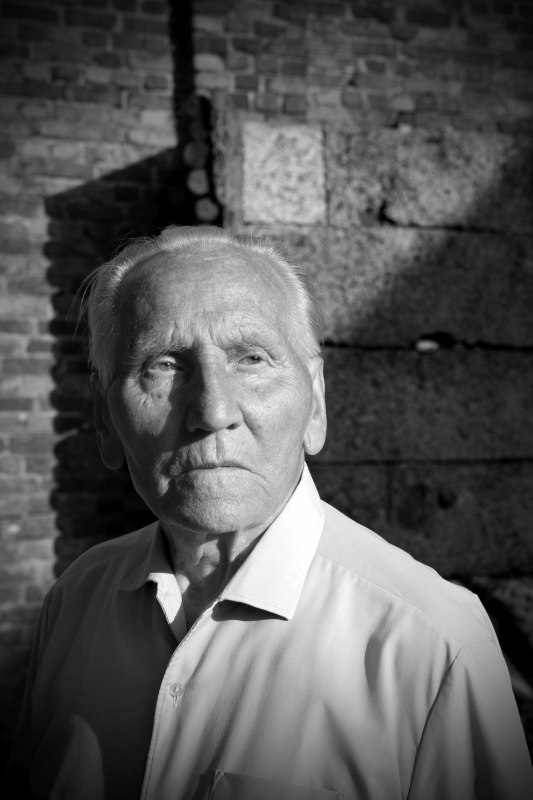
For more than a decade, photographer Stefan Hanke sought out survivors of Nazi concentration camps from all groups of persecuted people who could still be located and captured them in striking black-and-white photographs.
Together with biographical information and quotes from the subjects, the photographs bear witness to the crimes of the Nazis. Respect for and recognition of concentration camp survivors are indispensable components of the culture of remembrance.
Many of the portraits feature survivors from Poland, such as Kazimierz Piechowski, who was deported to Auschwitz as early as the summer of 1940. With great courage, he managed to escape from the camp and, in the years that followed, joined the Polish Home Army (Armia Krajowa) in the fight against the German occupation.
Another focal point of the exhibition is former prisoners of the Ravensbrück concentration camp, such as the Frenchwoman Marie-José Chombart de Lauwe, who was also active in the Resistance. In Stefan Hanke’s photograph, the eyewitness stands at the memorial on the shore of Lake Schwedt in remembrance of the many victims.
Both Chombart de Lauwe and Piechowski remained politically and professionally active after 1945 and were highly regarded in French and Polish society.
At the beginning of the exhibition, a map shows the Nazi camp system in occupied Europe. Pomerania was located between the Ravensbrück and Stutthof concentration camps. Pomerania also had an extensive network of satellite camps of the concentration camps, forced-labor camps, and prisoner-of-war camps.
Photographer Stefan Hanke began taking portraits of concentration camp survivors in 2004. After many stops, his traveling exhibition is now coming to Mecklenburg-Vorpommern for the first time. Detailed biographies of those portrayed can be found in the photo book “Surviving the Concentration Camps: Portraits by Stefan Hanke.”
The patron of the special exhibition is Minister President Manuela Schwesig.
The exhibition is taking place as part of a German-Polish project in collaboration with the University of Szczecin:
History in Dialogue: Coming to Terms with Nazi Crimes in Pomerania
The project is co-financed by the European Union with funds from the European Regional Development Fund (ERDF).