Thin sheets of hanji paper are moistened, kneaded, and pressed until they come together to form a striking, artistic collage.
What happens when paper isn't cut and glued, but rather kneaded? Joomchi is a centuries-old Korean technique for working with hanji, a paper made from the bark of the mulberry tree. In our workshop, you’ll learn the process from the ground up and create your own paper collage.
When Paper Becomes Fabric
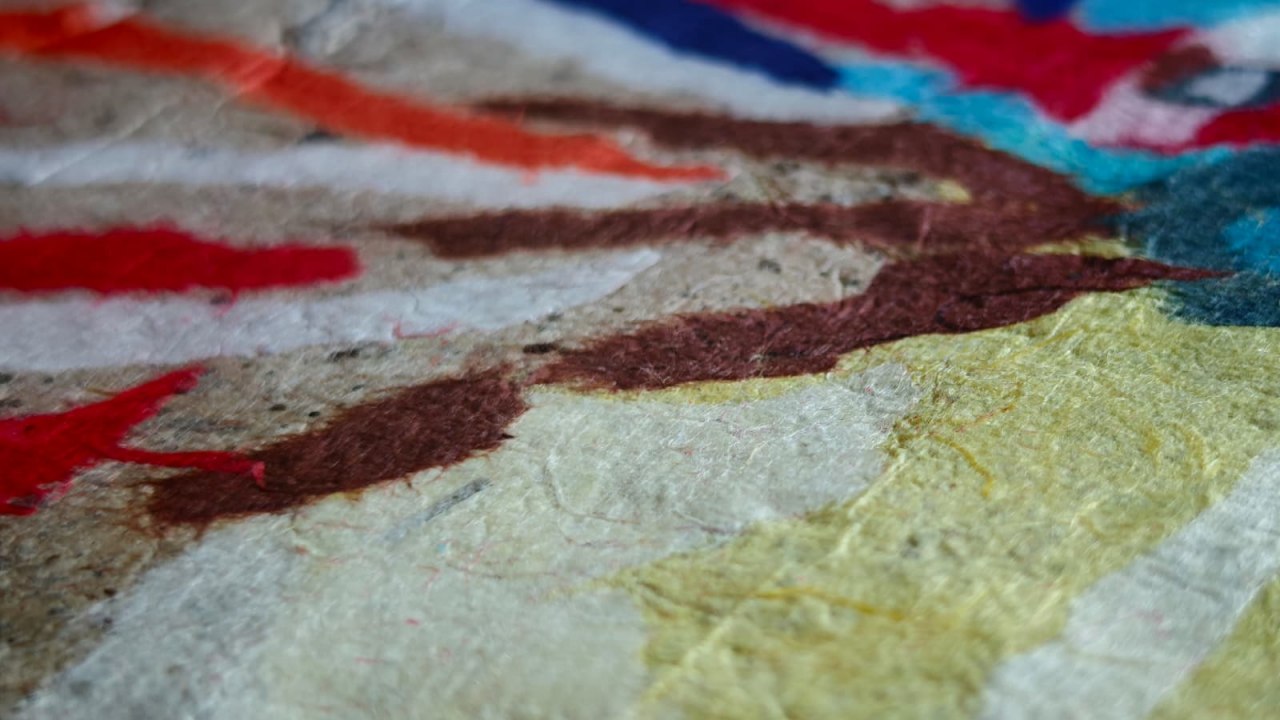
The principle is as simple as it is astonishing: Thin, overlapping layers of hanji paper are moistened with water, pressed, and then kneaded and rolled over an extended period of time. The long, strong fibers of the mulberry bark bond together without any adhesive—much like wool during the felting process. The result is a material of great strength with a leather-like appearance, featuring a vibrant surface and a texture unlike that of any industrial paper.
Discovering Colors and Textures
Because the overlapping layers intermingle during the process, new color blends, transparencies, cracks, and compacted areas emerge. These serendipitous results are not a side effect but the true appeal of the technique: you’ll learn to guide them and use them creatively. Over the course of the class, you will use the papers created in this way to develop an expressive, colorful collage.
Course Instructor
The workshop is led by paper artist Yibo Liu.
Who is this course for?
The course is open to adults, teenagers, and children accompanied by their parents, with or without prior experience. No prior knowledge is required. What’s needed is curiosity, patience, and a love of experimentation. The work involves working with wet paper, so please bring work clothes or an apron and a towel. Hanji paper, tools, and materials will be provided.