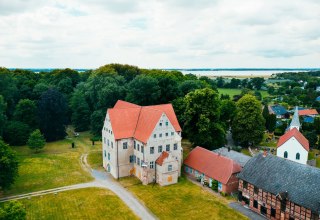
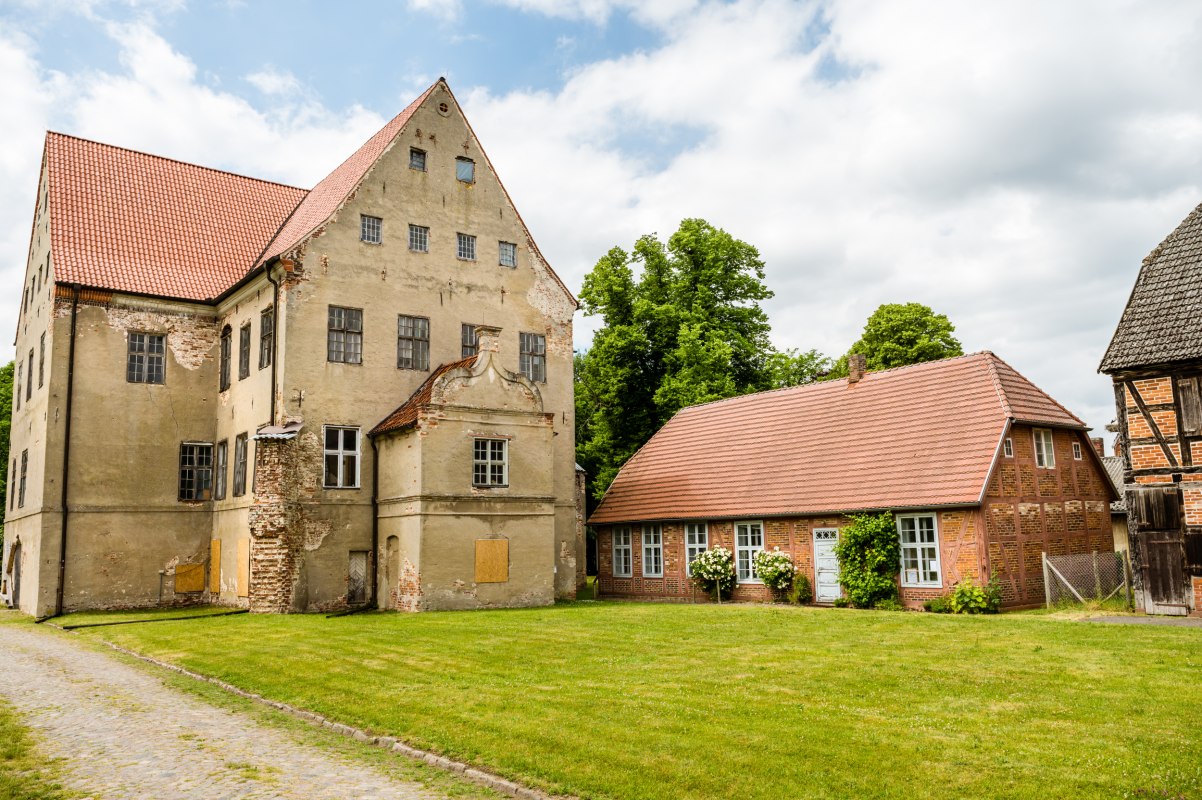
The Renaissance Ludwigsburg Palace was built in 1592 as a summer residence for Sophia Hedwig von Pommern-Wolgast. After her death in 1631, the castle changed hands several times until it was sold to the Greifswald merchant Weissenborn in 1811.
The district of Ludwigsburg belongs to the municipality of Loissin and is a special excursion destination with one of the last remaining castles of the Pomeranian dukes in Germany.
Idyllically situated on the edge of the Greifswald Bodden, Ludwigsburg Castle was built in 1592 by order of Ernst Ludwig, Duke of Pomerania-Wolgast, for his wife Sophia Hedwig. It is largely preserved in its original state. After Sophia Hedwig's death in 1631, the estate changed hands several times until it was sold to the Greifswald merchant Weissenborn in 1811. After the expropriation of the Weissenborn family in 1945, the property fell into disrepair due to a lack of maintenance.
Since 1997, the non-profit association Förderverein Schloss- und Gutshofanlage Ludwigsburg e. V. has been working to preserve and develop this historic gem. In 2020/21, parts of the property were transferred to the ownership of the state of Mecklenburg-Vorpommern for a symbolic purchase price, which has since planned and carried out the thorough renovation. The association continues to lease the state-owned areas (with the exception of the castle park) and is allowed to use them for public events.
The historical significance of the site is not limited to the history of the Pomeranian dukes. Friedrich August von Klinkowström, a friend and companion of Caspar David Friedrich and Philipp Otto Runge, the two most important painters of North German Romanticism, was born at Ludwigsburg Castle on August 31, 1778. At the beginning of the 19th century, Klinkowström set off to study art in Dresden alongside Caspar David Friedrich from Greifswald, where he made the acquaintance of Philipp Otto Runge from Wolgast. Later, Runge would often visit his dear friend Klinkowström in Ludwigsburg. The castle is therefore also a meeting place for the "Romantics".
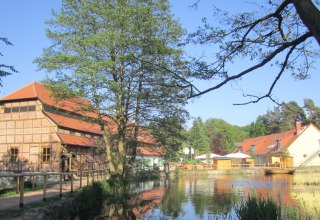
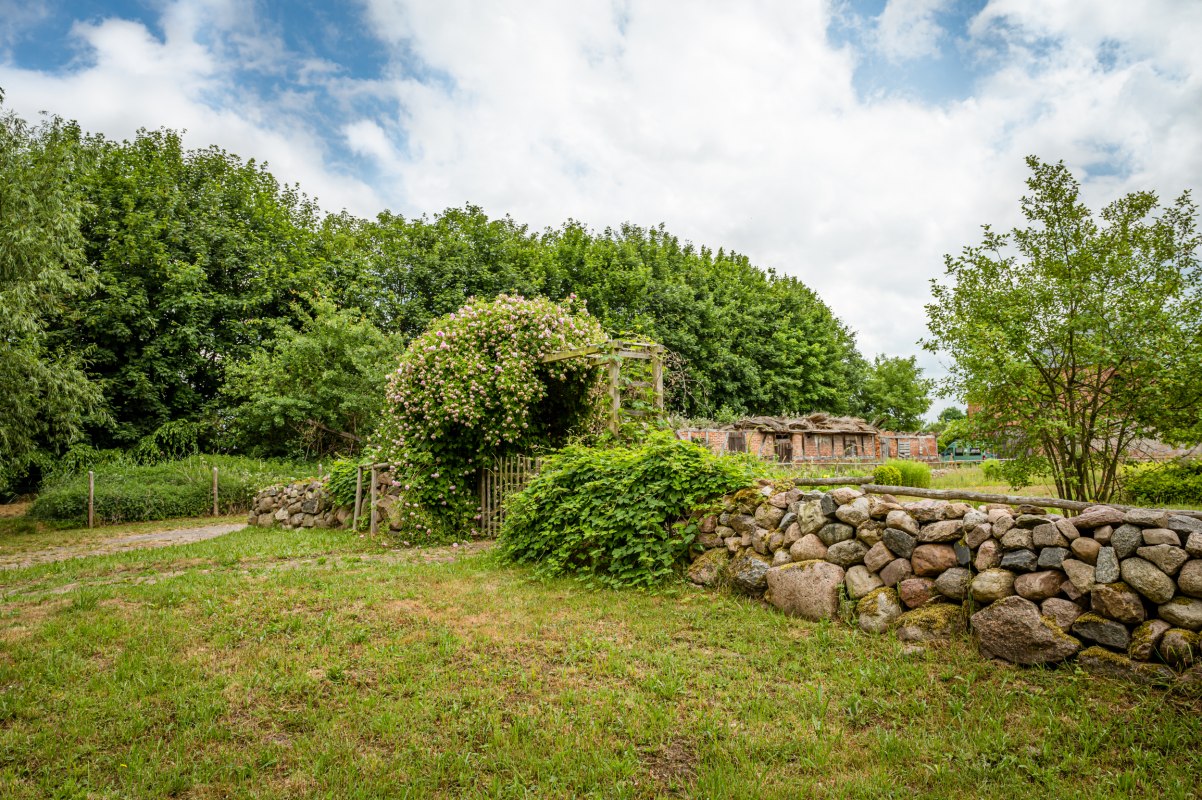
With its farm buildings, Ludwigsburg ultimately documents an agricultural estate at the turn of the 19th and 20th centuries, as was typical for Pomerania at the time.
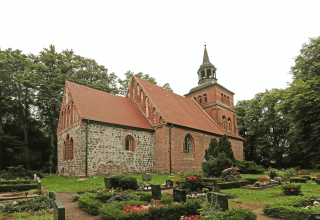
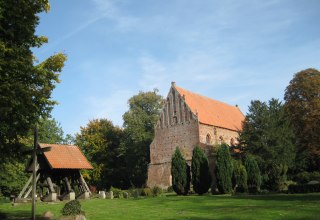
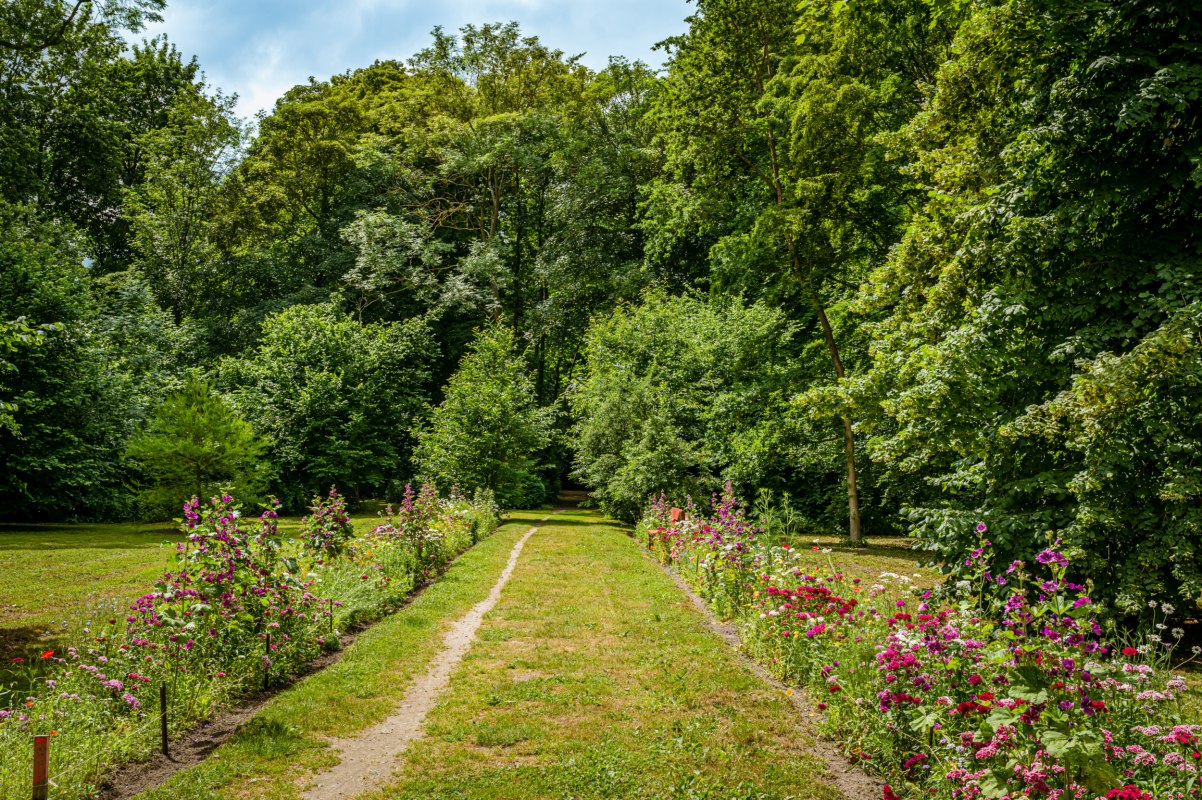
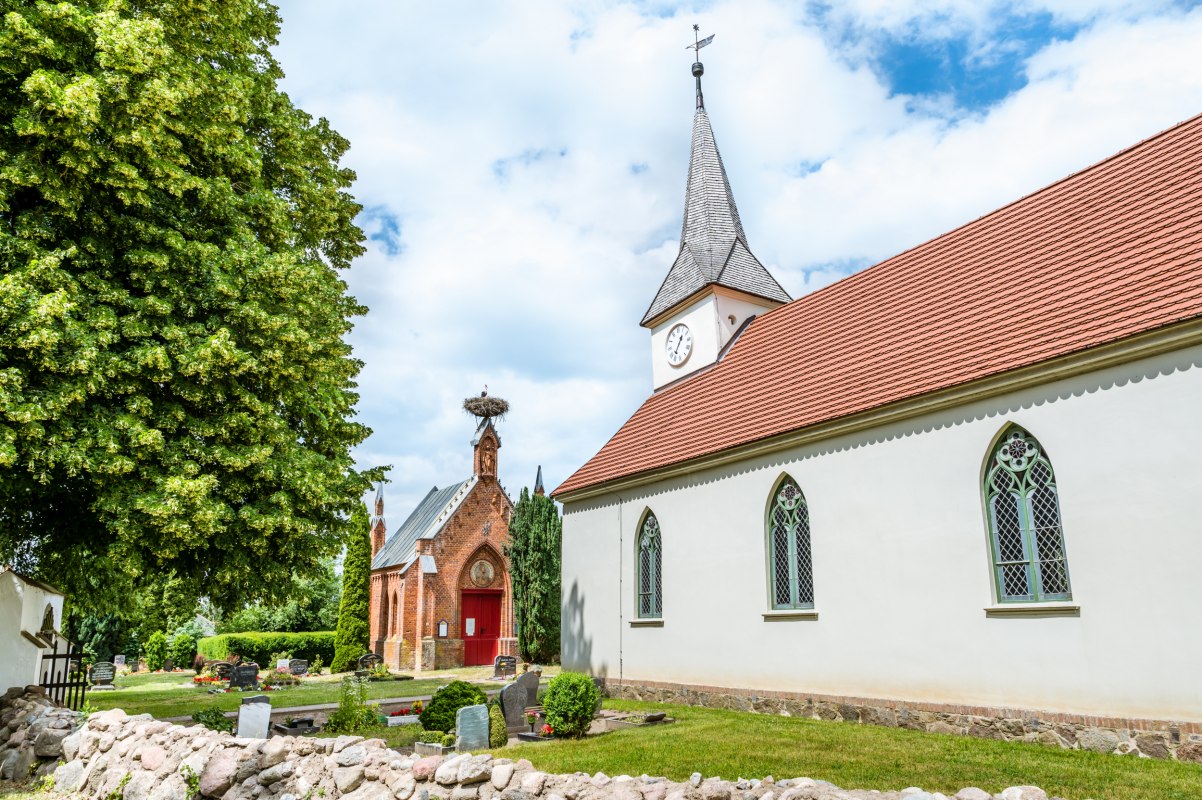
The ensemble is rounded off by small highlights: the completely renovated castle chapel from 1708 - the oldest working church clock in Vorpommern still chimes in its tower - a mausoleum from the 19th century and a magnificent castle park that invites visitors to linger. The "Old Electrical Workshop" exhibition can be seen in the granary building, one of the very few electrical engineering museums in north-eastern Germany. Last but not least, the association runs a herb and rose show garden, which was created around 25 years ago by the then chairwoman of the association, Christel Schmidt, based on a historical model.
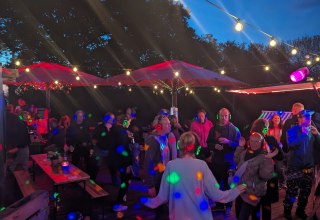
The complete renovation of the Ludwigsburg castle and estate complex will take several more years. In the meantime, unfortunately not all parts of the grounds are accessible to visitors and there are no regular opening hours. However, the Förderverein organizes herb and smoke markets in a very special atmosphere in the castle courtyard several times a year. In July and August, guided tours of the castle and church take place every Wednesday at 6.00 pm. Outside of these and other events, the Friends' Association is happy to open the exhibitions during the season (April to October) by appointment, as far as its staffing levels allow.
Experience the history of Western Pomerania up close through the example of old buildings and be inspired by the original nature!