Romanticism bike tour in Vorpommern

Route of the North German Romanticism

© MV-T

Route

293 km

Etappen

7

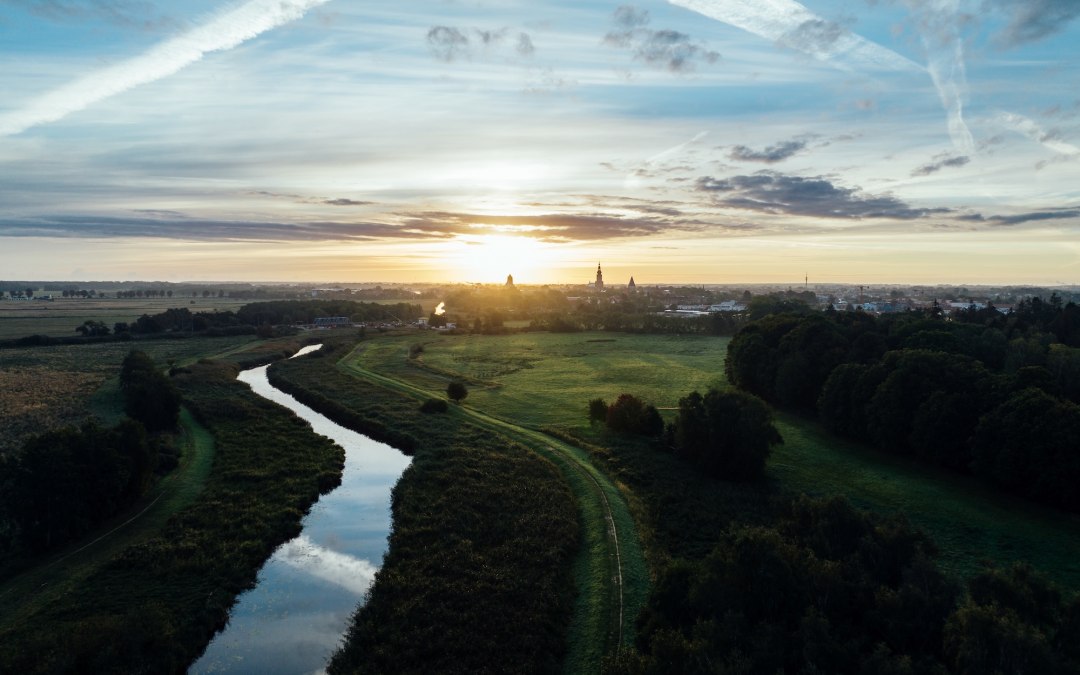
Sunrise over the Hanseatic City of Greifswald: a quiet river meanders through meadows, while church spires slowly become visible in the morning light on the horizon. Mecklenburg-Vorpommern awakens quietly. // © MV-T/Gänsicke
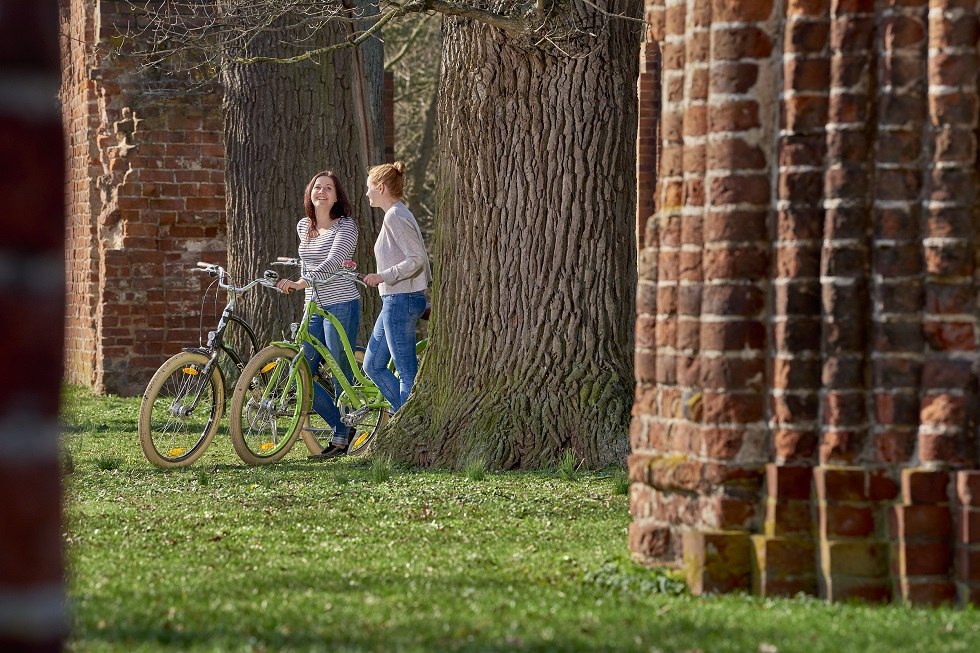
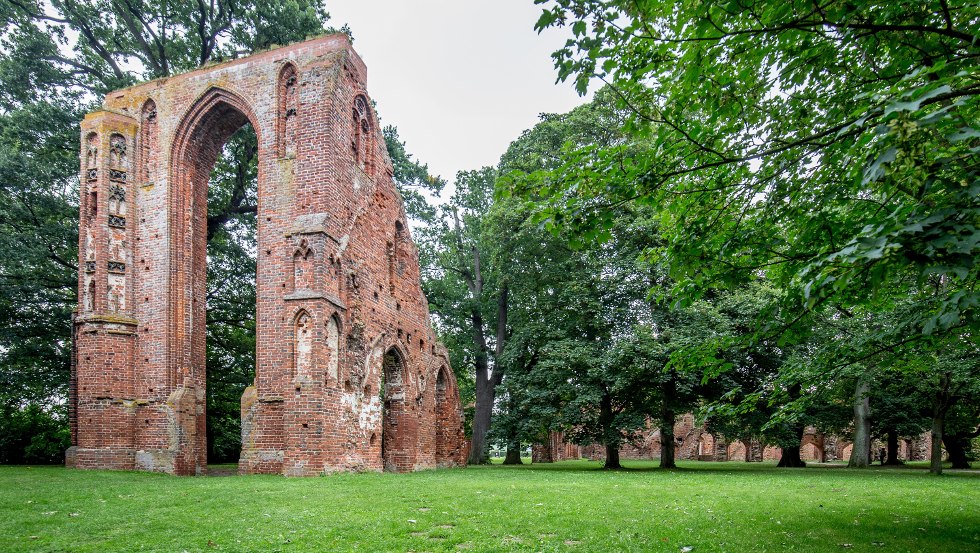
Eldena monastery ruins was the favorite motif of Caspar David Friedrich // © MV-T/pocha.de
The impressive Eldena monastery ruins near Greifswald enchants with its romance // © MV-T/Krauss
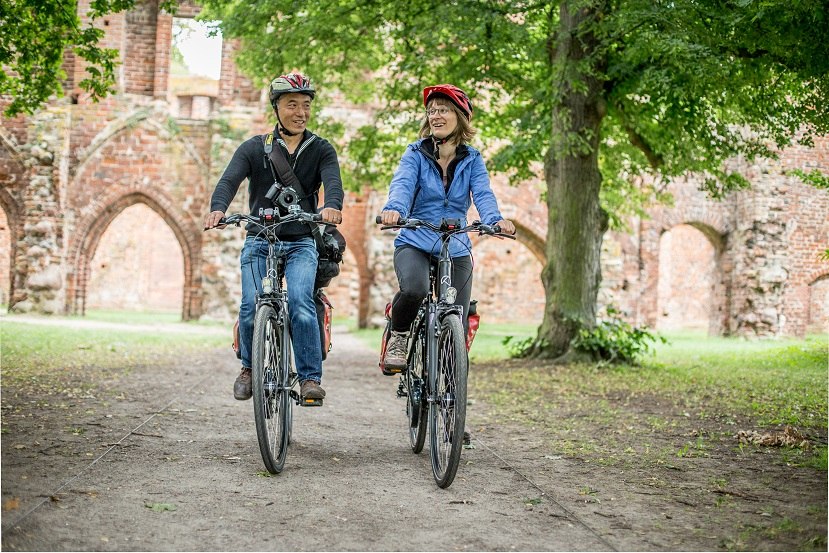
The Eldena monastery ruins are also a source of inspiration for the photo artist Hiroyuki Masuyama // © MV-T/Krauss
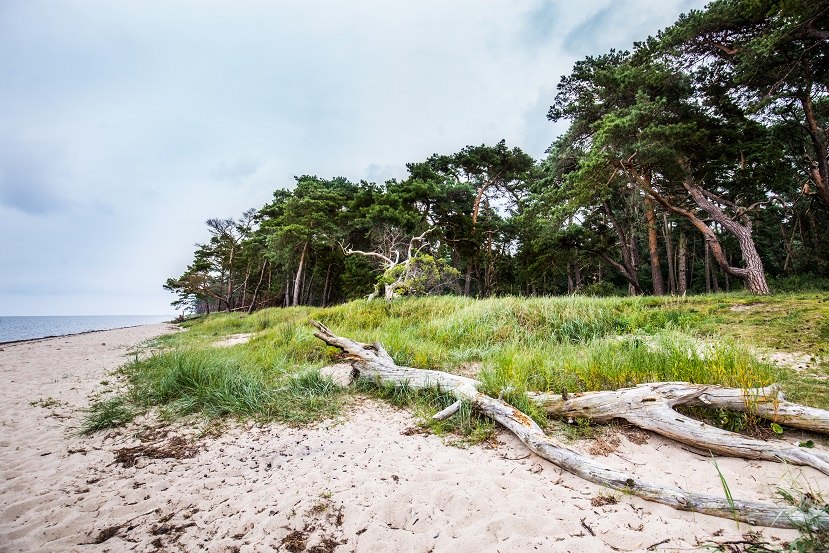
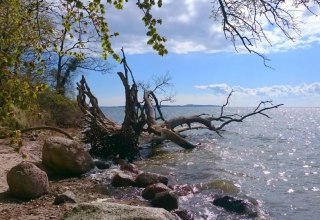
Coastal forest on the natural beach of Ludwigsburg // © MV-T/Krauss
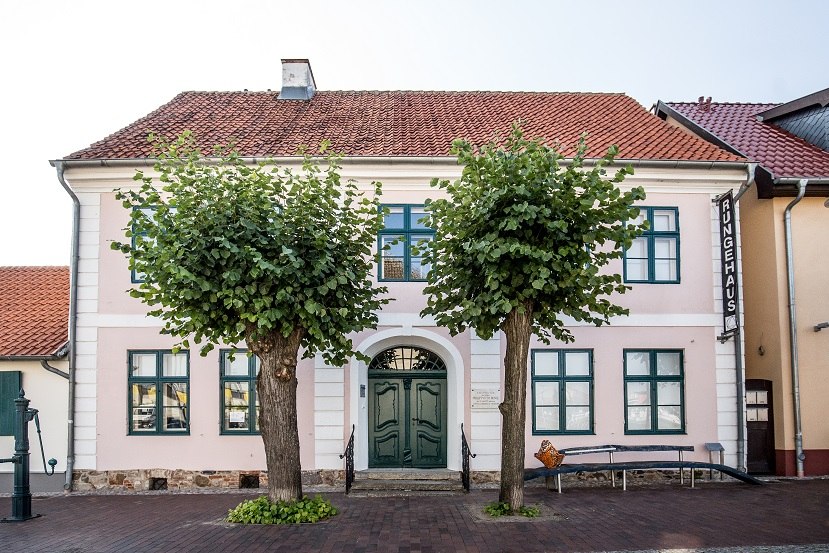
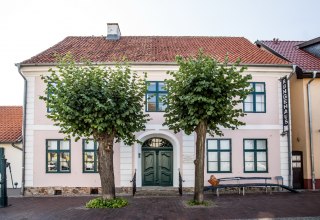
The Museum Rungehaus with exhibition on the life and work of the artist // © MV-T/Krauss

Route

48 Ergebnisse
  • Station 10: Besinnung an den Wasser-Eichen // © MV-T/UB

    Path of leisure & knowledge

    • Freely accessible at any time
    • Fürst-Malte-Allee, 18581 Lauterbach

    Let yourself be impressed by the history and development of the Goor Forest! Imposing trees, burial mounds and fantastic views of a Baltic Sea bay of the Island of Rügen will inspire you. During the hike you will immerse yourself in this magical forest by the sea, come to rest and deepen your contact with nature and yourself. This forest, which is developing into a "primeval forest", is largely in the care of the Michael Succow Foundation for the Protection of Nature.

    Read more: "Path of leisure & knowledge"
  • © Florian Melzer/im-jaich

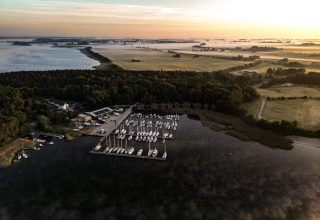
    Im-jaich natural harbor Gustow

    • Freely accessible at any time
    • Am Yachthafen Drigge, 18574 Gustow

    Arrive, relax and enjoy nature. As soon as you dock in Gustow, you will be greeted by the unique charm of our natural harbor. Far away from the hustle and bustle of everyday life, our home port is idyllically situated on the southern Strelasund, nestled in the picturesque Bodden landscape of Rügen.

    Read more: "Im-jaich natural harbor Gustow"
  • Das Geburtshaus von Philipp Otto Runge ist heute ein Museum // © MV-T/ Krauss

    Museum Rungehaus

    • Kronwiekstraße, 17438 Wolgast

    The museum Rungehaus is the birth house of the painter and romantic artist Philipp Otto Runge (1777-1810). Alongside Caspar David Friedrich, he is regarded as one of the most important painters and graphic artists of the German Romantic period.

    Read more: "Museum Rungehaus"
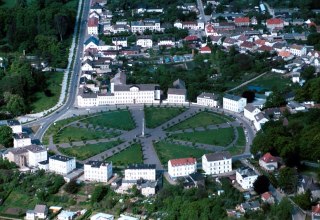
  • Der Circus Putbus wird im Rondell von weißen klassizistischen Bauten umsäumt. In der Mitte steht der 19 m hohe Obelisk. // © Tourismuszentrale Rügen

    Circus Putbus

    • Circus, 18581 Putbus

    The name Putbus is probably of Slavic origin and translates as "behind the lilac bush". In 1810 this place was developed by Prince Malte to a residence town in classicistic style with theater, pedagogy and white houses around the circus. A city from the drawing board with park and animal enclosure and rosebushes in front of every house.

    Read more: "Circus Putbus"
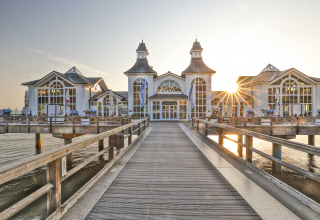
  • Sellin pier

    • Freely accessible at any time
    • Seebrücke, 18586 Sellin

    The Sellin pier leads almost 400 meters out to sea. Since 1998, the dream castle by the sea has once again become a landmark of the Island of Rügen. Whether in the light-flooded palm garden, which extends over two floors, or the imperial pavilion reminiscent of the twenties, you always enjoy the free view of the sea and the beach, surrounded by an eventful gastronomic ambience.

    Read more: "Sellin pier"
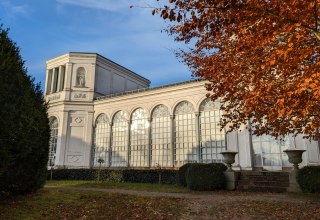
  • The orangery in Putbus. // © MV-T / Reuter

    Orangery Putbus

    • Open today
    • Alleestraße, 18581 Putbus

    Look at art and enjoy art in the Orangery in Putbus.

    Read more: "Orangery Putbus"
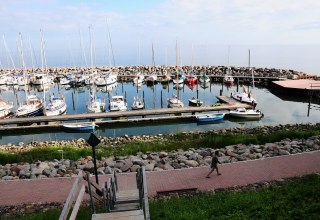
  • Port of Lohme // © Tourismuszentrale Rügen

    Port & water hiking resting place Lohme

    • Freely accessible at any time
    • Am Hafen - Servicegebäude, 18581 Lohme

    The marina in Lohme on the island of Rügen is an idyllic little harbor with a view of Cape Arkona.

    Read more: "Port & water hiking resting place Lohme"
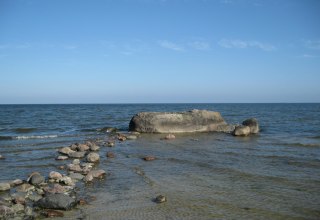
  • Der Teufelsstein ist ein beliebtes Fotomotiv // © Angelika Michaelis

    The "Teufelsstein" in Lubmin

    • 17509 Lubmin

    The “Teufelsstein”, which translates to “Devil’s Stone”, is a boulder in the Greifswalder Bodden near Lubmin. As late as 1909 it was above the cliff. It serves as a benchmark for surveying the coastal decline. It is a popular photo opportunity on a hike along the cliff coast to Vierow and on the high shore back to the seaside resort of Lubmin.

    Read more: "The "Teufelsstein" in Lubmin"
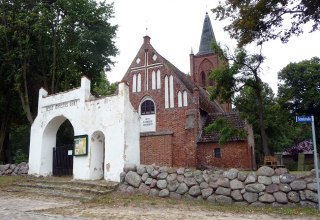
  • Church with entrance portal // © Sabrina Wittkopf-Schade

    Village church Kemnitz

    • Schulstraße, 17509 Kemnitz

    The village church in Kemnitz looks back on a long tradition. In the rectory, right next to the church is a small exhibition of the painter Friedrich August von Klinkowström.The theme cycle path "Route of North German Romanticism", which runs from Greifswald to Wolgast, leads to the places of this painter of the romantic period.

    Read more: "Village church Kemnitz"
  • © Tourismuszentrale Rügen

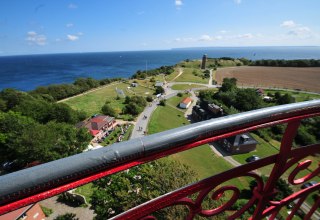
    Monument Kap Arkona

    • Am Parkplatz, 18556 Putgarten

    The area monument Kap Arkona is one of the most popular excursion destinations on Rügen. In addition to the 45 metre high cliff, the cape is home to a whole range of sights: The castle wall of Jaromarsburg Castle is located directly at the top of the Cape. The glass dome of the restored sighting tower glistens next to it. The Schinkel tower, the large lighthouse and the bearing tower can be visited.

    Read more: "Monument Kap Arkona"
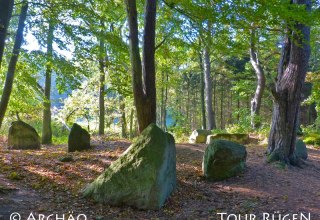
  • On the coastal path between Lancken-Granitz and Stresow, the "goat stones" lie in the shade of tall deciduous trees. // © Archäo Tour Rügen

    Goat stones - megalithic tomb near Gobbin

    • 18568 Lancken-Granitz

    The goat stones are part of a group of several megalithic burial sites along the coastal path between Lanchen-Granitz and Groß Stresow

    Read more: "Goat stones - megalithic tomb near Gobbin"
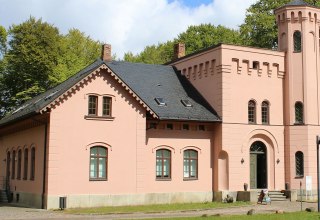
  • Außenansicht des Granitzhauses // © Bildarchiv Biosphärenreservatsamt-Südost-Rügen

    The “Granitzhaus“ and exhibition

    • Closed today
    • Jagdschloss Granitz, 18609 Binz

    Since 2004, the former forester’s and guest house of the “Fürsten zu Putbus“ houses a visitor centre about the UNESCO biosphere reserve “Südost-Rügen“.

    Read more: "The “Granitzhaus“ and exhibition"
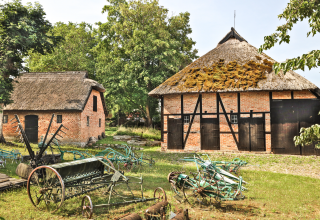
  • © MV-T/Gohlke

    Göhren Museum Farm

    • Strandstraße, 18586 Ostseebad Göhren

    The Mönchgut Museum Farm is the oldest and largest open-air museum on Rügen. While the residential building was built around 1850, the core of the half-timbered barn dates back to around 1680, making it one of the oldest buildings on Rügen.

    Read more: "Göhren Museum Farm"
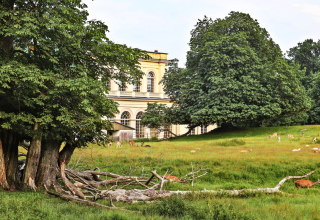
  • © MV-T/Gohlke

    Putbus castle park

    • Wreechener Weg, 18581 Putbus

    Although Putbus Castle, the former manorial seat of the Princes of Putbus, was razed to the ground as early as 1962, the beautiful castle park is still a reminder of this magnificent time. Magnolias and sequoias adorn the garden, which is laid out in English style.

    Read more: "Putbus castle park"
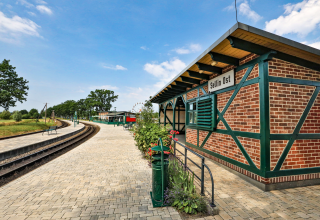
  • © MV-T/Gohlke

    Sellin small train station

    • An der B196, 18586 Sellin

    The Rasende Roland, as it is affectionately called, has been traveling across the Island of Rügen at a comfortable top speed of 30 km/h since 1895 and connects the well-known seaside resorts with each other.

    Read more: "Sellin small train station"

Content is loaded

Content is loaded

The focus of the themed cycle route between Wolgast and Greifswald, which opened in 2018, and the extension to the island of Rügen, which will open in 2024, is on the Romantics from Western Pomerania: Caspar David Friedrich, Friedrich August von Klinkowström, Karl Gottlieb Lappe and Philipp Otto Runge.

From the ruins of Eldena Abbey in Greifswald to the resort town of Wiek on the island of Rügen, a further 240 kilometers along the Route of North German Romanticism will take you past important places in the lives and motifs of the early Romantic artists. These include original locations such as Lake Wreech, Göhren's south beach and the Königsstuhl National Park Center. For the most part following the Baltic Sea Coast Cycle Route, the “Route of North German Romanticism” signpost leads along all seven stages with cultural features and offers a magnificent view of the picturesque coastline. Four additional information boards at Stralsund, Lake Wreech, Sellin and Cape Arkona provide background information on the life and work of the Romantic artists and offer a selection of interesting tips on other natural and cultural highlights in the area.

The tour starts individually in Wolgast, Greifswald or Stralsund. Central and regular train connections in these cities make it easy to travel to and from the tour, even on your own bike. A variety of accommodation options, restaurants and cultural attractions along the route invite you to take a relaxing break or stay a little longer.
Service

Arrival

Public transport:

Rail connection: Greifswald, Wolgast

More information

More info / links:

  • Tour tips: Eldena monastery ruins, Ludwigsburg castle and beach, Lubmin seaside resort and Freest fishing village, Wusterhusen vicarage, Rungehaus museum in Wolgast.

Similar tours

  1. Beliebtes Ausflugsziel und Wahrzeichen von Klütz ist die Holländerwindmühle // © Stadtinformation Klütz

    Castles and villages

    Read more: "Castles and villages"
  2. Die Landschaft der Halbinsel Mönchgut auf Rügen besticht durch ihre sanften Hügel // © TZR/C. Thiele

    Mönchgut bike tour

    Read more: "Mönchgut bike tour"
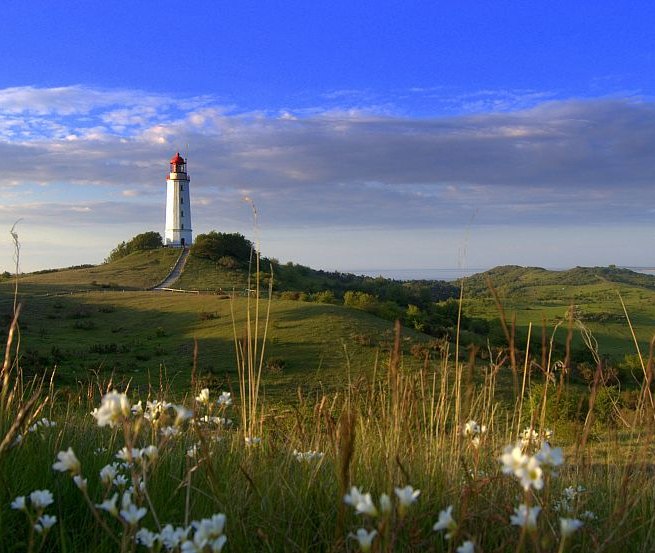
  3. The landmark of the island - lighthouse Dornbusch // © Robert Ott

    Around the island of Hiddensee

    Read more: "Around the island of Hiddensee"
1- 0 from 0