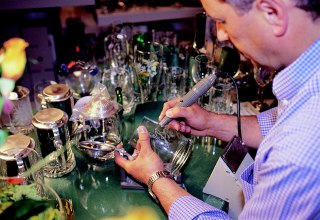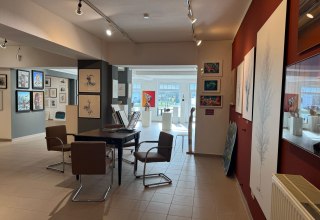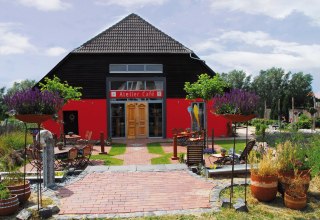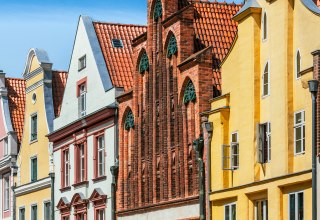
The unspoiled nature, the turbulent Baltic Sea, the special light - for centuries, artists have found wonderful sources of inspiration in Mecklenburg-Vorpommern. Caspar David Friedrich and Philipp Otto Runge created their world-famous masterpieces here. The artists' colonies in Ahrenshoop, Schwaan and on the island of Hiddensee show unique works by formative artists of the region as well as contemporary works. Art halls and galleries offer changing exhibitions of nationally and internationally renowned sculptors, photographers and painters.

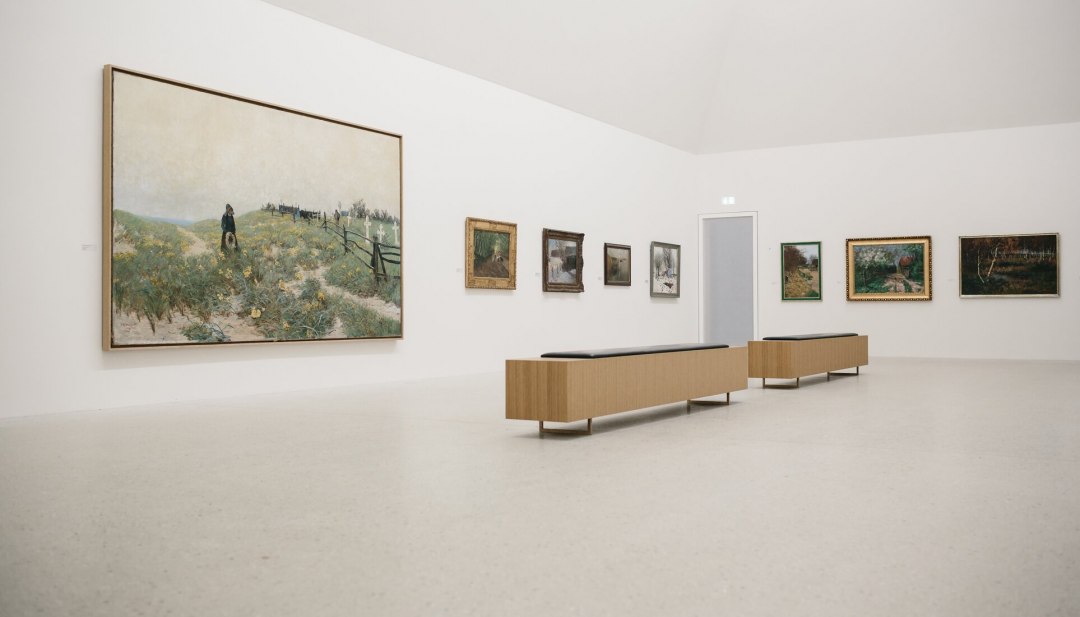
Exhibition at the Museum Ahrenshoop, © TMV/Roth

Between Baltic Sea and Bodden: Artists' Colony Ahrenshoop

The artists' colony of Ahrenshoop is located on the Fischland-Darß-Zingst peninsula. The extensive landscape between the Baltic Sea and the Bodden, the alternating cliffs and dunes and especially the unique light conditions attracted the first landscape painters to the coast at the end of the 19th century. The painter Paul Müller-Kaempff, who opened the first painting school in the village in 1894, is considered the founder of the colony. He was followed by many other artists as well as their friends and families, whereby the former fishing village simultaneously developed into a Baltic seaside resort.

Even today Ahrenshoop is a meeting place for artists and art lovers. In numerous exhibition houses and studios, the art historical development of the artists' colony can be traced from its founding to the present. These include, for example, the Ahrenshoop Art Museum, which opened in 2013, the Kunstkaten and the Künstlerhaus Lukas.
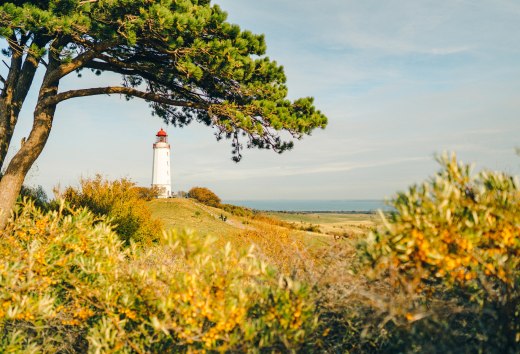
Peace and seclusion on the artists' island of Hiddensee

Hiddensee has been considered an artists' colony since the beginning of the 20th century. Far from big-city civilization, artists spend the summer months on the island or settle there completely. The foundation stone of the community was laid by the painter Oskar Kruse-Lietzenburg, whose "Lietzenburg", built in 1904, became an artists' meeting place for painters, writers and actors. After his death, the sculptor Max Kruse and his wife, the doll maker Käthe Kruse, continued this tradition. The painters Henni Lehmann and Clara Arnheim founded the Hiddensoer Künstlerinnenbund in 1919. Their studio and exhibition rooms are located in the blue barn, where their works are exhibited again today. Among the many prominent guests of the island are also the actress Asta Nielsen, painter and sculptor Käthe Kollwitz and the writer Gerhart Hauptman.

If you want to get an impression of the cultural development of Hiddensee, it is worth visiting some other galleries and exhibitions besides the blue barn. Open for guests are, for example, the Gerhart Hauptmann House, the Museum of Local History, the Henni Lehmann House and the Asta Nielsen House.

Content is loaded

back

Nature studies in Schwaan

But it was not only on the coast that artists gathered to immortalize the unique nature of Mecklenburg-Vorpommern in their works. At the end of the 19th century, a colony of artists also emerged in the small farming town of Schwaan, south of Rostock. Local painters came together here to study the natural landscape around the tranquil little town and capture it in their paintings. The founder of the colony is the Schwaan-born painter Franz Bunke, who studied and later taught at the Weimar School of Painting. Rudolf Bartels, Peter Paul Draewing and Alfred Heinsohn also belonged to the core of the artist community.

Today, their works are exhibited in the Kunstmuseum Schwaan in the building of the former watermill. The house where Franz Bunke was born can also be visited. If you would like to see the original locations of the works, the artist trails are the right place to go: Three cycling and hiking trails lead past them starting from the art museum.

Galleries and art studios

Places of art and inspiration in Mecklenburg-Vorpommern

273 results

  • Rakubrand Kronsberg, © Südliche Boddenküste

    Raku ceramics, Kronsberg

    • Waldstraße, 18314 Lüdershagen OT Kronsberg

    Raku is the charm of chance and subtle asymmetrical rhythm.

    Read more: "Raku ceramics, Kronsberg"
  • © Silke Voss

    Tine and Jochen Löber

    • Neu Tellin, 17129 Alt Tellin

    Happily far away from the tourist hustle and bustle of Ahrenshoop, the Löber couple lives at the end of a path that leads to a green potter's farm near Neu Tellin.

    Read more: "Tine and Jochen Löber"
  • UNESCO World Heritage Forum

    • Open today
    • Waldhalle, 18546 Sassnitz

    The hiking base near the port town of Sassnitz on the island of Rügen is dedicated to the UNESCO World Natural Heritage idea. Nature lovers can learn about the phenomenon of ancient beech forests here or simply linger in the greenery, fortify themselves and unwind.

    Read more: "UNESCO World Heritage Forum"

Content is loaded

Content is loaded